
The Woman Who Brought a Pillow to the Power Office: How a Navi Mumbai Protest Exposed Mumbai's Monsoon Infrastructure Rage
A viral video of a working woman protesting power cuts in Ulwe with a pillow reveals deep-seated anger over Mumbai's monsoon infrastructure failures, from Sion-Kurla flooding to Central Railway grid failures, exposing the stark inequality between hyper-development and decaying basic services.
A Pillow, a Power Office, and a Cry for Sleep
In early June 2026, a working woman from Ulwe Sector 8 in Navi Mumbai did something that instantly crystallised the simmering anger of an entire metropolitan region. Exhausted after a week of sleepless nights, she walked to the local MSEDCL electricity office carrying a pillow. Her message to the officials inside was as simple as it was devastating: she had come there to sleep because their office had power, while her home did not. In videos that quickly spread across social media, she broke down crying, explaining that power cuts occurred every night from around 11 pm to 4 or 5 am—precisely the hours she needed to rest after work. Her complaints, she said, had gone unanswered, and residents were left 'sitting in darkness' while officials enjoyed uninterrupted electricity. The symbolic act of bringing a pillow transformed a routine grievance into a visual protest that was instantly meme-able, shareable, and impossible to ignore.
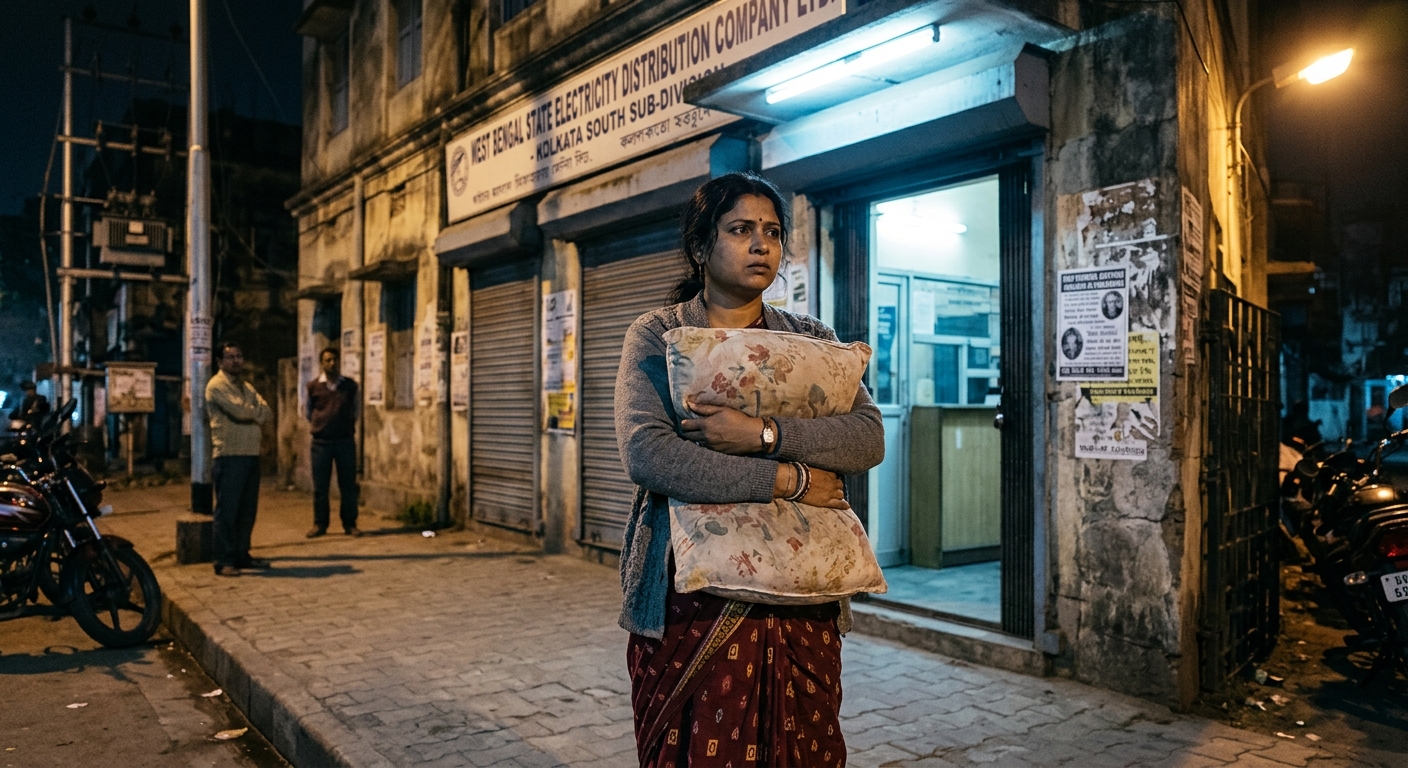
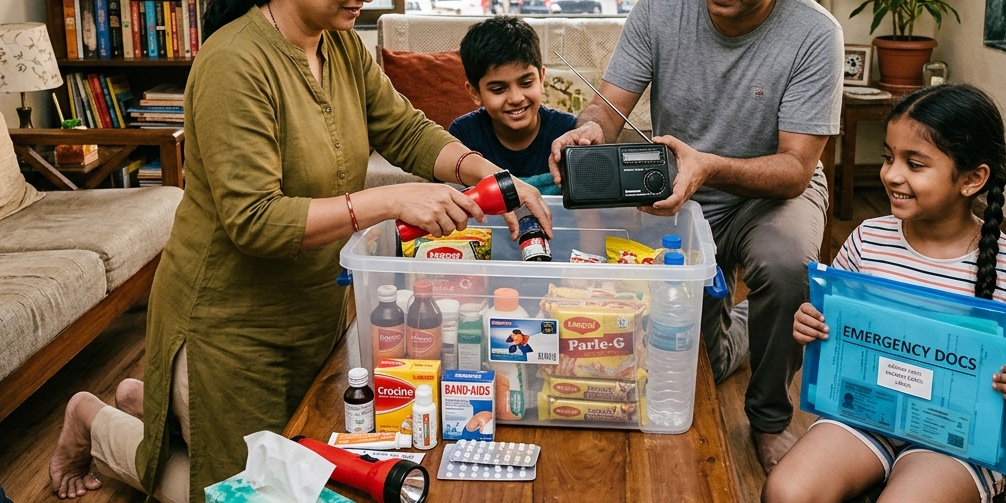
The image that captured a city's frustration: a working woman from Ulwe brought a pillow to the MSEDCL office to protest sleepless nights caused by power cuts.
From Ulwe to the National Feed: How the Video Went Viral
The clip from Ulwe did not stay local for long. It was picked up by television and digital outlets including NDTV, Lokmat, Republic World, and Times Now, which framed it as a 'viral pillow protest' and a symbol of growing anger over power cuts in Navi Mumbai. Times Now's Instagram post described her as a working woman who hadn't slept properly for a week due to repeated night-time cuts, adding a note that they could not independently verify all details—a telling detail that shows how quickly user-generated content is now pulled into mainstream news cycles. On Reddit, posts on r/navimumbai and r/IndiaSpeaks shared the NDTV clip and discussed the incident as part of a broader pattern, with users asking 'what is happening with power cuts in Navi Mumbai' and reporting similar overnight outages in Ulwe and Taloja. The video hit a nerve because it compressed multiple frustrations into one image: uncontrolled suburban real-estate growth, inadequate supporting infrastructure, unresponsive utilities, and a sense that ordinary working residents are paying the price.
Reddit as a Grievance Ledger: The Pattern of Nighttime Outages
On r/navimumbai, the woman's video landed in an environment already primed by months of anger about outages. Multiple threads ask bluntly 'What is Happening with power cuts in Navi Mumbai' and 'What the F* is exactly happening with the power cuts in Navi Mumbai?', with users from Ulwe, Taloja, and other nodes sharing experiences of repeated overnight cuts, voltage fluctuations, and a total lack of clear communication from MSEDCL. Other posts describe specific local protests and escalations, including a 'protest against power cuts near station,' suggesting that residents are moving from online complaints to street-level action. Commenters trade practical coping tips—inverters, complaint helplines like the MSEB number—but also point out the structural issue: rapid construction and population growth seems unmatched by upgrades to distribution networks. The pattern emerging is one of unpredictable, prolonged outages at night, a perception that newer nodes marketed as 'smart' or 'upcoming' are in practice infrastructure-starved, and a sense of being ignored because they are not the 'core' city.
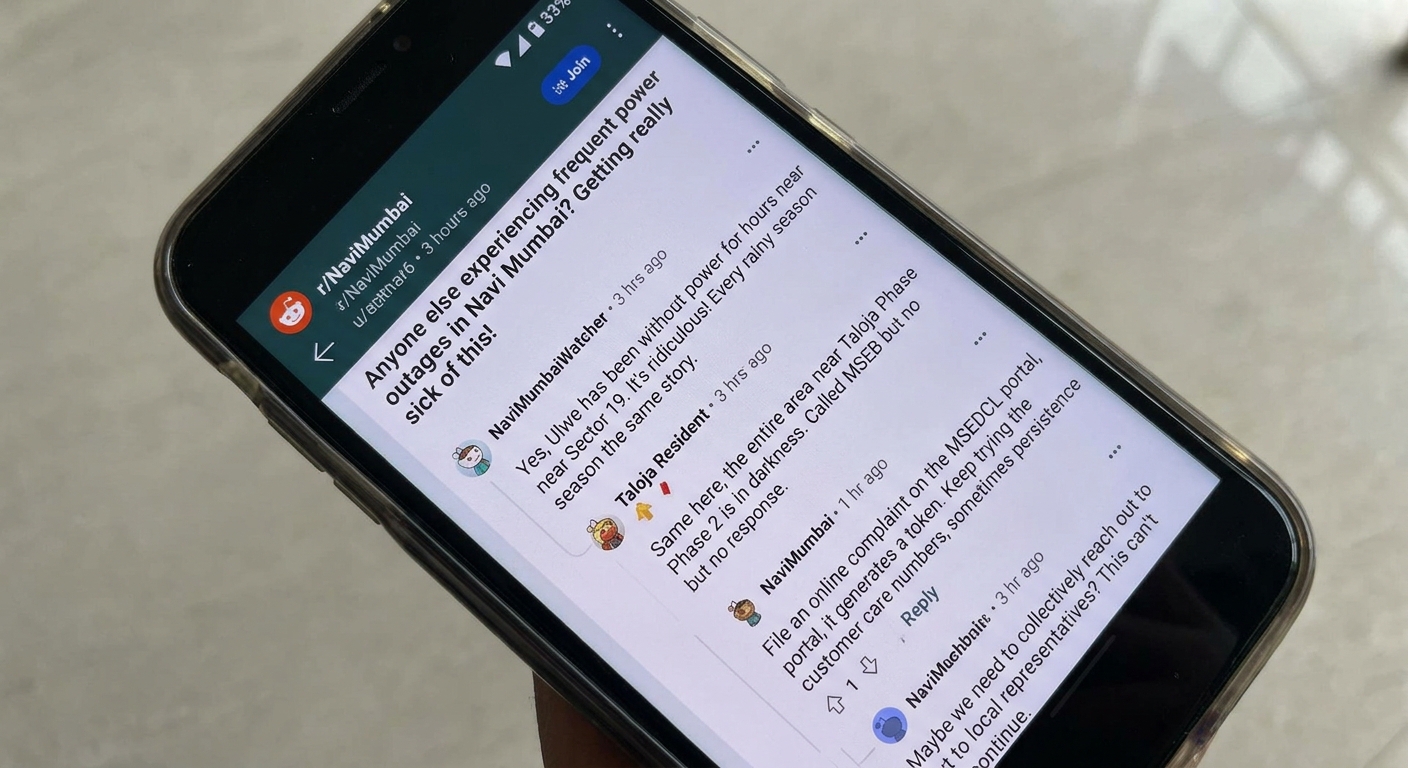
Reddit's r/navimumbai became a digital grievance ledger where residents documented the pattern of overnight power cuts and traded coping strategies.
Instagram’s Emotional Amplification and the Comment-Section Town Hall
On Instagram, the incident was packaged differently but with equal potency. Posts from news handles like Times Now presented the clip as a short vertical reel with captions emphasising 'working woman,' 'has not slept properly for a week,' 'extreme heat,' and 'anger online.' The comments section quickly broadened the complaint—users from other Navi Mumbai sectors or Mumbai suburbs chimed in with their own 'same here' stories about power, water, or flooding, turning the reel into a comment-section town hall. This contrast between Reddit's more detailed, problem-solving tone and Instagram's emotional, high-velocity amplification shows how both platforms feed the same narrative of everyday infrastructural failure. The fact that the outlet itself flagged it could not verify all details also highlights the hybrid nature of contemporary urban reporting: citizen videos are both indispensable and contested.
The Monsoon Script: 'BMC During Monsoon' as a Meme and a Reality
The Navi Mumbai power story is unfolding alongside the annual online ritual of 'BMC during monsoon' content, which centres on Mumbai city proper. Every monsoon, users on Reddit, Instagram, and X share images and videos of waterlogged streets, stalled BEST buses, cars submerged up to their windows, and commuters wading through waist-deep water—especially in low-lying areas like Sion and Kurla, and parts of the Central line. The phrase 'BMC during monsoon' has effectively become a meme format: side-by-side images of glossy infrastructure renderings versus real flood photos, sarcastic captions about 'Mumbai spirit' and 'BMC sleeping,' and jokes about the city 'officially becoming Venice for three months.' In years with heavier rainfall, posts tag #Sion, #Kurla, and #KingCircle, often showing railway tracks under water, slowed or halted trains, and overflowing drains. This is a long-running, documented pattern: central neighbourhoods like Sion and Kurla repeatedly suffer because they are low-lying, highly concretised, and dependent on ageing drains and pumping infrastructure, while large storm-water upgrades are slow and contested.
When the Grid Fails: Central Railway and the Geography of Stuckness
Layered onto flooding complaints is anger about suburban train disruptions, especially on Central Railway. Heavy rains in the Sion–Kurla belt routinely lead to waterlogging on tracks, which in turn causes signal failures, overhead equipment issues, or grid trips that halt services on the Central line and Harbour line. Social media posts often describe commuters stuck in trains for hours, walking on the tracks, or being stranded at stations with poor information. Users conflate and connect these events as one experience: power cuts at home, flooded access roads, and non-functioning local trains—all in the same week or month. On a bad day, a single commuter might experience all three failures simultaneously. The pillow protest and the Central Railway breakdowns are both examples of critical infrastructure that residents depend on daily, failing at precisely the moment of maximum stress—whether that is extreme heat or torrential rain.
The 'Two Bombays': BKC and Coastal Road versus Ulwe and Kurla
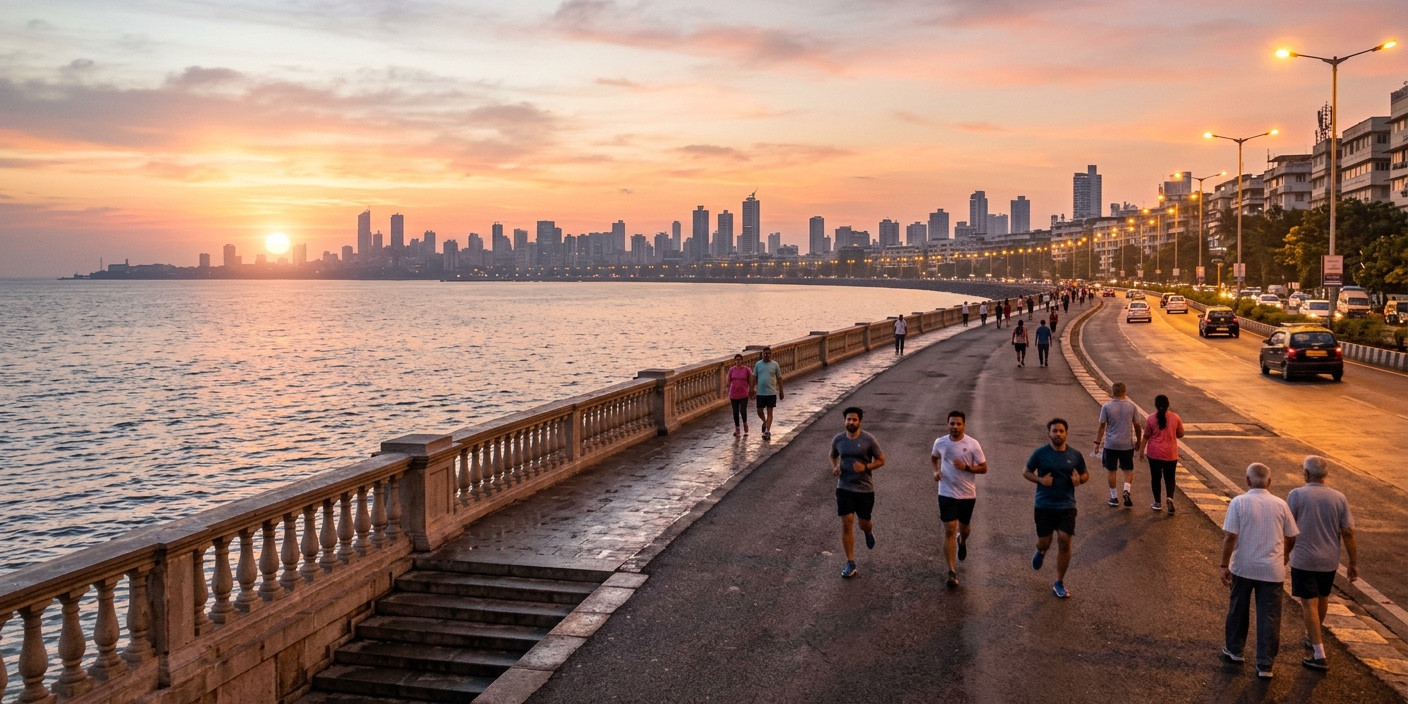
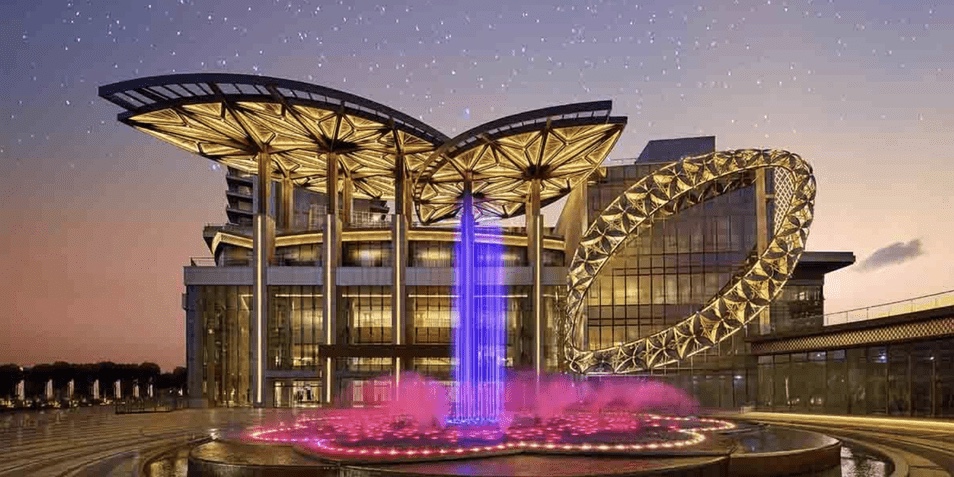
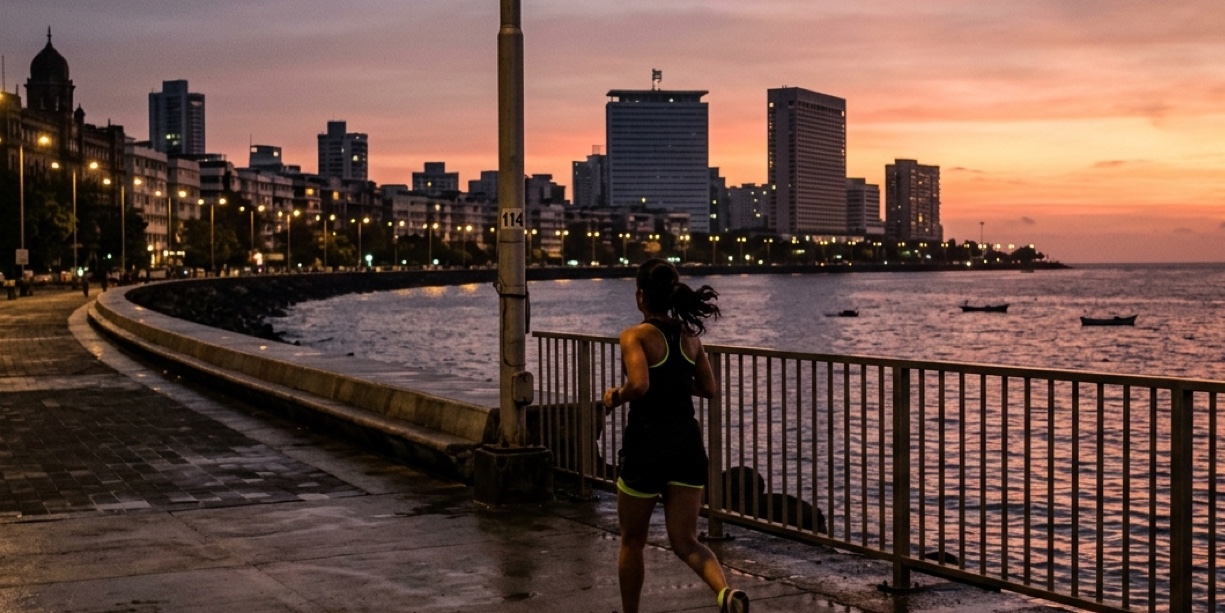
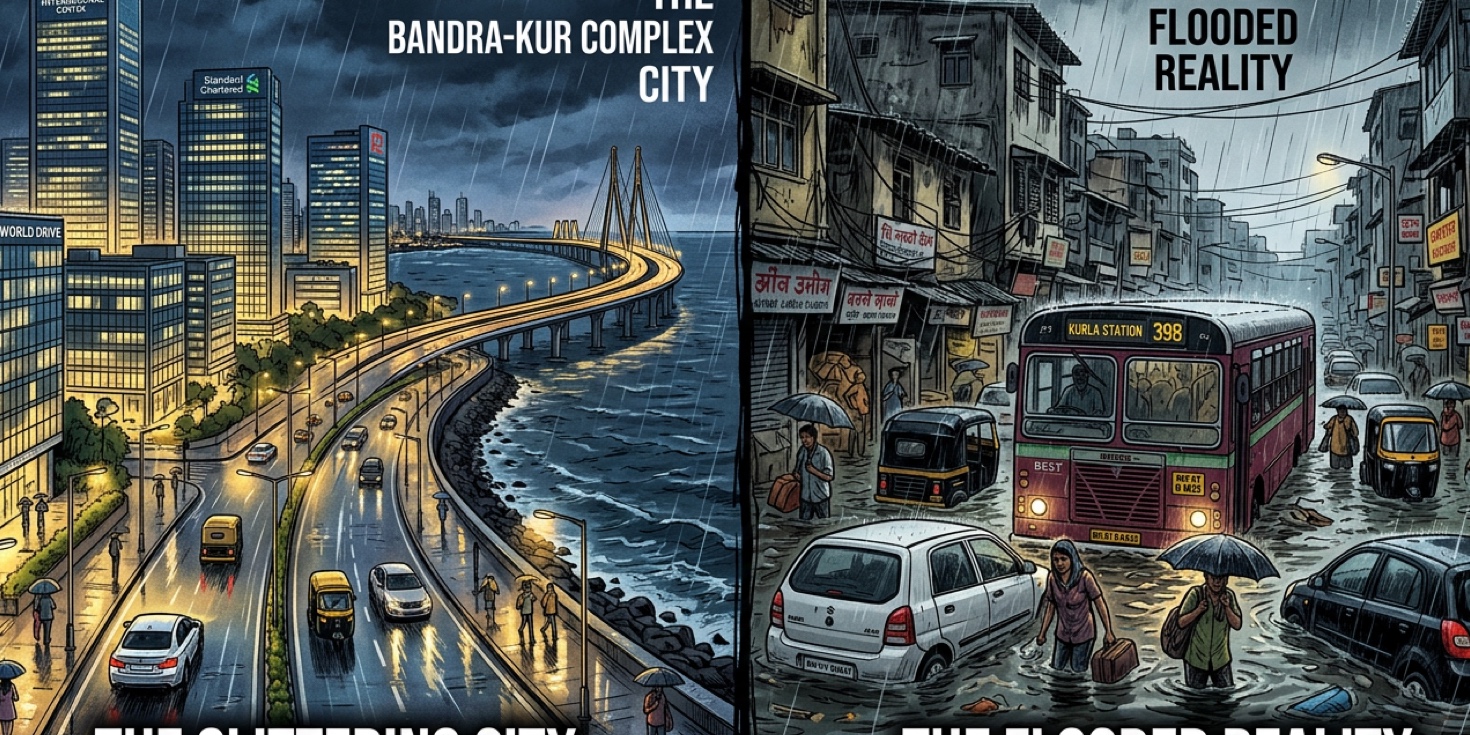
The user-generated anger around power cuts, flooding, and transport failures plays against the official visual narrative of Mumbai as a world-class financial hub. In Bandra Kurla Complex (BKC), gleaming glass towers, five-star hotels, and international banks are showcased in investment pitches as the symbol of 'New Mumbai,' with comparatively better-maintained streets, high-visibility security, and lighting. Along the coast, multi-billion-rupee projects like the Coastal Road are marketed through drone-shot videos emphasising engineering sophistication, sea views, and tunnels—not sewers or drains. On social media, users constantly juxtapose these glamour projects with their lived experience: sarcastic posts asking why the city can 'build coastal roads and bullet trains but not fix drainage in Kurla,' memes about 'BKC on the brochure vs. Kurla in the monsoon,' and comments that 'in Coastal Road and BKC there is always light, but in Ulwe we can't sleep because of cuts.' This creates the 'two Bombays' narrative: a Shiny Bombay focused on investors, tourists, and elite commuters, and an Everyday Bombay where middle- and lower-income residents face chronic underinvestment in basic utilities and maintenance.
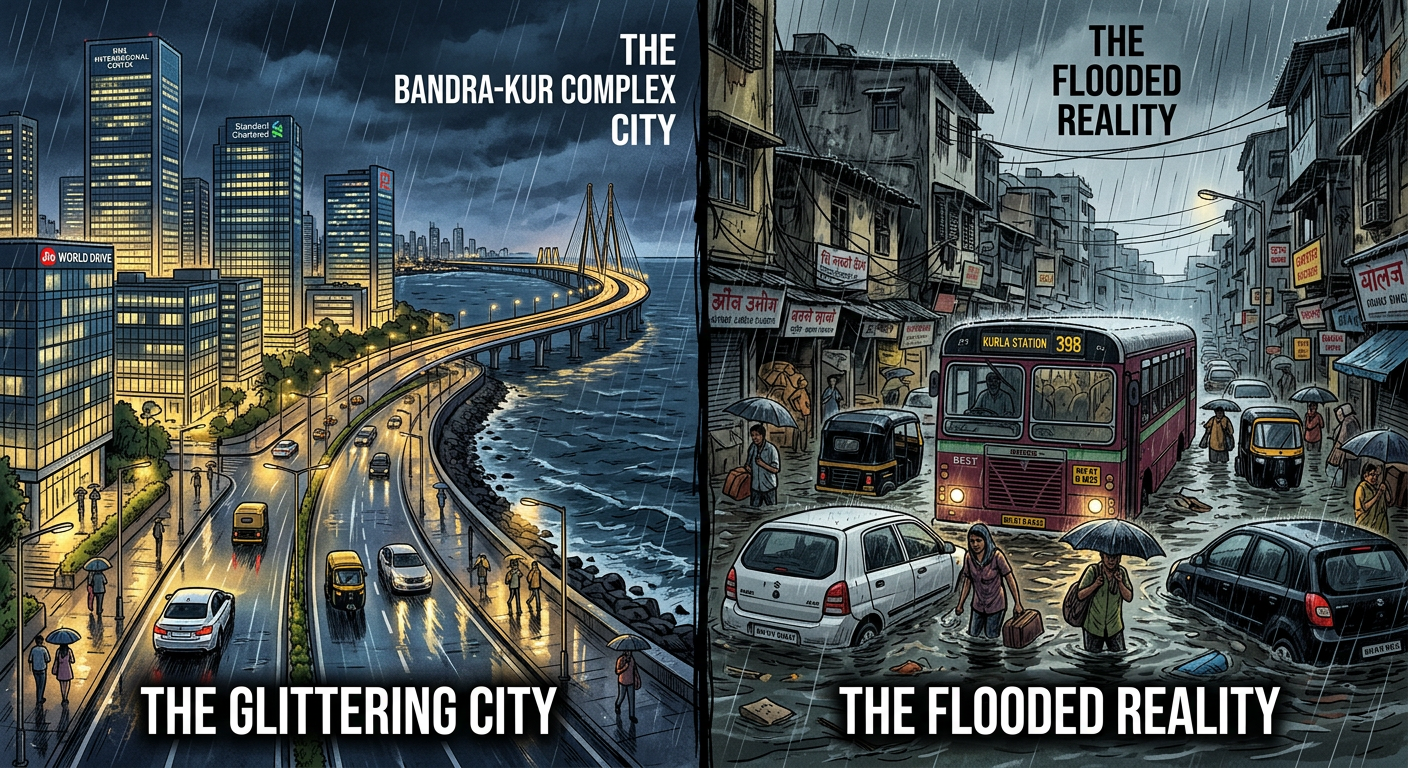
The 'two Bombays' narrative: hyper-development in BKC and along the coast stands in stark contrast to the monsoon reality of flooding and outages in neighbourhoods like Kurla and Ulwe.
Governance Fragmentation and the Spectacle of Accountability
The incident is a lens on the fragmented governance of the Mumbai Metropolitan Region. Navi Mumbai is under different administrative bodies—NMMC, CIDCO, MSEDCL—than Mumbai city's BMC, but residents experience the region as one urban continuum and vent online about 'the authorities' generically. When things go wrong, each agency can point to another: state versus municipal versus parastatal versus utility. Online, this plays out as a palpable sense of powerlessness: residents file complaints, tag officials, or call helplines, but see little structural improvement. The pillow protest is the logical escalation when digital channels appear ineffective. Viral clips are becoming de facto audit reports, documenting failures that official dashboards often underplay. Coverage notes that after her video went viral, the issue gained wider visibility, with more residents speaking to media about overnight outages and rising temperatures, and some reports mentioning symbolic protests and demands for explanations from MSEDCL. However, there is no evidence of a decisive, systemic fix—mirroring monsoon flooding and train disruption debates, where each season brings promises but limited visible change.
Infrastructure Lagging Speculative Real Estate: The Ulwe Story
Areas like Ulwe have seen a burst of residential construction linked to Navi Mumbai airport expectations, new transit corridors, and proximity to Mumbai. Residents often discover that power, water, drainage, and transport capacity have not kept pace. Reddit threads from Navi Mumbai explicitly link power cuts to 'too many new buildings, same old transformers' or overloaded feeders. This mirrors older patterns in Mumbai's suburbs, where densification came first and infrastructure followed late, if at all. The woman's story—routine night shifts or late work, needing a few hours of sleep, being denied even that—is an example of urban precarity that cuts across class. The anger is not abstract; it is about very tangible harms: lost sleep and productivity, children unable to study, health risks from heat and humidity without fans, and economic losses from outages or commute disruptions. Viral clips like this endure not just because they are dramatic, but because they crystallise shared, chronic vulnerabilities that millions feel but rarely see acknowledged in glossy city branding.
What the Pillow Protest Really Says About the City
The woman in Ulwe who walked to the power office with a pillow has become something larger in Reddit and Instagram conversations: a symbol of a city split against itself. A city that can light up BKC but cannot guarantee a fan at night in Ulwe is a city where the fracture between aspiration and reality is being mapped in real time on social media. The monsoon memes and power-cut reels are not trivial; they are a form of urban accountability and a record of inequality. Every year, the same locations flood, the same excuses are offered, and the same cycle of online rage and dark humour plays out. The pillow protest is the latest, most potent entry in that cycle—a working woman reduced to begging for sleep at a power office, and a metropolitan region forced to confront the question of who, exactly, its gleaming infrastructure is meant to serve.
Sources
Woman protests power cuts by bringing a pillow to the electricity office. : r/IndiaSpeaks
What the F* is exactly happening with the power cuts in Navi Mumbai?
Power cuts keep Navi Mumbai residents awake on sweltering nights — Hindustan Times
Traffic chaos during protest in Mumbai, woman argues with protesters. : r/Maharashtra
Times Now on Instagram: "A viral video from Navi Mumbai's Ulwe ..."
Navi Mumbai Power Crisis: Sleepless Nights, Protests & Growing Anger | Lokmat Times (YouTube)
Clarification on yesterday's traffic jam issue by the MLA : r/navimumbai