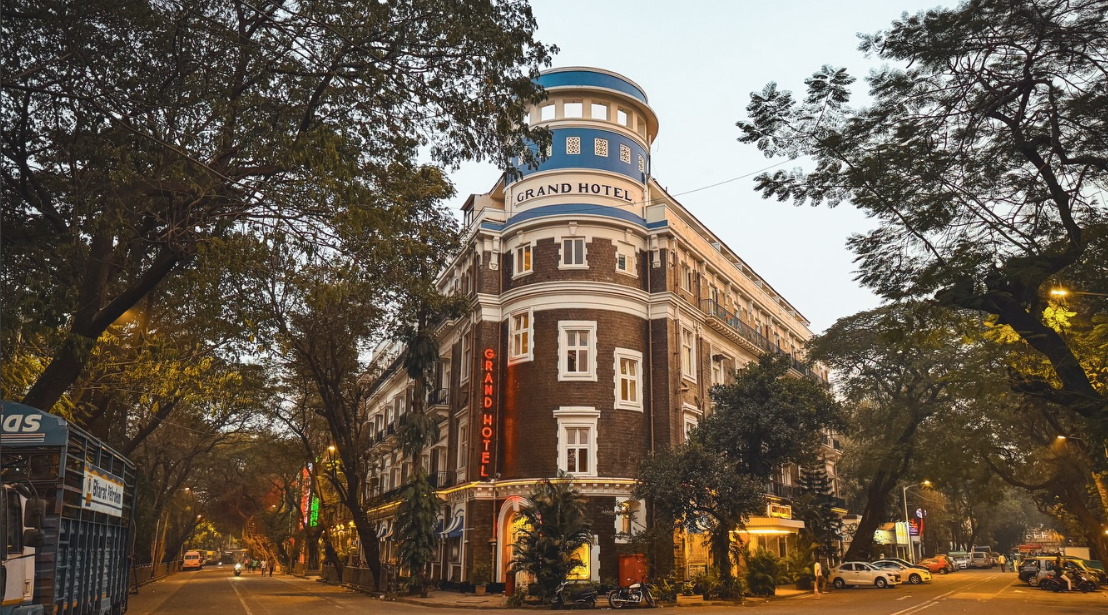

Monsoon Emergency Kits for Mumbai: Pack for Bag, Car & Home
A practical guide to building three monsoon emergency kits - to stay safe amid Mumbai's flooding, wall collapses, and transport chaos.
When the First Cloudburst Hits
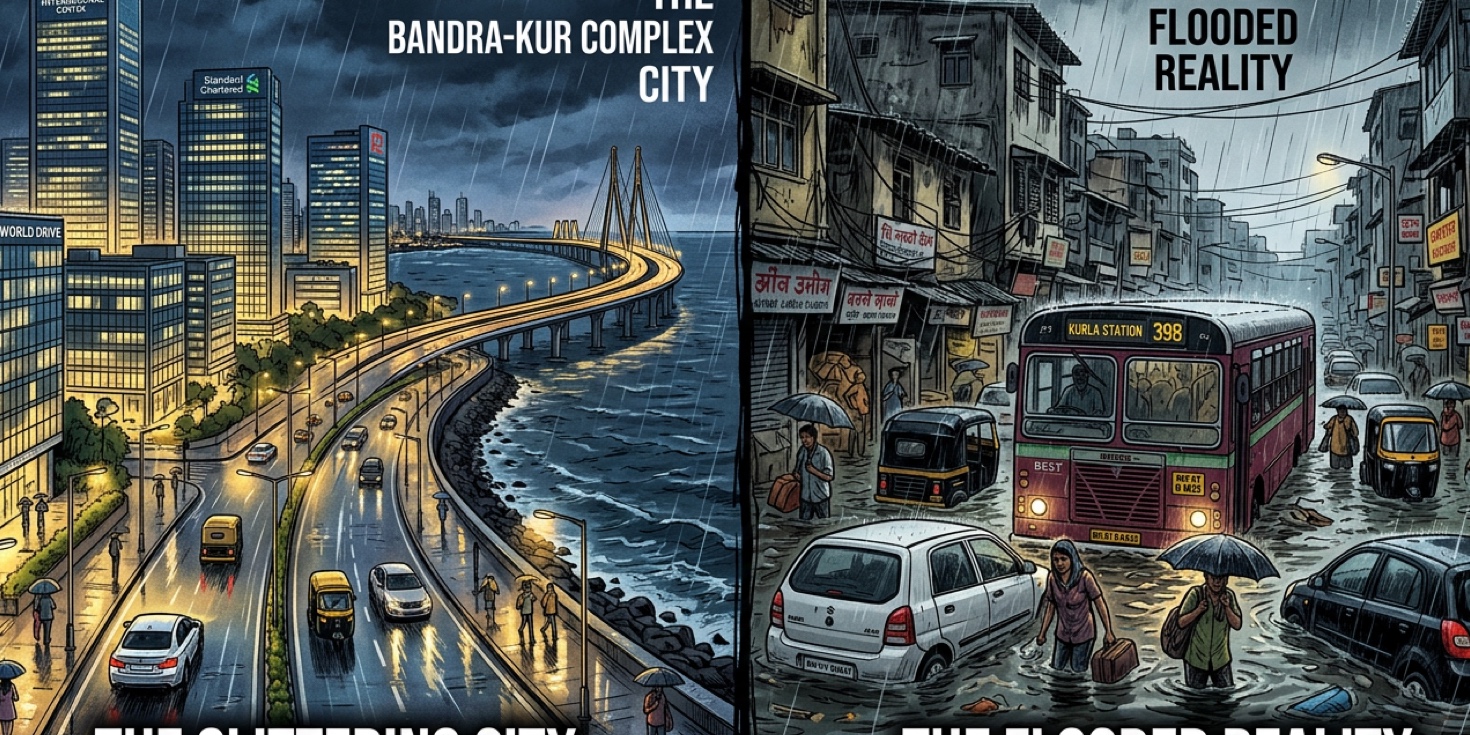
It happens without warning. A choked underpass becomes a lake; a BEST bus shudders to a halt in waist‑deep water; local trains freeze between stations, and a skywalk exit turns into a waterfall. In these moments, the difference between manageable discomfort and genuine danger often comes down to what you have within arm’s reach. Mumbai’s monsoon now feels less like a season and more like a safety test—sudden wall collapses in Kurla, waterlogged subway entrances at Andheri, and viral videos of commuters wading through murky water with bags held above their heads confirm what every Mumbaikar senses: the anxiety is real. This guide is about turning that anxiety into action. By assembling three simple emergency kits—one for your daily bag, one for your car, and one for your home—you can reclaim a measure of control over the chaos.
Understanding the Risks You’re Preparing For
Before building a kit, it helps to understand exactly what you’re preparing against. Mumbai’s monsoon brings intense cloudbursts that overwhelm drainage in minutes. Roads become rivers, and low‑lying neighbourhoods see water enter ground‑floor homes. The BMC’s disaster management unit urges citizens to assume floods and power disruptions will happen during heavy spells, and to plan accordingly. A stranded commute—whether in a flooded bus, a stalled local, or a taxi crawling through jammed flyovers—drains phone batteries fast, leaves you drenched and hungry, and exposes you to viral infections that spike in damp, crowded spaces. Knowing the hotspots (the Citizen Matters checklist recommends studying your local water‑logging points) and having the BMC Disaster Management app on your phone are the first steps. The kits that follow build on that digital readiness with physical essentials.
Your Daily Monsoon Bag Kit
This is the most shareable part of the guide. Think of it as your monsoon go‑bag, whether you’re riding the local, catching a Metro, or squeezing into a taxi. First, stay dry: a sturdy poncho or hooded raincoat is better than an umbrella in crowded trains, but if you prefer one, choose a compact model with firm stretchers so it doesn’t flip inside‑out in gusts. A waterproof bag cover or simple Ziploc pouches protect your phone, wallet, and documents—a point emphasised by travel blogs and video creators alike. Pack a quick‑dry towel to wipe off rainwater and prevent chills; a change of clothes and socks stored at your workplace or inside your bag means you’re never trapped in wet attire. For footwear, open‑toed rubber‑soled shoes dry faster and give grip on slippery surfaces. Second, stay connected: a fully charged portable power bank and cable are non‑negotiable. Mumbai local train safety articles explicitly say commuters should always carry a portable charger because outlets are scarce and the crush of people makes reaching them impossible. Add a physical emergency contact card with the BMC helpline (1916), the Maharashtra Disaster Management Control Room (022‑22027990), and Metro 24x7 helplines. Third, stay healthy: a small wellness pouch holding sanitiser, antibacterial wipes, disposable masks, basic fever reducers, and any personal medication addresses the spike in monsoon infections. Finally, dry snacks and a reusable water bottle keep hunger at bay when street food is unsafe and delivery apps are unavailable.
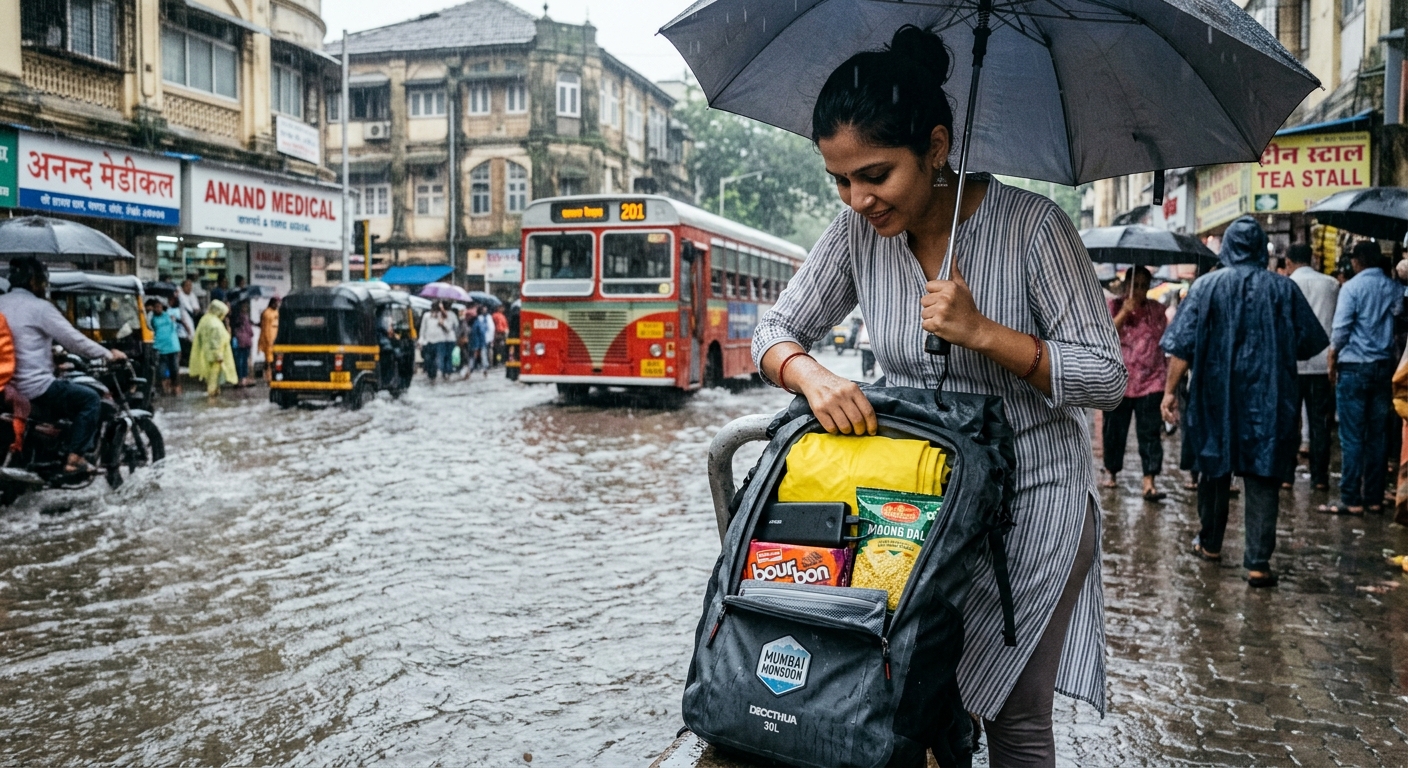
A well‑stocked bag kit can turn a stranded commute into a manageable wait.
What Goes in the Car (or Taxi) Monsoon Kit
Many Mumbai residents either drive or depend on taxis. A dedicated kit kept permanently in the vehicle turns it into a mobile safe room. Local travel hacks recommend a compact bag with a change of clothes, a towel, and spare open‑toed footwear as the baseline. Add a poncho and an extra raincoat for passengers. A car phone charger and a backup power bank ensure connectivity even if the engine is off. While not unique to monsoon, a basic tool kit—jumper cables, a tow rope, and a reflective warning triangle—can be vital if you must abandon the car in a flooded underpass, a scenario that became all too real after a recent breakdown on the Western Express Highway. Keep a high‑visibility reflective jacket and a small first‑aid kit with bandages and antiseptic. If a jam stretches for hours, you’ll have snacks and water, and if you need to wade to safety, you’ll be dry and visible.
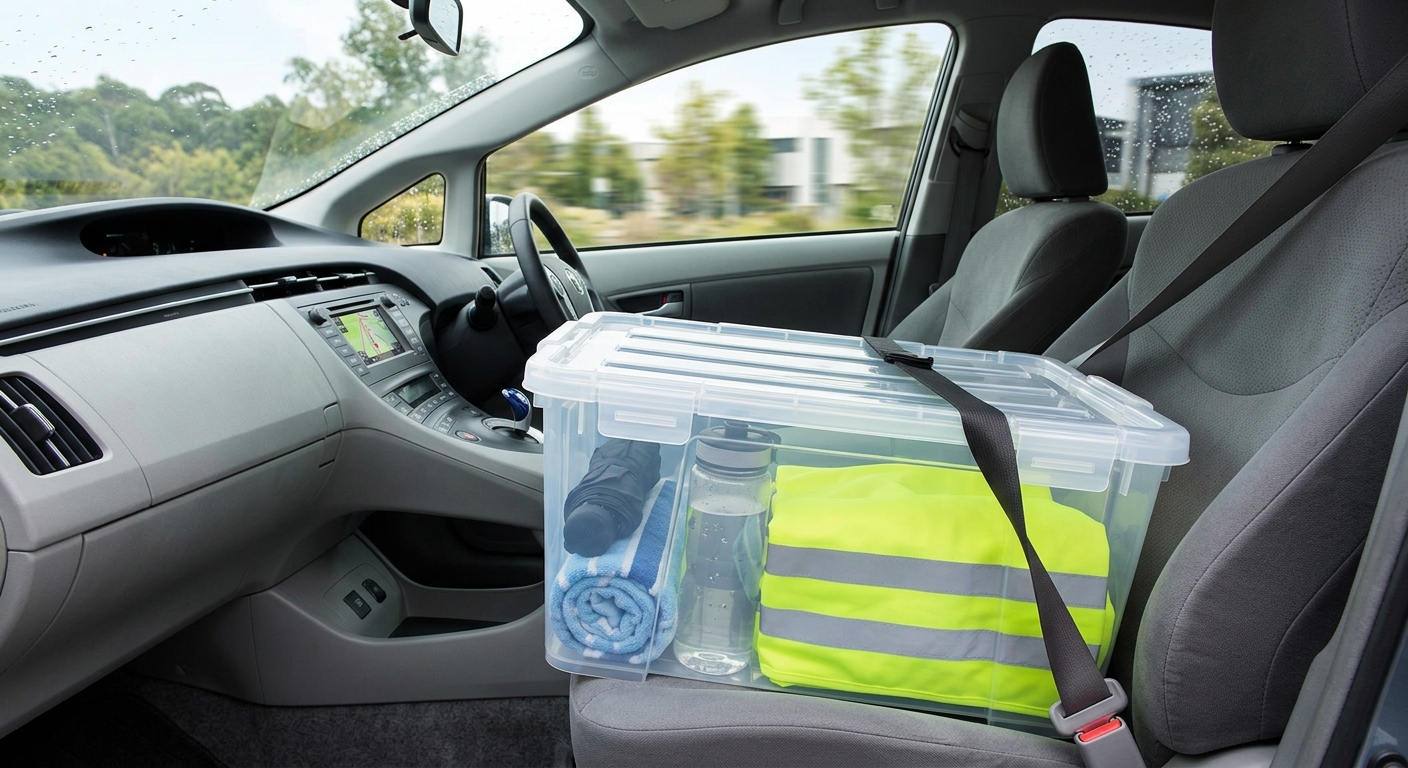
Keep a dedicated kit in your car for those hours‑long traffic jams.
The Home Emergency Box Every Family Should Have
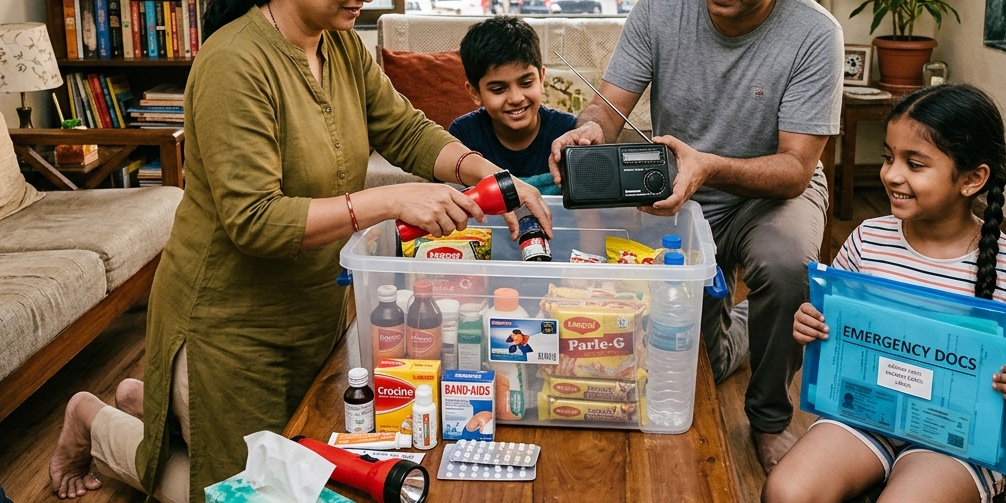
A home kit assumes flooding, ceiling leaks, and power cuts are likely. Start with the BMC’s own recommendations: post a list of emergency contacts (local police, hospital, disaster management helplines) where everyone can see it. Download the BMC Disaster Management app and note the water‑logging hotspots near your residence. The most critical safety rule—if water seeps through the ceiling near wiring, shut off the electricity immediately—must be understood by all adult household members. Then assemble a clear, labelled box. Power and light: battery‑powered torch, spare batteries, charged power banks, and candles as backup. Health: a family‑sized monsoon wellness kit with fever reducers, age‑appropriate cold medicines, a steam inhaler, menthol balms, and nasal spray. Sanitiser, wipes, and masks for infection control. Food and water: shelf‑stable snacks and at least a day’s supply of potable water; a thermos flask is useful for warm beverages. Documents: waterproof folder with copies of key IDs, insurance, and prescriptions. Basic repair items like plastic sheets, duct tape, and a mop help manage minor leaks. For families with infants or elderly members, include any special comfort items or medications.
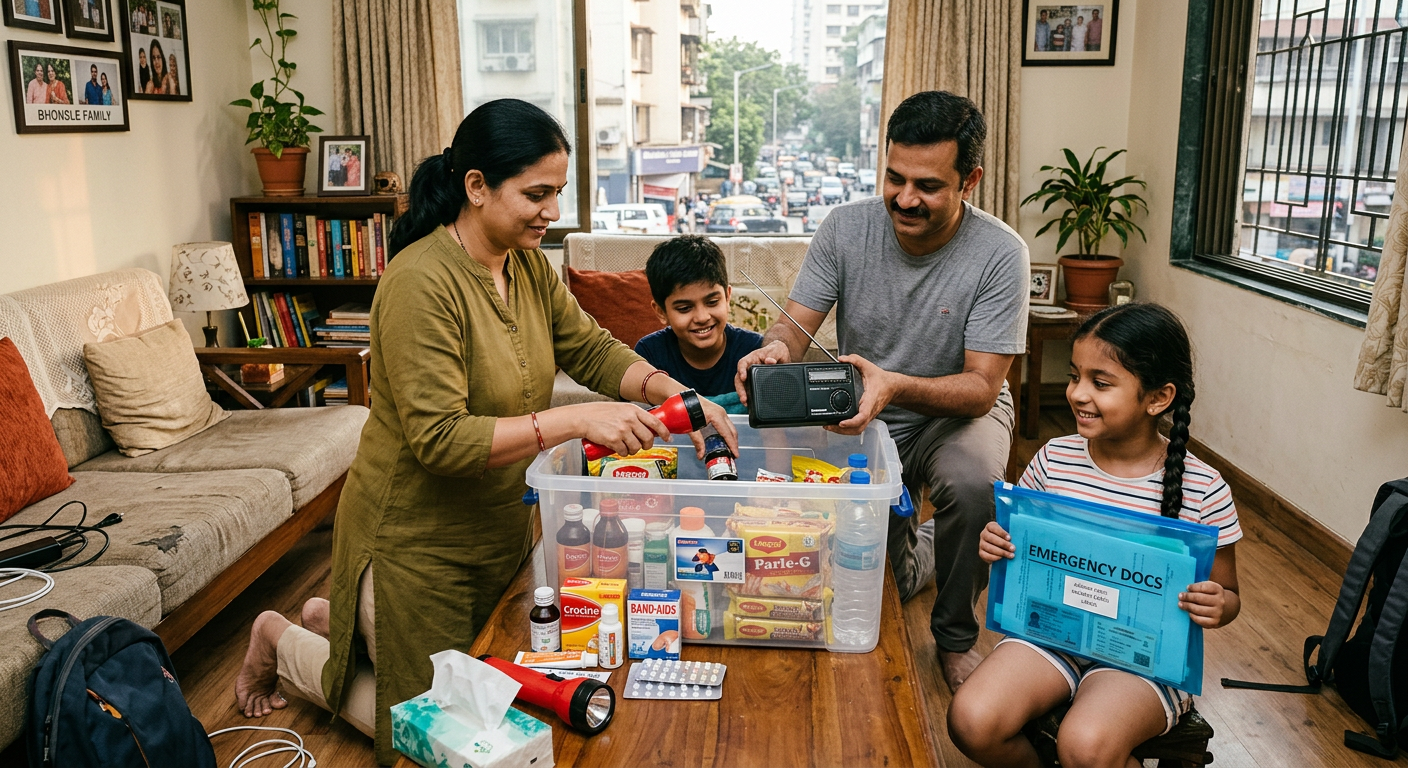
Involve the whole household when preparing the home monsoon box.
Smart Moves in Trains, Buses, and on Foot
Kit items work best when paired with smart behaviour. Respect the cloudburst: if a deluge is forecast, the most reliable advice, repeated by seasoned Mumbai travel blogs, is to stay home if you can and work remotely. When travel is unavoidable, plan your route around known water‑logging spots using the BMC app’s hotspot map. In crowded local trains, keep your belongings close, stay alert, and when standing, face the direction of travel so you can exit quickly—a subtle tip from official train safety guidance that can save precious seconds in a scramble. For bus commuters, keep your kit bag zipped and small; after a BEST bus broke down in a flooded stretch near Sion, passengers who had dry clothes and charged phones fared far better than those who didn’t. Walking through waterlogged streets? Don’t ignore warning signs around manholes or open drains; use a torch or phone light after dark.
Community Preparedness: Share the Safety Net
Preparedness multiplies when neighbours coordinate. Encourage your housing society to share emergency contacts on the group chat, keep a common-area first‑aid kit and torch, and maintain a list of nearby hospitals and pharmacies. Building complexes can designate a point person to check on elderly residents during heavy waterlogging. During the recent wall‑collapse incidents, neighbourhood WhatsApp groups became rapid‑response channels—formalising that instinct with a simple monsoon‑safety protocol costs nothing and saves immense stress. If your society hasn’t yet, propose a half‑hour drill before the next big spell: check the main power supply, clear drain grates, and ensure everyone knows where the emergency box is stored.
Your Quick‑Share Checklists
Save or screenshot these lists for immediate use. BAG KIT: poncho/raincoat, waterproof bag cover, quick‑dry towel, change of clothes and socks, open‑toed rubber footwear, power bank + cable, emergency contact card, hand sanitiser, wipes, masks, basic medications, dry snacks, water bottle. CAR KIT: spare clothes, towel, open‑toed shoes, umbrella, phone charger + power bank, high‑visibility vest, first‑aid kit, reflective triangle, snacks, water, tool kit. HOME BOX: torch + batteries, candles, power bank, wellness kit (fever reducers, cold meds, steam items), sanitiser/wipes/masks, shelf‑stable food, drinking water, waterproof document folder, plastic sheets and duct tape. For further reading, explore the BMC preparedness checklist and monsoon wellness guides that informed these lists.
Preparedness Is a Weekend Project
Wall collapses, flooded subways, and stranded commutes are not hypothetical—they are the new normal of Mumbai’s monsoon. Yet the weight of that normal lifts noticeably when you know you have a dry set of clothes, a charged phone, and a plan. Assembling these three kits takes an afternoon. Do it with your family, share the checklists with your building society, and rest a little easier the next time the sky opens. Over time, update the medicines, rotate the snacks, and recharge the power banks. The goal isn’t to eliminate risk but to face it with a degree of confidence that turns a disaster into an uncomfortable story rather than a dangerous ordeal.
Sources
No More Rain Woes: The Definitive Guide To Arming Yourself This Monsoon | LBB
Monsoon Wellness Kit: 8 Essentials To Stay Safe From Seasonal Illnesses
Life-hacks to Brace Yourself Against the Mumbai Monsoons - Indiana Travel Services
Mumbaikars of Reddit, how do you commute in the Monsoon season?
Mumbai Monsoon Travel: Essential Tips for Taxi Rides During Rainy ...
How To Stay Safe While Travelling In Mumbai Local During Monsoon
Monsoon ready? A checklist for Mumbai residents and neighbourhood
Frequently Asked Questions
Is a monsoon emergency kit really necessary in Mumbai?
Yes. Intense cloudbursts routinely waterlog roads, disrupt public transport, and cause power failures. A kit keeps you dry, connected, and healthy when you’re stranded, and helps you manage minor flooding at home.
How often should I update my monsoon kit?
Review bag and car kits at the start of every monsoon, and check home kit contents every two months during the season. Replace expired medicines, recharge power banks, and refresh snacks and water.
What apps should I use during heavy Mumbai rains?
The BMC Disaster Management app is essential—it shows water‑logging hotspots and provides emergency contacts. Also keep a reliable weather app and, if you use the Metro, their official helpline numbers.
Can I use this guide for family members with special needs?
Absolutely. Add any prescription medicines, comfort items for children, and adult incontinence supplies or mobility aids for seniors. Keep a list of medical conditions in the waterproof document folder.
What’s the one item I should never skip?
A portable power bank with a full charge. In virtually every monsoon emergency scenario—from stalled trains to flooded underpasses—a dead phone cuts you off from help, navigation, and loved ones.