From Zoo Outing to Craft Destination: How Kalaangan 2026 Is Quietly Turning Byculla into Mumbai’s New Heritage-Design Hub
A post-event analysis of Kalaangan 2026 at Bhau Daji Lad Museum, exploring its impact on demand for lesser-known Indian handicrafts and Byculla's emergence as a heritage-design district.
A Museum Plaza Transformed
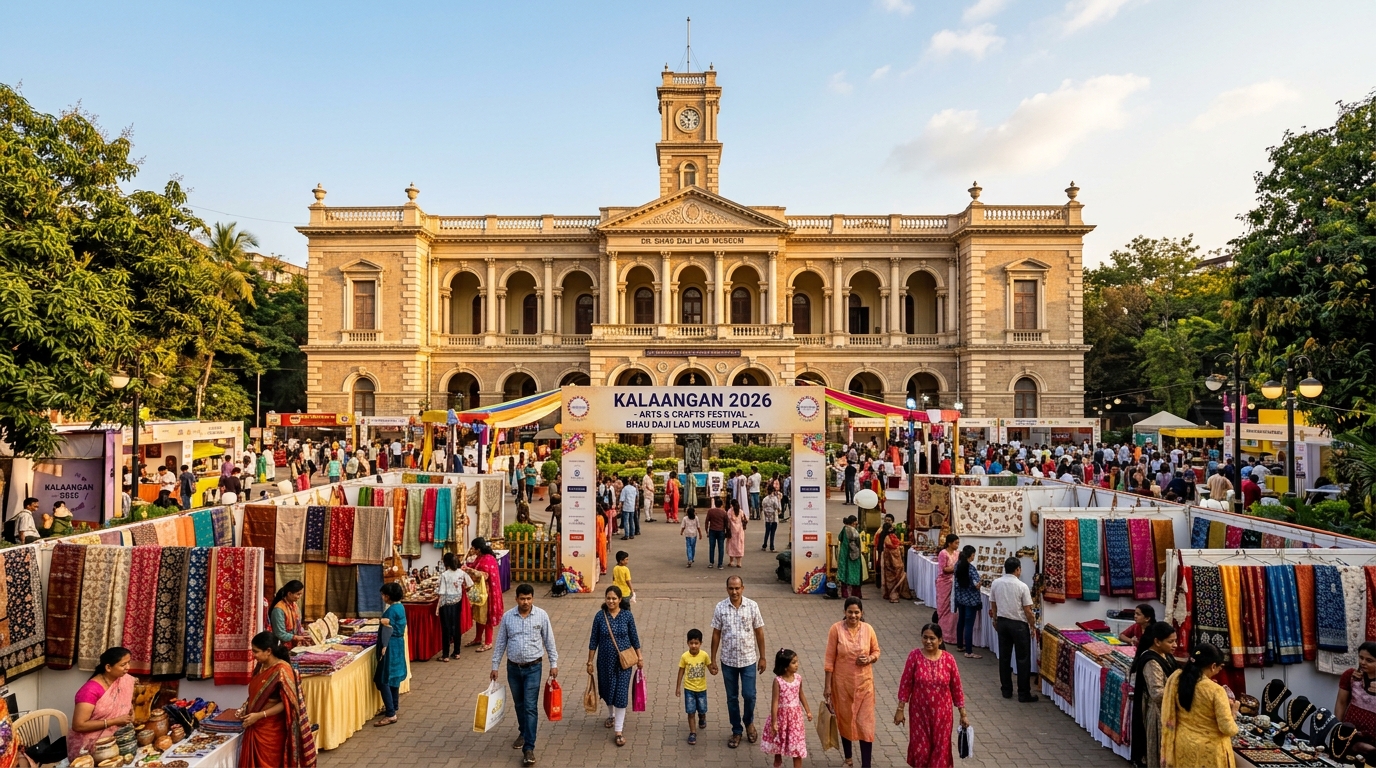
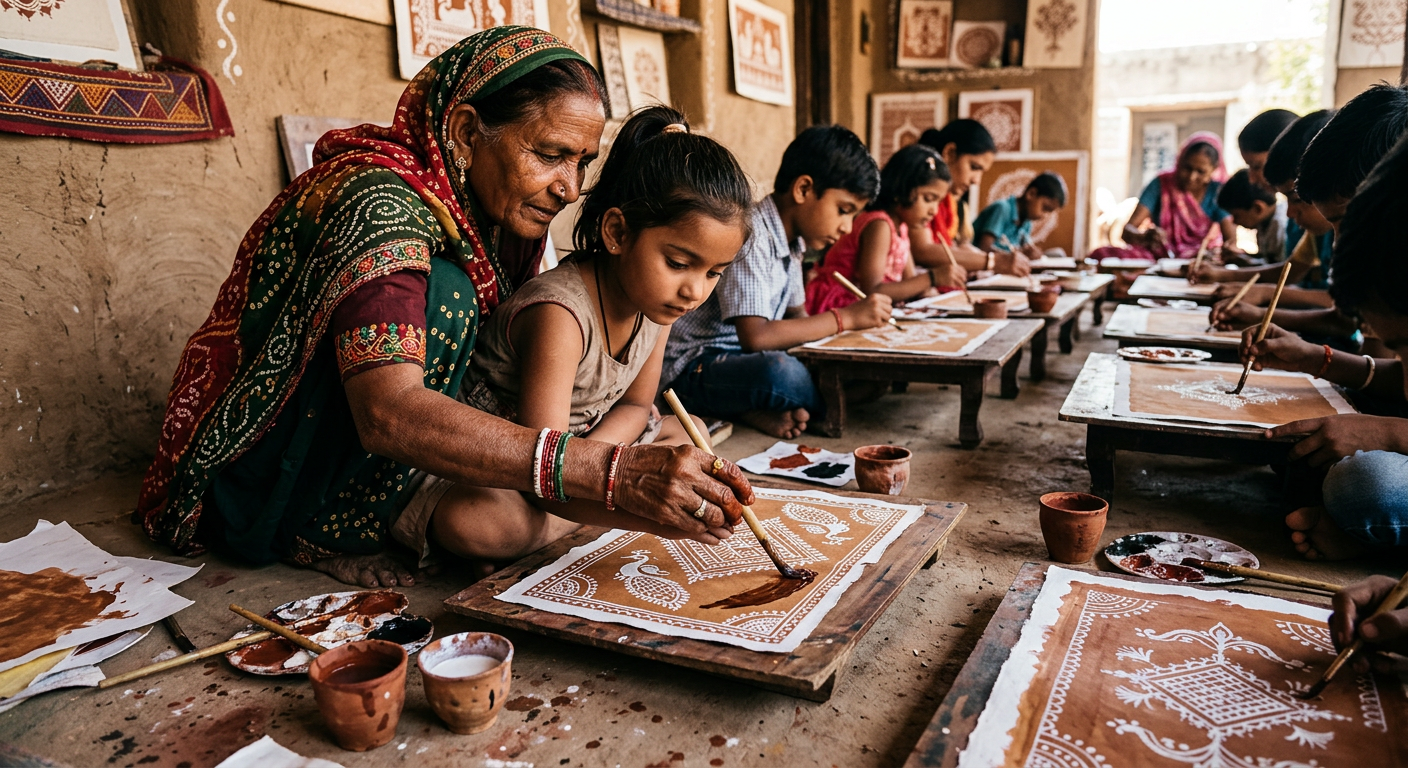
On a warm May afternoon in 2026, the neo-Palladian façade of the Dr Bhau Daji Lad Mumbai City Museum became the unlikely backdrop for a quiet revolution in India’s craft economy. Under the shade of the Museum Plaza, a Mandana artist from Rajasthan guided a young girl’s hand across a sheet of paper, translating ritual floor motifs into a take-home artwork. A few metres away, families drifted between stalls piled with Sohrai textiles, Sholapith flowers, and hand-beaten metal jewellery, their conversations punctuated by the rhythmic sounds of a potter’s wheel. This was Kalaangan 2026, a three-day art and design festival that returned to Byculla from May 22 to 24, consolidating its role as a museum-led platform for over 40 traditional and contemporary craft styles from across India. With free entry, nominal workshop fees, and a curatorial eye fixed firmly on lesser-known handicrafts, the event did more than sell products—it began to reposition an entire neighbourhood as Mumbai’s emerging heritage-design hub.
The Kalaangan Model: Free Entry, Paid Workshops, Deep Engagement
Kalaangan’s structural DNA, established in its 2024 debut and refined in 2026, rests on a deliberate access model. Entry to the craft fair is free and open to all, separating the market from the museum’s ticketed galleries and lowering the barrier for casual visitors, families, and zoo-goers who might never otherwise step into a museum precinct. Workshops, priced at around ₹200 per head with materials included, monetise deeper engagement. In 2026, sessions spanned Pattachitra, Gond, Mandana, Sohrai, and Sanjhi painting, Sholapith flower-making, contemporary clay doll-making, and wheel pottery. Free guest talks—including one on how technology and social media can accelerate growth within the crafts industry—and performances like Mallakhamb and Chitrakathi storytelling added layers of narrative immersion. This tiered structure creates demand on three levels: visual exposure at stalls, tactile learning in workshops, and intellectual connection through talks and performances, converting browsers into informed collectors and repeat buyers.
Surfacing India’s Lesser-Known Craft Traditions
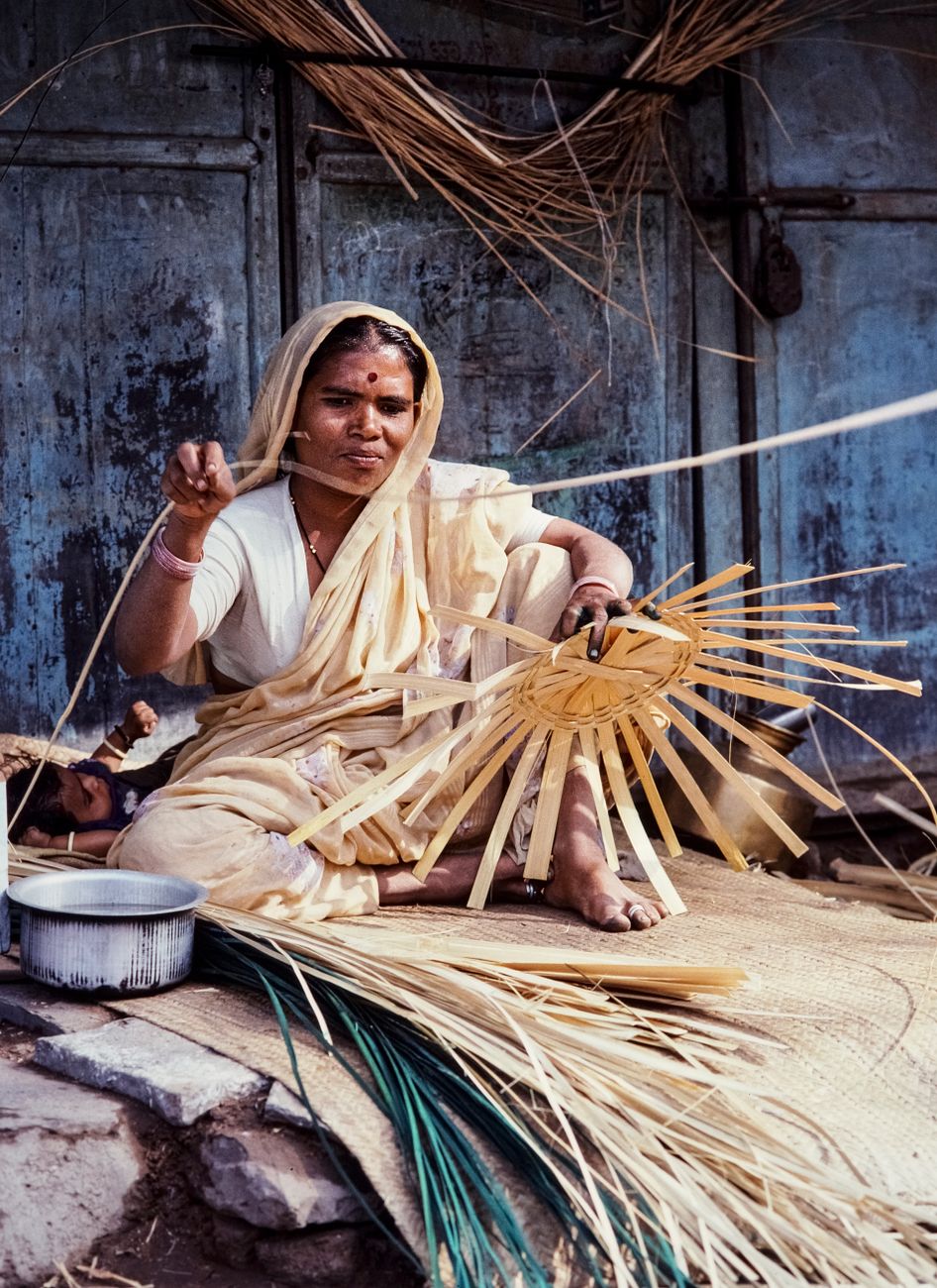
Where mainstream craft fairs in Mumbai often default to marquee textiles like Banarasi silk or Pashmina, Kalaangan deliberately foregrounds regionally contained, underrepresented traditions. The 2026 edition showcased Pattachitra narrative scrolls from Odisha and Bengal, Gond painting from Madhya Pradesh, Mandana ritual art from Rajasthan, Sohrai harvest paintings from Jharkhand, and Sanjhi paper-cut stencilling from Uttar Pradesh. Material-based crafts included Sholapith flowers from Bengal—delicate ivory-like decorations carved from plant pith—and Kuprkabi doll-making, a contemporary reinterpretation of clay craft blending sculpture with textile work. Chitrakathi, a Maharashtra tradition of painted storytelling scrolls accompanied by sung narratives, bridged visual art and performance. By placing these forms inside a respected museum rather than a generic flea market, Kalaangan adds cultural legitimacy and pricing power, shifting perception from ‘ethnic décor’ to living knowledge systems worthy of collection and commission.
Demand Creation: Beyond Impulse Buying
While hard sales data for Kalaangan 2026 remains internal to organisers EkiBeki and the museum, qualitative indicators point to a significant impact on demand for niche crafts. The repeat of the platform after 2024, expansion of workshop slots, and sustained social media buzz signal structural success. The museum’s leadership has explicitly framed heritage as an economic tool, arguing that institutions must connect preservation to livelihoods. Kalaangan operationalises this by stimulating immediate retail demand through high footfall and live demonstrations, but its deeper contribution lies in building informed, long-term demand. When a visitor spends an hour learning Sohrai motifs from a Jharkhand artist, they are more likely to commission a wall mural or order a textile piece later. The presence of design students, architects, and interior professionals—already drawn to the museum’s special project spaces and exhibitions—creates pathways to collaborative projects and bulk commissions that far exceed weekend retail value.
Byculla vs Kala Ghoda: Two Craft Economies, Two Neighbourhoods
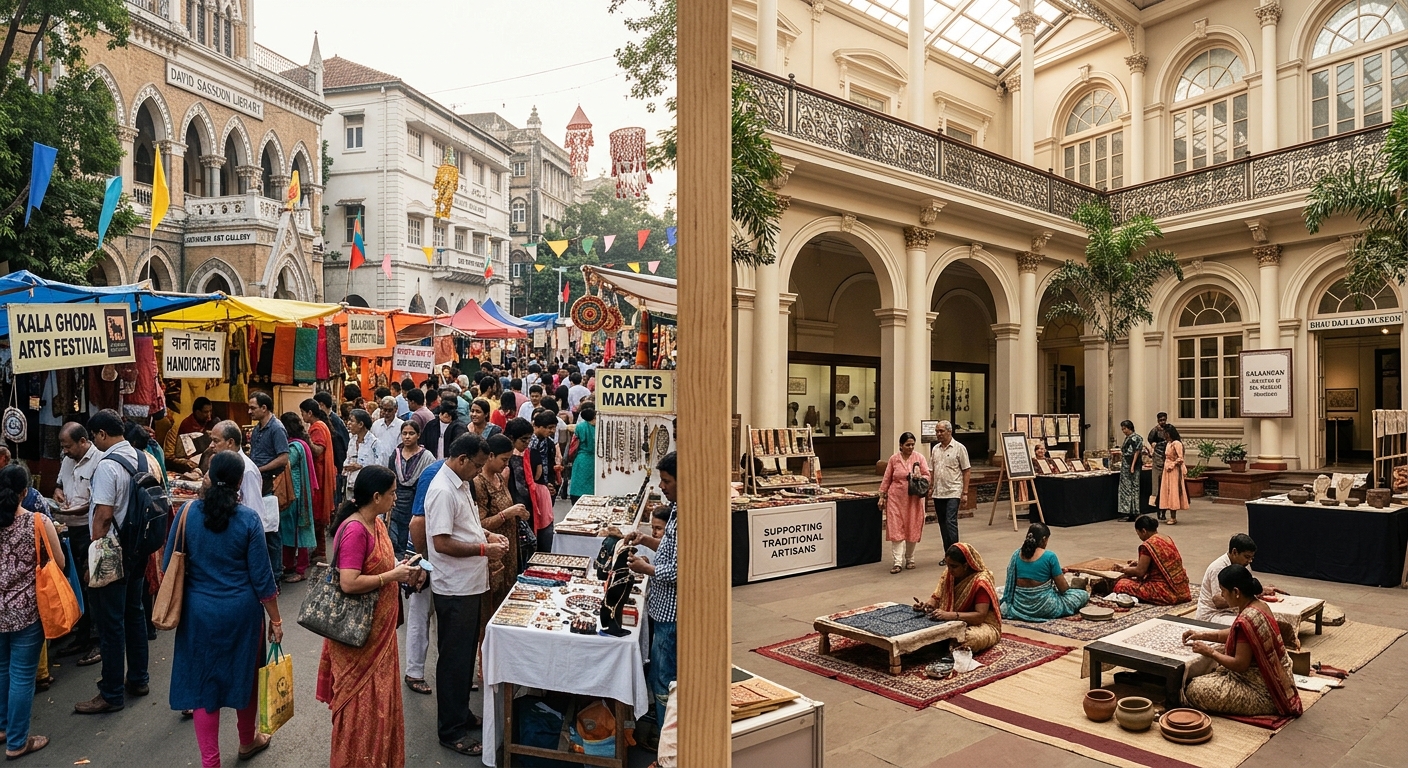
Mumbai’s established art district, Kala Ghoda, offers a bustling street-festival model during its annual Arts Festival—large-scale bazaars with high footfall, multiple sponsors, and a mix of artisans, designers, and resellers. Kalaangan operates on a fundamentally different logic. Anchored by a museum with curatorial oversight and a conservation mandate, it fields fewer stalls—40-plus craft styles—but with higher curatorial coherence and a strict artisan-first ethos. The atmosphere is slower, more educational, and deeply contextualised within art history and heritage discourse. Where Kala Ghoda amplifies an already mature creative precinct, Byculla is nascent. Kalaangan layers a design market onto a heritage-nature outing—the museum sits inside the Byculla zoo and botanical garden—creating a repeat ritual for families and aspirational visitors. It is, in essence, Byculla’s answer to the Kala Ghoda street fair, but with a museum-curated, heritage-first identity that prioritises depth over volume.
The Museum as Marketplace: A Global Trend Takes Root in Mumbai
Kalaangan sits within a broader international movement where museums become hybrid spaces blending exhibition, education, and ethical retail. At BDL Museum, this shift has been deliberate. Following a four-year structural restoration and full reopening, the institution renewed its mandate to treat heritage as an economic asset and to bridge conservation with contemporary creative livelihoods. The museum’s special project spaces regularly host contemporary artists and foundations, signalling openness to new design economies. Kalaangan extends this logic to the Museum Plaza, turning it into a temporary design market that blurs the line between museum gift shop, craft fair, and pedagogical lab. Crucially, it keeps artisans—not brands—at the forefront, offering a more responsible alternative to generic pop-up markets by foregrounding context, provenance, and fairer pricing. It is one of Mumbai’s clearest test cases for whether museums can become regular marketplaces for living craft traditions.
Supporting Artisans Beyond the Weekend
Organised in collaboration with EkiBeki, a non-profit dedicated to artisan market access and economic stability, Kalaangan embeds longer-term support structures. Being showcased at BDL Museum elevates artisans’ cultural standing and bargaining power. Leading workshops forces them to codify and articulate their process, transforming them into educators and opening future income streams through online classes and institutional engagements. The 2026 edition’s talk on technology and social media for crafts encouraged digital literacy, helping artisans leverage Instagram and e-commerce to sustain demand beyond the fair. Networks built on-site—between artisans from different clusters, and with designers, curators, and museum professionals—seed collaborations and repeat orders. Artisans returning from 2024 reported evolving product mixes in response to Mumbai audiences, and many saw repeat customers who first discovered their work at Kalaangan.
What Kalaangan Means for Mumbai’s Craft Economy
If Kalaangan recurs annually—and the 2026 edition strongly signals institutional commitment—its ripple effects could reshape Mumbai’s craft landscape over the next decade. Byculla, historically residential and industrial, is already gaining visibility as a weekend cultural destination. Spillover footfall to surrounding cafés, bookstores, and potential future design studios could mirror the clustering that transformed Kala Ghoda. The museum’s campus, combining heritage architecture, botanical gardens, and a zoo, offers a unique family-oriented draw that no other Mumbai cultural venue replicates. More broadly, Kalaangan demonstrates that museum-led craft markets can generate informed, sustainable demand for lesser-known traditions while anchoring neighbourhood regeneration. As other institutions watch this experiment, the model could proliferate, shifting where and how Mumbai residents discover, learn about, and buy Indian handicrafts and textiles—from high-street stores and generic melas to curated, context-rich museum experiences that honour both the object and its maker.
Sources
- EkiBeki supports artisans with market access and economic stability
- This platform Kalaangan returns with its second edition to celebrate unique Indian crafts this weekend in Mumbai
- Crafts Mela - DR. BHAU DAJI LAD MUMBAI CITY MUSEUM - Explore
- 'Heritage should be seen as an asset, it can be leveraged as an economic tool'
- DR. BHAU DAJI LAD MUMBAI CITY MUSEUM - Home
- Revamped Bhau Daji Lad museum reopens after four years
- 10 years after revamp, Mumbai's Bhau Daji Lad museum continues to give glimpse of history
- Mumbai's oldest museum, Bhau Daji Lad in Byculla reopens with renewed glory
- Upcoming exhibition | EkiBekiAssociation
- Kalanand 2024: This art exhibition in Mumbai highlights a ...
- Collections Stories