From CBD to Hoskote: How Townships and Metro Are Reshaping Bengaluru’s Lifestyle
Large townships and the Blue Line metro are shifting Bengaluru’s social scene to Hoskote, Yelahanka and Varthur. Explore the real estate and F&B future.

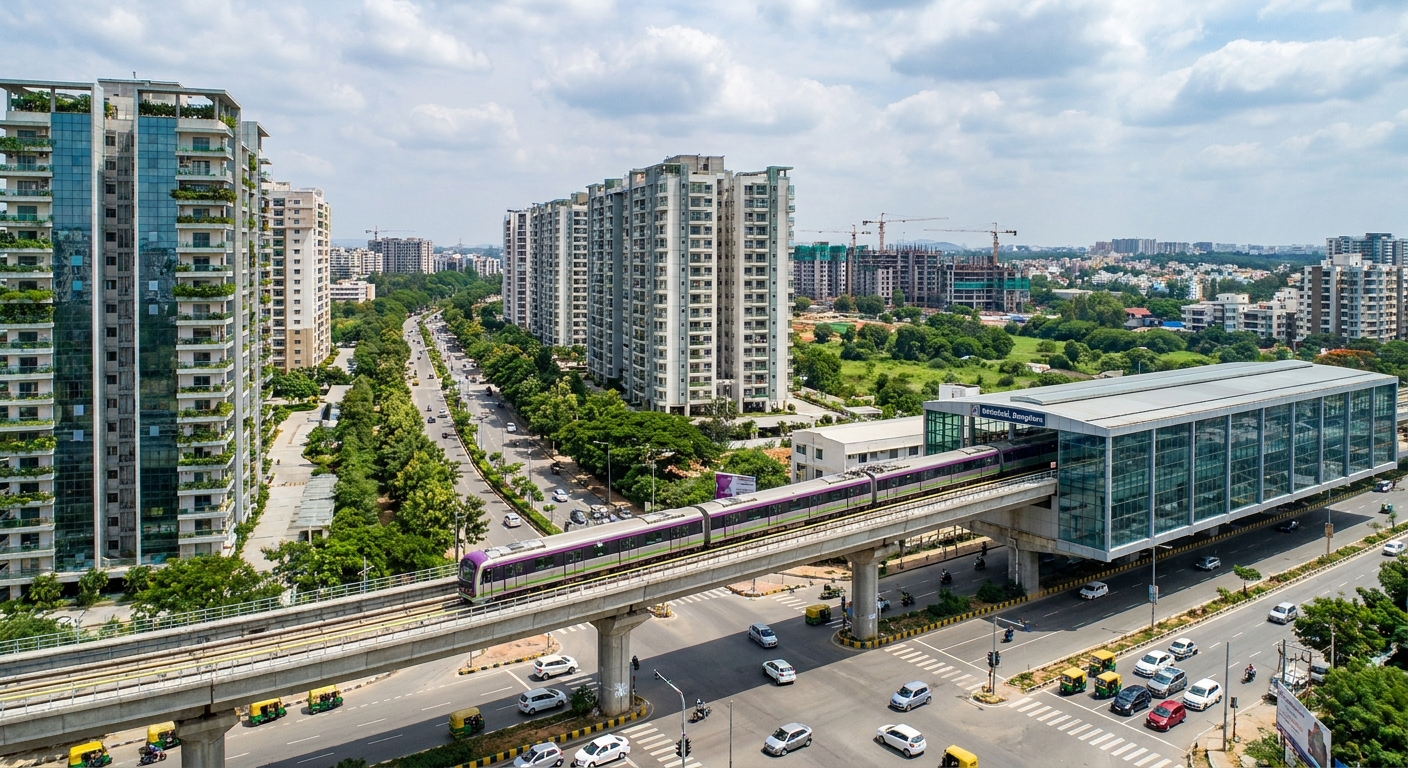
A Friday Evening in 2035: Hoskote Toll, Not Indiranagar
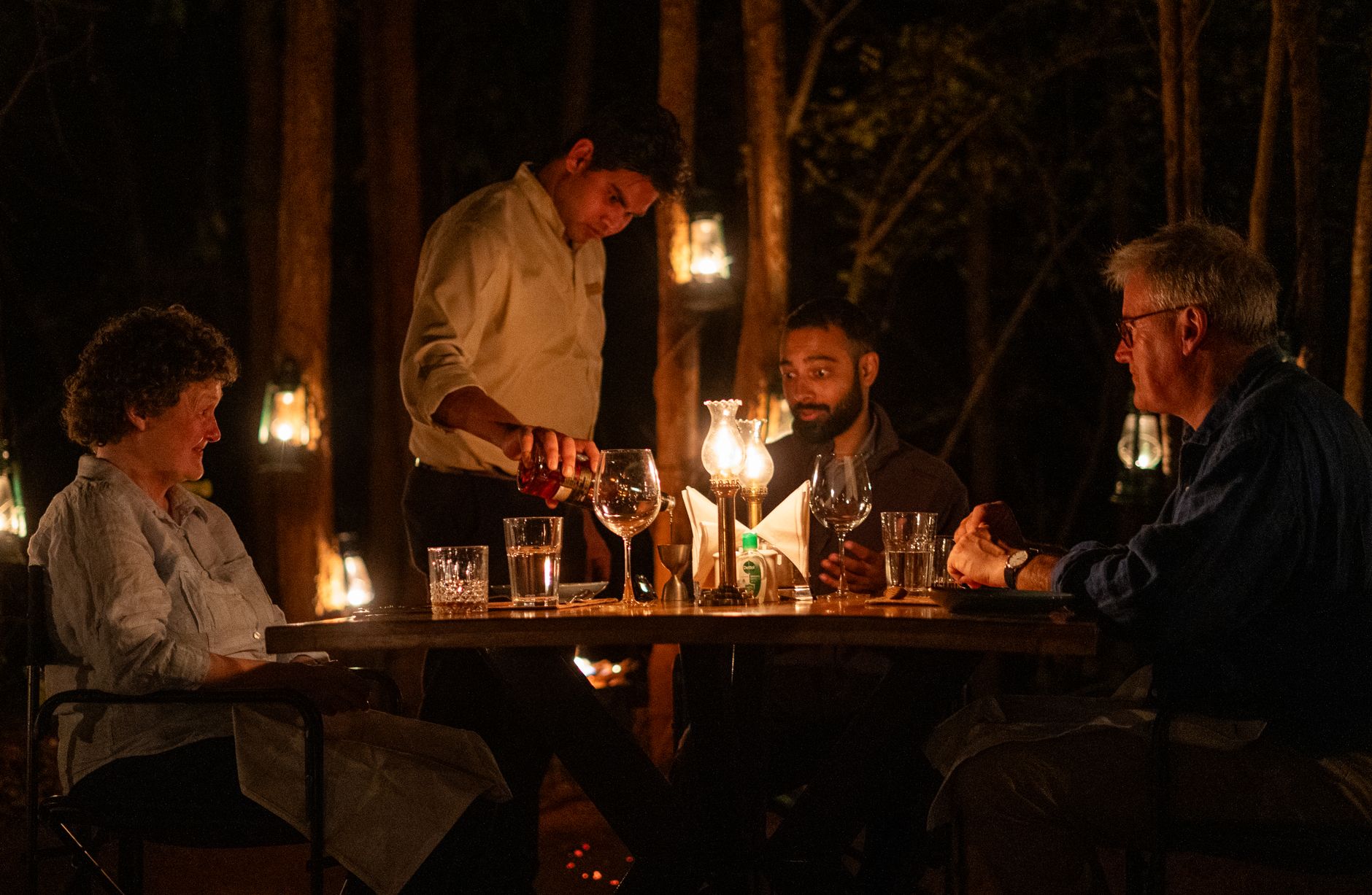
Imagine a Friday evening a decade from now. A young couple, both tech professionals, step out of their apartment in a 300‑acre township near Hoskote Toll. They walk past a landscaped courtyard to a café on the high street just outside the gate, where friends are already gathered around a table. The chatter mixes with the hiss of a coffee machine, and the glow of the city’s new Blue Line metro is a short ride away. This scene isn’t a fantasy—it’s the logical endpoint of three forces now converging: mega townships, metro expansion, and a residential gravity shift that is pulling Bengaluru’s lifestyle map outward. The question for homebuyers, investors and urban observers is no longer whether the city will expand, but where exactly the next Indiranagars and Koramangalas will sprout.
The Big Shift: From Old Suburbs to New Corridors
Bengaluru’s densest lifestyle clusters—100‑foot Road, Koramangala, Whitefield—grew where three ingredients converged: affluent residents, job hubs and good accessibility. Today, the same logic is replaying along new infrastructure corridors. The Economic Times recently identified eight residential growth corridors for 2026, anchored by IT clusters and large land parcels, with premium high‑rises and gated communities aimed at families and professionals. These are not speculative fringes; they are the backbone of the city’s next phase. The Blue Line metro, a 58‑km corridor from Central Silk Board to the airport, is the linchpin. By the end of 2026, the 19‑km stretch from Silk Board to KR Puram is targeted to open, followed by KR Puram–Hebbal by late 2027 and the airport link around mid‑2027. This will shrink travel times drastically, making northern and eastern belts viable for daily social life.
Hoskote and Sobha One World: A 300‑Acre Test Case
On Old Madras Road, near the Hoskote Toll, Sobha One World is taking shape as one of the city’s largest single‑location residential developments. The master plan covers 300 acres, with Phase 1 alone spanning about 48 acres and delivering roughly 3,484 apartments across 14 towers, with a mix of 1 to 4 BHK units. Possession is planned in stages starting around December 2032. Positioned just off NH‑75 and about five minutes from the Satellite Town Ring Road, the township is designed as a self‑contained mini city, with internal retail, community spaces and schools. While the initial commercial mix will be functional—supermarkets, pharmacies, chain coffee—the presence of thousands of middle‑ to upper‑middle‑income households in one gated environment creates a powerful latent demand. Once the population matures through the 2030s, the service roads and STRR junctions are likely to see independent cafés, craft beer bars, boutique gyms and co‑working spaces, mirroring the evolution of Whitefield a decade earlier.
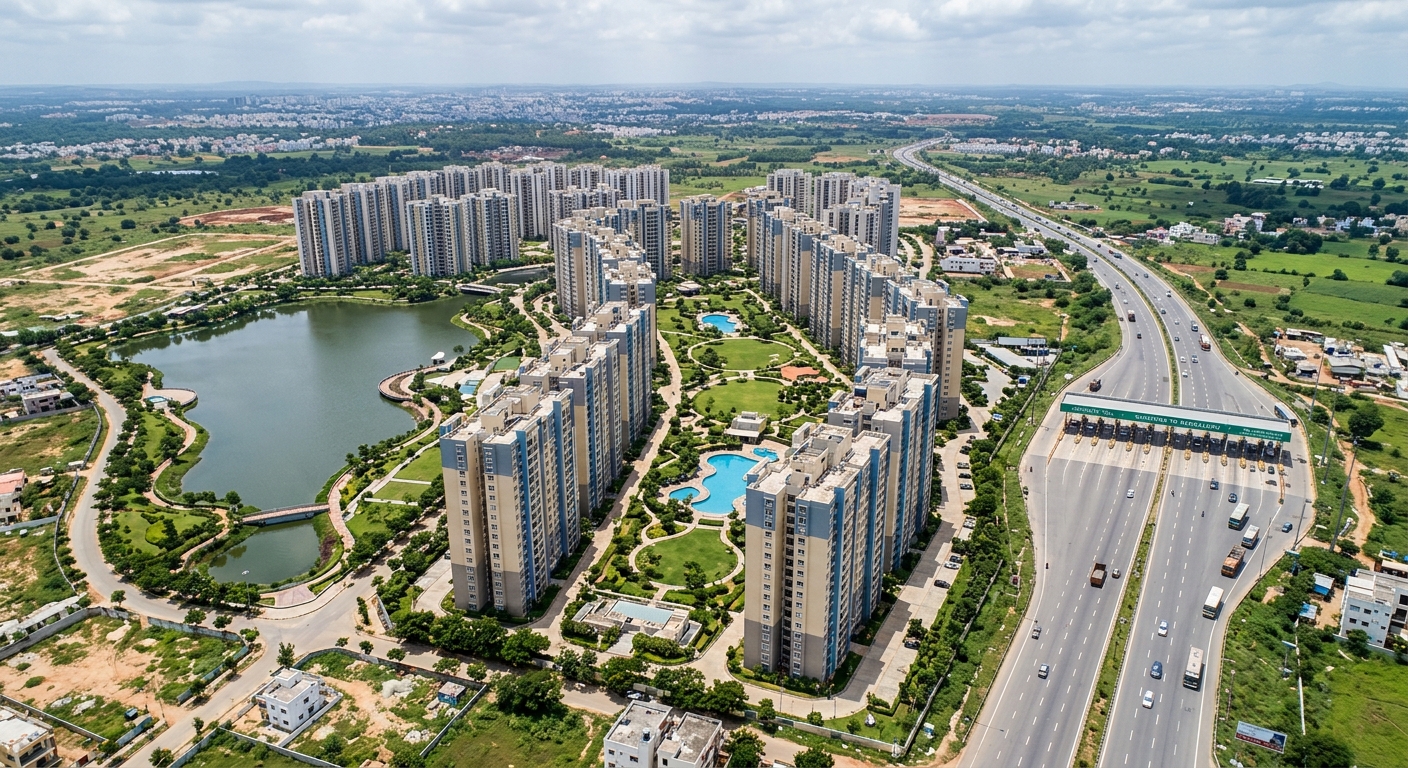
Large-scale townships like Sobha One World are creating self-contained residential catchments that will drive future lifestyle demand.
Yelahanka–Jakkur: The North’s Urban Growth Belt
The Yelahanka–Jakkur belt is described by analysts as North Bengaluru’s urban growth belt, with premium high‑rises and township‑style developments aimed at IT professionals and families. The Blue Line dramatically alters this corridor’s prospects. The KR Puram–Hebbal stretch, targeted for December 2027, will connect the area to the ORR IT clusters, while the Hebbal–Airport link will put the airport a short ride away. This dual connectivity is already attracting airline and tech professionals who want a single location with access to multiple job hubs. Over the next decade, Yelahanka New Town and the lakesides around Jakkur are poised to develop high streets with cafés, bars and co‑working spaces. The transformation will likely resemble the shift that turned Whitefield from a distant suburb into a self‑sustaining social hub, only with better air quality and more master‑planned infrastructure.
Sarjapur–Varthur: Where F&B Is Testing the Waters
The Sarjapur–Varthur corridor connects the ORR/Sarjapur tech cluster with Whitefield, and has seen rapid apartment and villa development. Lifestyle infrastructure is still catching up, but independent cafés are starting to treat this stretch as a viable market. Helen & Lorena’s Place on Sarjapur–Varthur Road is a recent example, signalling that entrepreneurs see a resident base large enough to support neighbourhood cafés. As gated communities fill up, the natural next step is boutique bars, chef‑led restaurants and hybrid spaces—co‑working cafés, art studios with smoothie bars—catering to remote workers and young families. This corridor is a classic ‘early adopter’ opportunity for F&B investors who remember how Indiranagar’s quiet residential streets turned into dining destinations over a few years.
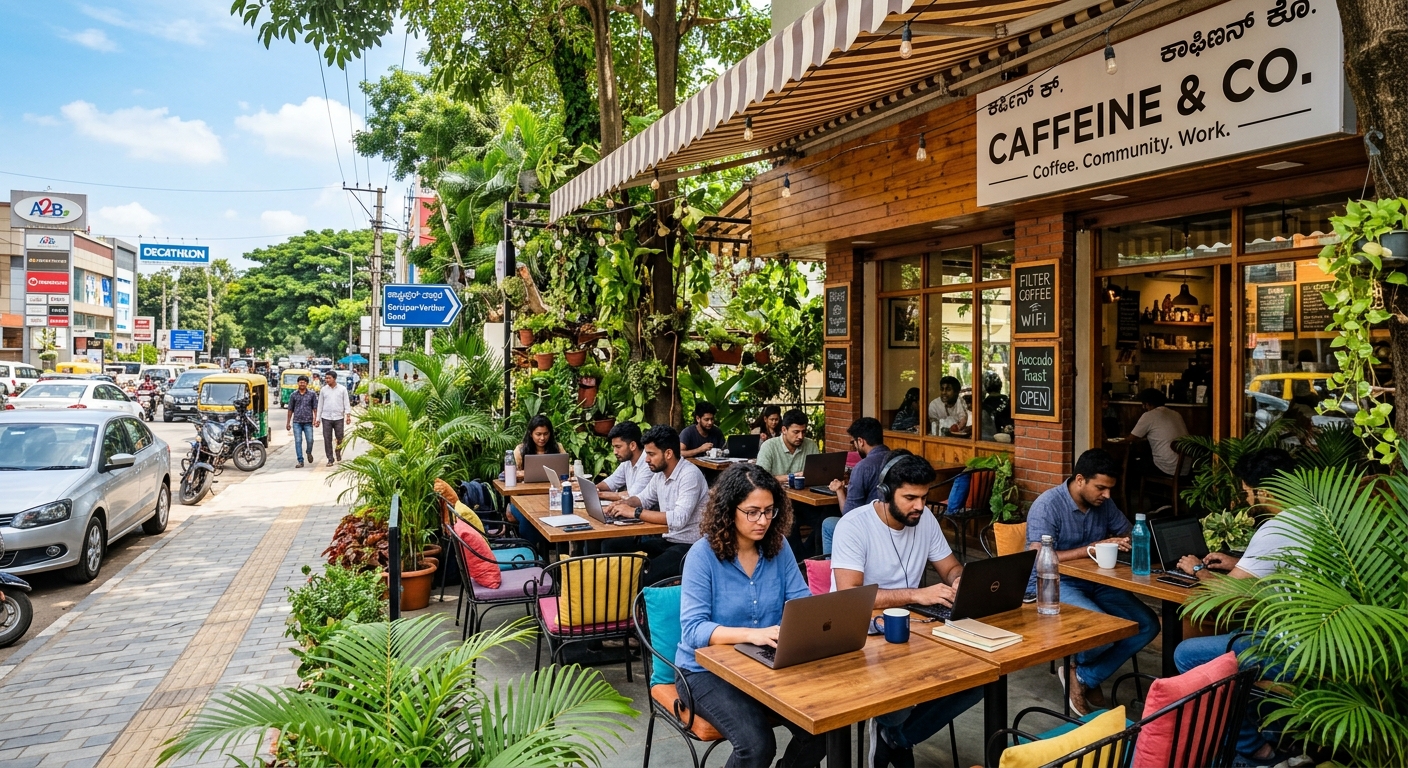
Independent cafés like Helen & Lorena’s Place are early signs that the Sarjapur-Varthur corridor is turning into a social destination.
The Township Logic: Captive Catchments and Curated Retail
Large townships like Sobha One World are not just housing projects; they are demand aggregators. By concentrating thousands of households in a walkable, gated environment, they create a captive audience for retail and services. The internal high streets often start with chains and daily needs, but the spillover effect is significant. Once a certain density is reached, approach roads and nearby junctions become prime locations for standalone cafés, bakeries, and even microbreweries. For homebuyers, this means the lifestyle value of a property is not just the apartment but the ecosystem that emerges around it. For investors, early acquisition of high‑street commercial parcels near township gates can capture outsized long‑term appreciation.
Metro Logic: Shrinking Distance to the New Suburbs
The Blue Line will fundamentally redraw Bengaluru’s mental map. When the Silk Board–KR Puram stretch opens by end‑2026, the travel time from the ORR employment zones to the Old Madras Road belt will drop drastically. The KR Puram interchange will become a powerful node, connecting the Whitefield–Hoskote axis to the wider network. For Yelahanka–Jakkur, the Hebbal–Airport link means that someone living in the north can work in Manyata Tech Park, catch a flight, and still be home in time for a dinner reservation at a lakeside café. This kind of frictionless connectivity is exactly what turned areas like HSR Layout into social hubs, and it is now being extended to the northern and eastern peripheries.
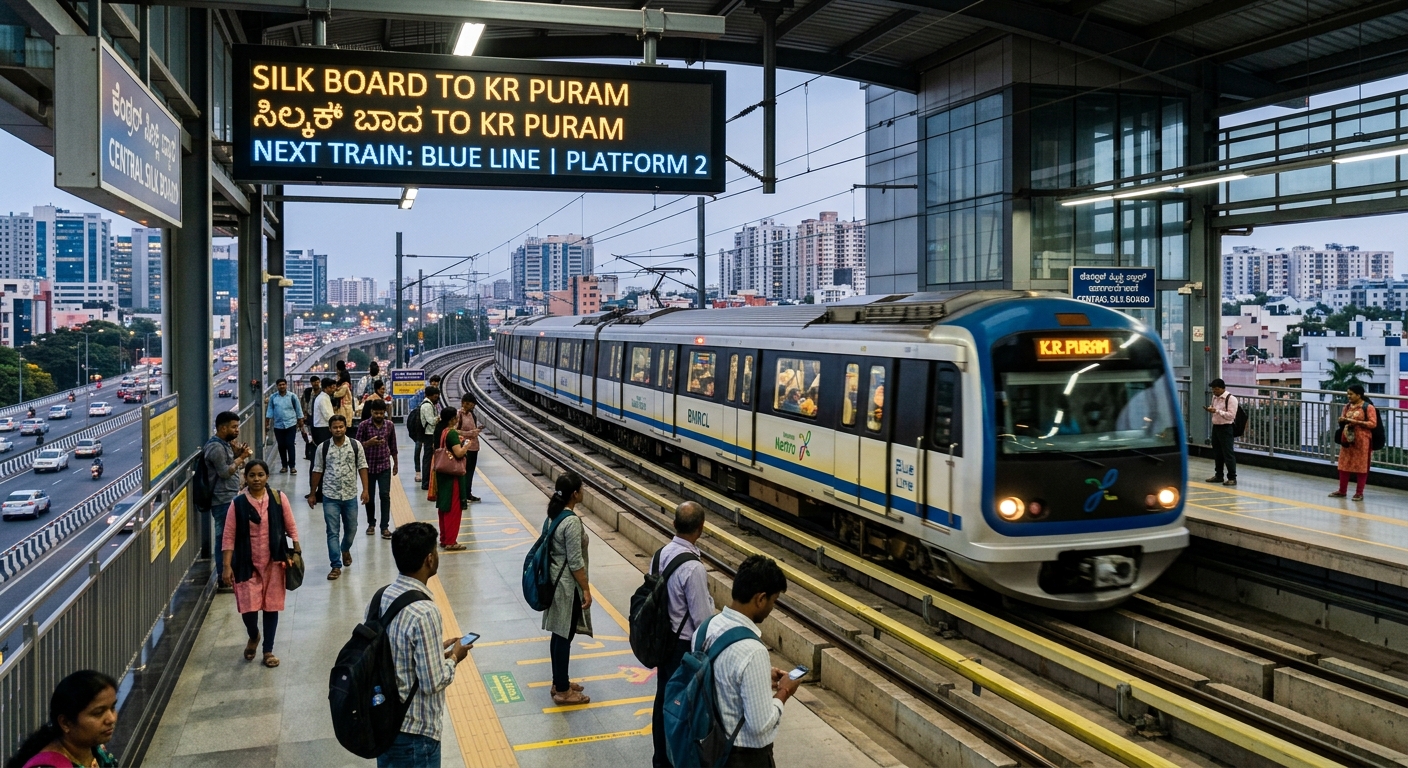
The Blue Line will connect the ORR IT corridor to north and east Bengaluru, reshaping where people can live and socialise.
Winners, Risks and Timelines for Homebuyers and Investors
The upside is clear: homebuyers who enter Hoskote, Yelahanka fringe pockets or Sarjapur–Varthur early can benefit from lower price points and the potential for lifestyle catch‑up. Investors in retail and F&B spaces can ride the wave of population growth and infrastructure delivery. However, risks remain. Metro and township timelines are long; Phase 1 of Sobha One World won’t start handing over until 2032, and Blue Line milestones have already been staggered. Local infrastructure—water, sewage, last‑mile connectivity—may lag, and a concentration of similar high‑rise supply could delay the emergence of distinctive, independent cafés and bars. The most prudent strategy is to view these corridors as a 10‑year play, not a quick flip, and to monitor on‑ground amenity build‑out as closely as apartment prices.
Reading the Coffee Grounds: A 2035 Lifestyle Map
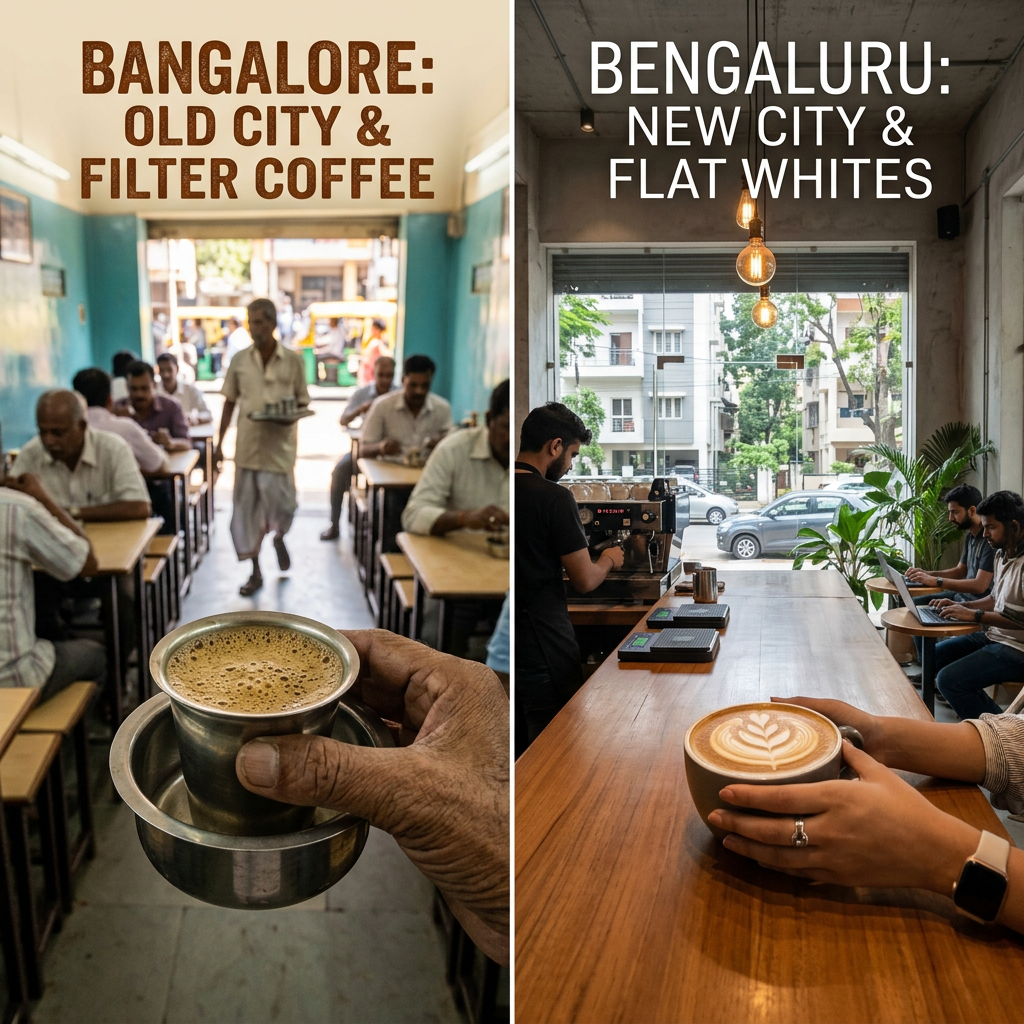
By the mid‑2030s, Bengaluru’s social scene will be polycentric. The 12th Main Indiranagar will still thrive, but new hubs will have matured: a cluster of lakefront cafés and co‑working spaces in Yelahanka–Jakkur, a high‑street buzz near the Hoskote Toll with residents walking from the township to a neighbourhood bar, and a series of destination restaurants along Sarjapur–Varthur Road. The catalyst in every case is the same: a large, connected residential base. For the homebuyer, choosing a property today means glancing at the future café map. For the investor, it means betting on the corridors where the next wave of urban life will unfold. The city is moving east and north—and its social life is moving with it.
Sources
Sobha One World Township | The 2026 Evolution of Suburban Living
Sobha One World Hoskote | RERA Approved | 1–4 BHK from ₹1.10 ...
Sobha Project Near Old Madras Road (OMR) | The 2026 Suburban ...
Sobha New Project in Hoskote: Premium Homes Launching in 2026
Sobha 300 acre township Hoskote - Sobha One World Mega Launch
Frequently Asked Questions
Is Hoskote a good place to buy a home in Bengaluru?
Hoskote is emerging as a residential frontier, anchored by massive townships like the 300‑acre Sobha One World and improving connectivity via NH‑75 and the Satellite Town Ring Road. While the metro does not reach Hoskote directly, the Blue Line’s KR Puram interchange will shrink commute times to IT hubs. Homebuyers should view it as a long‑term play, with lifestyle amenities maturing through the 2030s.
Will the Blue Line metro increase property values in Yelahanka and Jakkur?
Yes, the Blue Line is expected to significantly boost property values in Yelahanka–Jakkur. The KR Puram–Hebbal and Hebbal–Airport stretches will provide fast access to ORR tech parks and the airport, making the corridor attractive for professionals. This infrastructure lift, combined with large‑scale township projects, is likely to create a premium residential belt with strong rental demand.
Which new Bengaluru areas will have more cafés and nightlife by 2030?
By 2030, the Sarjapur–Varthur corridor, Yelahanka–Jakkur lakeside, and the approach roads to Hoskote townships are likely to see a surge in cafés, bars and co‑working spaces. The pattern follows the same trajectory as Whitefield and Indiranagar: once a critical mass of residential density is reached, independent F&B brands follow. Early entrants like Helen & Lorena’s Place on Sarjapur–Varthur Road are already testing the waters.
What are the risks of investing in emerging lifestyle corridors?
Key risks include delayed infrastructure delivery—the Blue Line has staggered milestones reaching into 2027, and mega‑township possession timelines stretch into the 2030s. Local civic amenities like water and road networks may lag, and an oversupply of similar high‑rise apartments could slow the emergence of distinctive F&B venues. Investors should adopt a 7‑10 year horizon and track on‑ground amenity development closely.
How do large townships influence the local café and bar scene?
Large townships create a captive, high‑income resident base, which initially supports functional retail and chain coffee shops. As the population grows, the spillover effect leads to independent cafés, bars and boutique retail on surrounding roads. This pattern has already played out in Whitefield and is now repeating in Hoskote, Yelahanka and Varthur.