
Has Bengaluru Lost Its Soul? A Tale of Two Bangalores
Explore the soul of Bangalore through the contrast between heritage neighbourhoods like Basavanagudi and Malleswaram, and the booming IT hubs of Bellandur and Whitefield. Is the city losing its identity or reinventing itself?

Two Mornings, One City: Basavanagudi and Bellandur
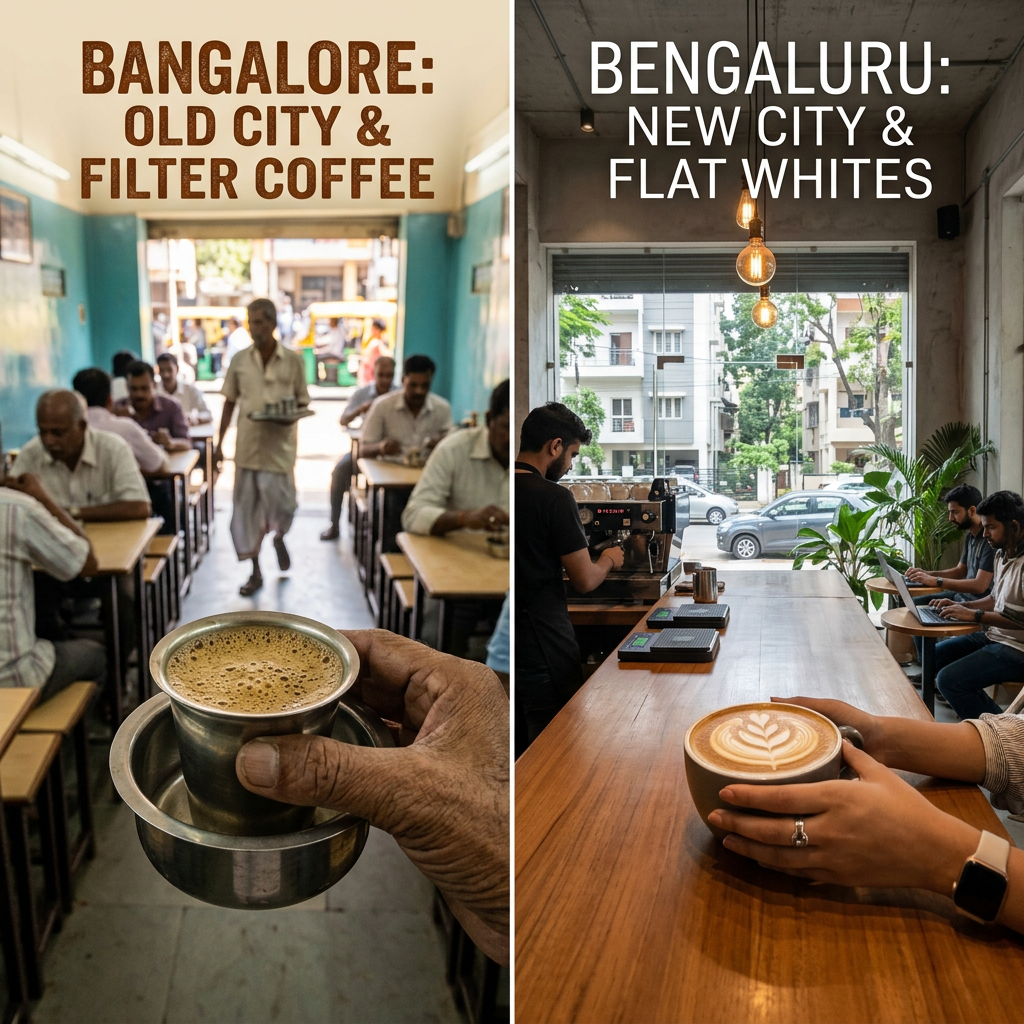
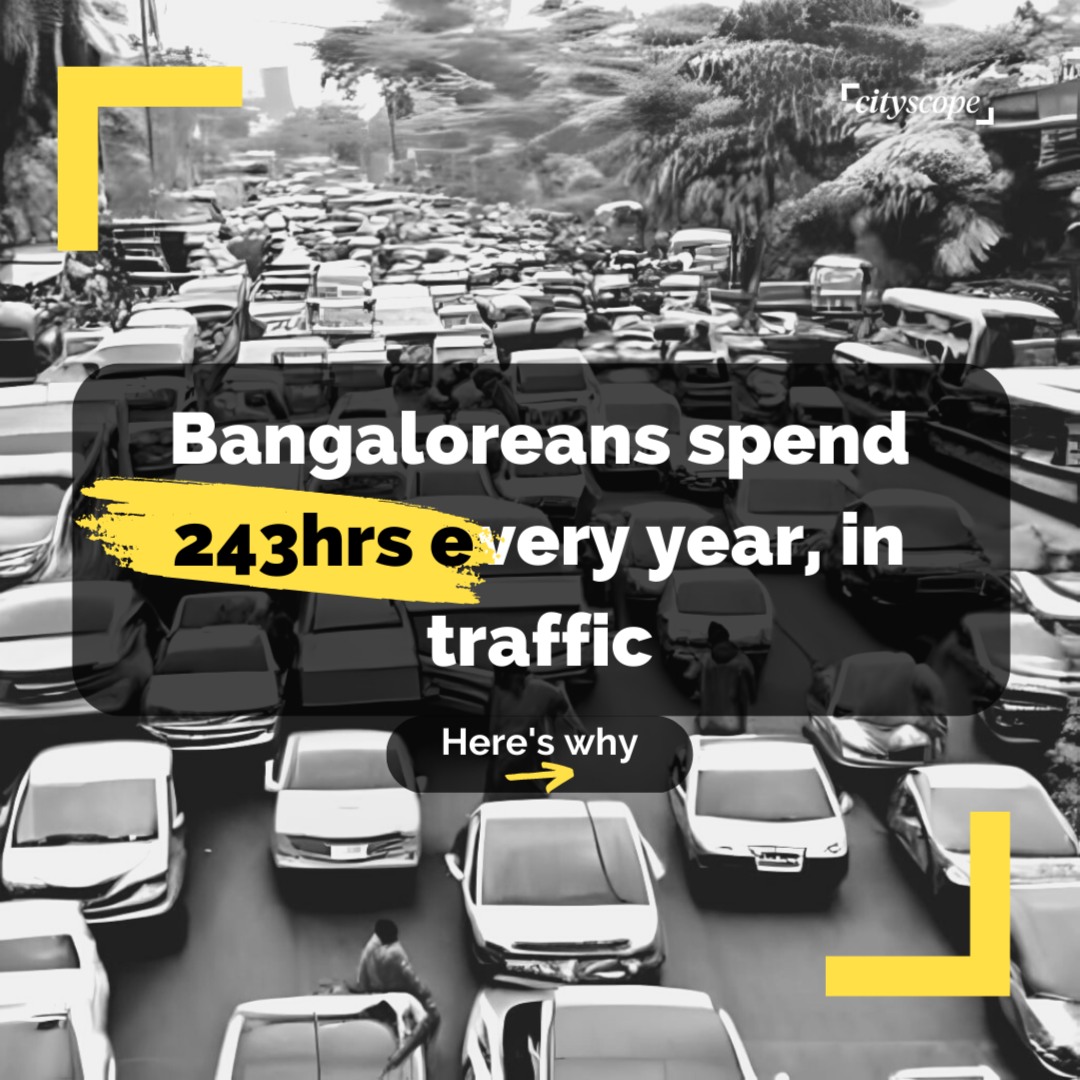
At dawn in Basavanagudi, the air smells of jasmine and wet earth. Flower vendors arrange garlands in Gandhi Bazaar as temple bells echo from the Bull Temple. An older man in a crisp white dhoti walks under dense rain trees on a narrow, cracked pavement, pausing to chat with a neighbour over a gate. Twenty kilometres away in Bellandur, the morning is a symphony of diesel and distant honking. Office buses crawl along the Outer Ring Road, past frothing Bellandur Lake. Young professionals clutching laptops queue at a café for takeaway flat whites before stand-up meetings. These parallel mornings encapsulate Bengaluru’s deepest identity crisis: has the city lost its soul, or has that soul simply migrated to new, unfamiliar forms?
The Birth of Old Bengaluru: Plague, Planning, and Trees
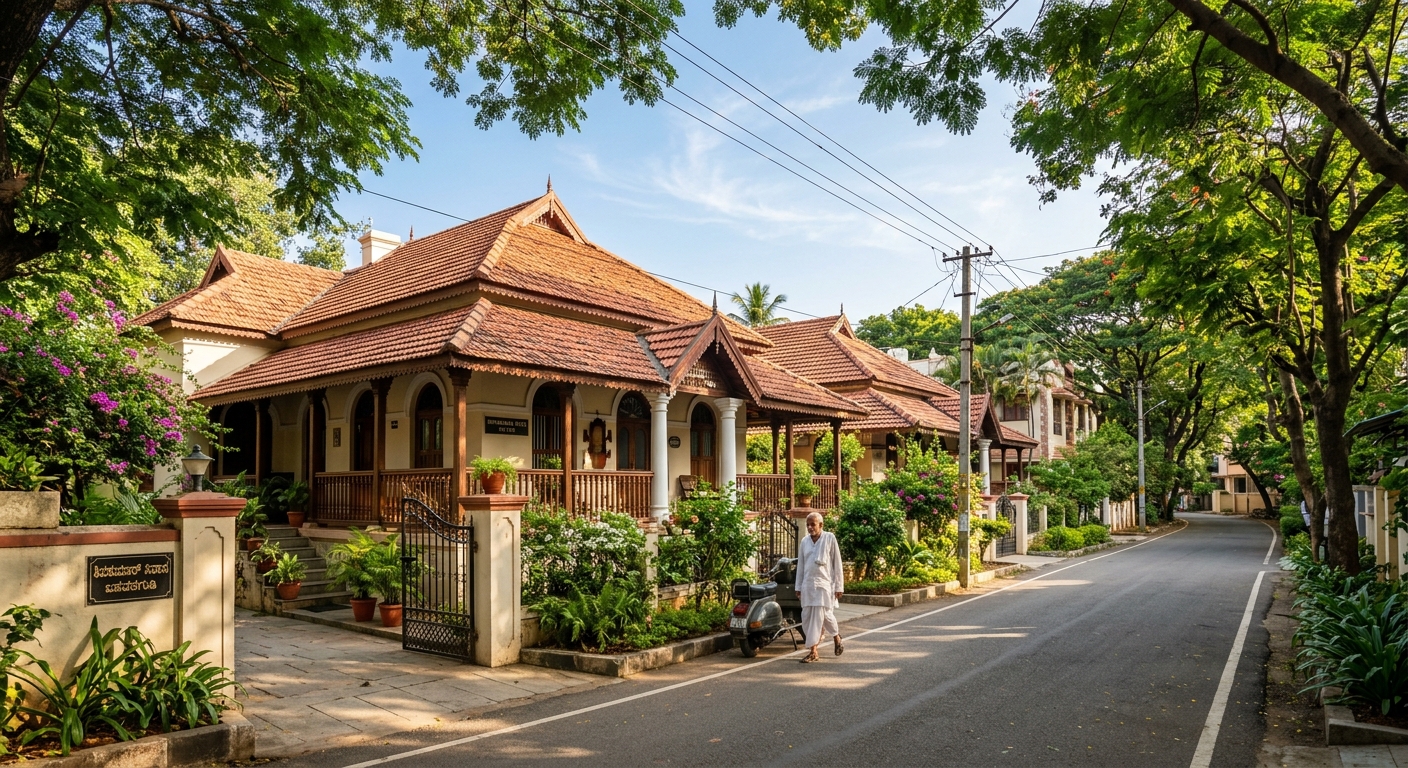
Basavanagudi and Malleswaram were not accidental neighbourhoods. After the plague of the 1890s, colonial administrators planned these extensions as healthier, tree-lined suburbs for the city’s elite. Laid out on a grid with wide streets, parks, and plots for independent houses, they were deliberately low-rise and green. Malleswaram took its name from the ancient Kadu Malleshwara temple; Basavanagudi from the iconic Nandi temple. These areas became home to predominantly Kannada-speaking professionals, with verandahs, courtyards, and trees like jackfruit and mango shaping a deeply communal street life. As a heritage walk organiser says, 'the architecture itself forced you to pause and connect — low compound walls meant you could see your neighbour’s jasmine blooming and ask for a few flowers.'
Verandahs, Markets, and the Architecture of Belonging
In old Basavanagudi, bungalows with Mangalore-tiled roofs, Burma-teak doors, and internal courtyards defined the streetscape. LBB’s visual documentation captures houses set back from the road, their gardens dense with fruit trees. Malleswaram’s Margosa and Sampige Roads were shady avenues where one could walk from temple to market to coffee shop without a car. Gandhi Bazaar remains a bustling hub of vegetable and flower sellers, while ‘Darshinis’ serve steaming idlis and filter coffee to a cross-section of the city. For decades, residents recall a life where children cycled to school, played cricket in vacant plots, and everyone knew each other’s names. Yet today, land values are driving the demolition of these bungalows for four- and five-storey apartments, a loss that fuels the ‘lost soul’ lament.
From Village Edge to IT Spine: The Rise of Bellandur and Whitefield
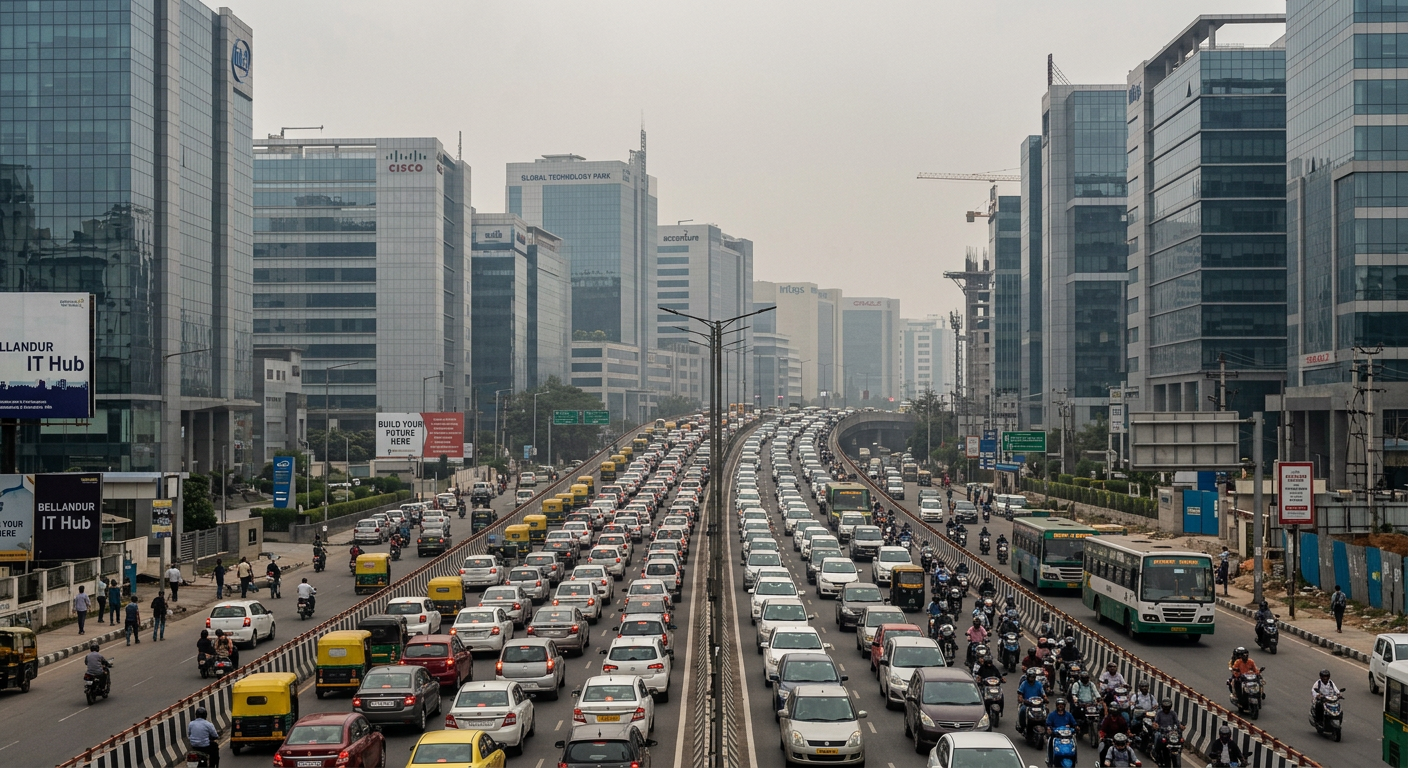
Whitefield, once a quiet Anglo-Indian settlement, and Bellandur, a village beside a vast lake, were transformed by the 1990s IT boom. The Outer Ring Road became the spine of glass-and-steel campuses, drawing thousands of migrant workers. Today, Bellandur is synonymous with high-rise apartments, office towers, and the surreal sight of toxic foam on the lake. Whitefield’s landscape is a patchwork of tech parks, malls, and gated villa communities. Life here revolves around office timings, shuttle buses, and meeting schedules. Unlike the old extensions, these corridors grew around employment nodes, with housing and retail following as afterthoughts. The result is a city of six-lane highways, identical apartment facades, and skywalks — a whole new visual grammar that many residents of old Bangalore find alien.
"Has Bengaluru Lost Its Soul?" The Debate That Won't Die
The Moneycontrol article capturing this viral debate distilled deep anxieties. Long-time residents argue the city they knew — quiet, green, neighbourly — has vanished under traffic, pollution, and anonymous high-rises. Instagram accounts like @bengaluruhappenings__ fuel this with Reels that juxtapose archival photos of leafy Malleswaram lanes with present-day shots choked by cars and Metro pillars. The comments reveal a collective grief, often edited to melancholy music. But younger professionals and migrants push back: for them, Bengaluru’s soul lies in its openness, job opportunities, and diversity, not in a particular architectural style. The debate, at its core, is about belonging and loss — but whose loss, and belonging to whom?
Whose Nostalgia? The Selective Memory of Old Bangalore
The romanticised ‘soul’ of old Bengaluru is tied to a certain class and linguistic majority. Basavanagudi and Malleswaram were historically upper and middle-class, Kannada-speaking enclaves. The nostalgia for cycling down quiet streets rarely includes the experiences of those who were never part of that milieu. Heritage experts note that even in the ‘idyllic’ past, these areas had less diversity than today’s mixed neighbourhoods. A long-time resident of Basavanagudi admits, 'It was beautiful, but we kept to ourselves. Now, my granddaughter’s friends are from all over India — that is a different kind of richness.' The ‘lost soul’ narrative often overlooks that the city is now more inclusive, even as it grapples with the pain of physical change.
Searching for Soul in Bellandur and Whitefield
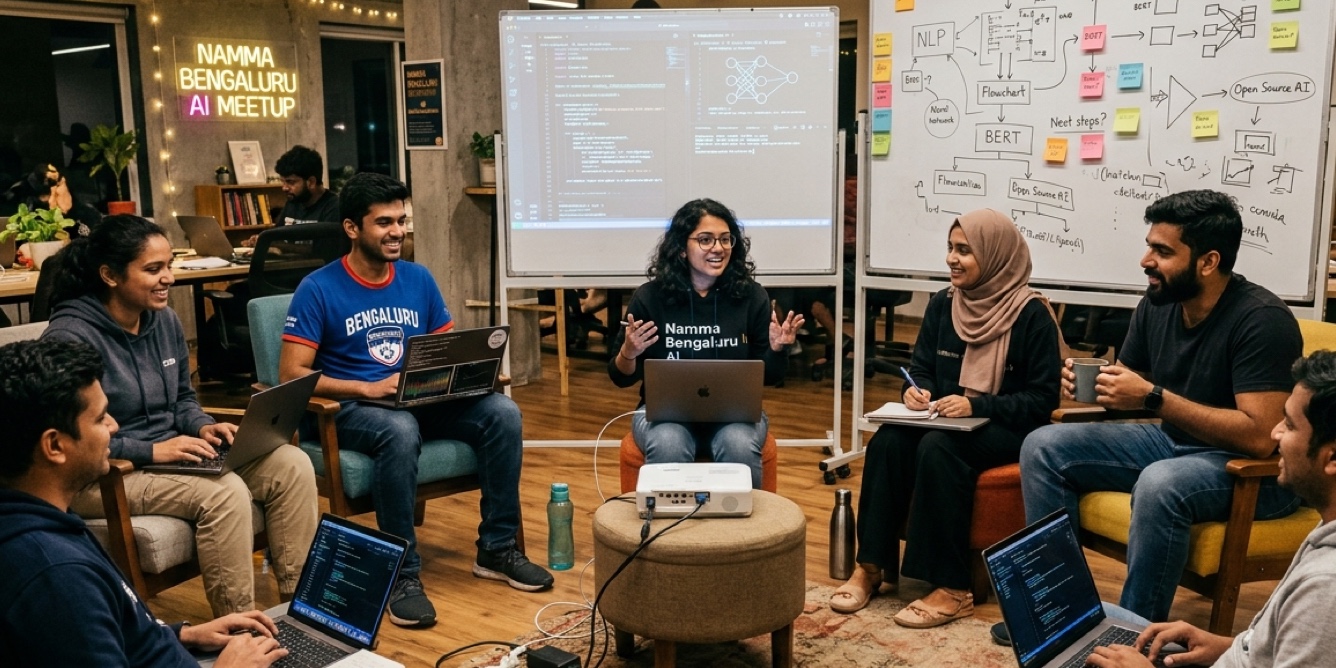
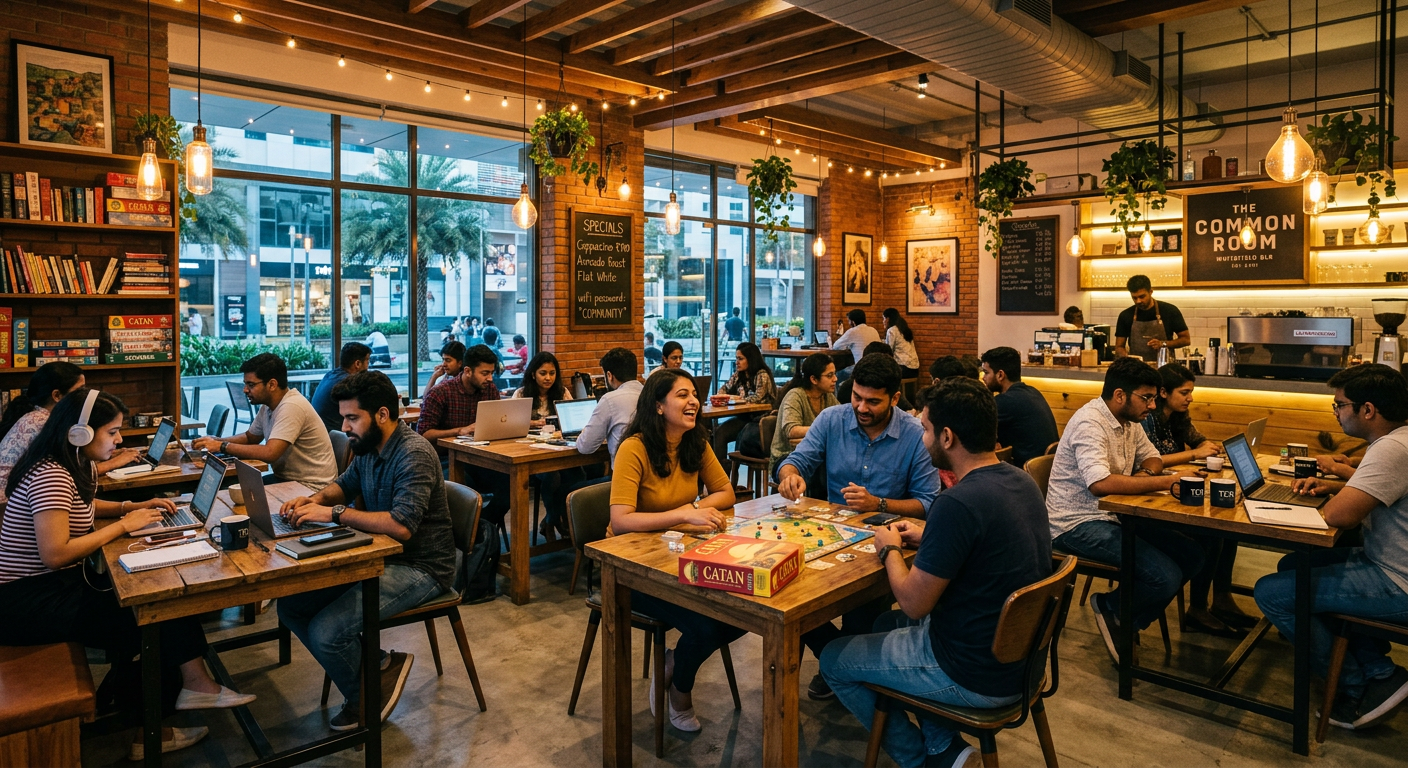
In the newer corridors, community doesn’t grow organically on street corners — it is manufactured indoors. Cafés and microbreweries become de facto living rooms, hosting open mics, quiz nights, and board game sessions. In gated apartments, residents’ associations organise cultural festivals, sports tournaments, and charity drives. WhatsApp groups buzz with car-pooling, book clubs, and parenting advice. A young techie in Whitefield says, 'I’ve never spoken to my neighbour across the hall, but my running club meets at 5:30 am every day — that’s my Bangalore.' These spaces lack the historical depth of a Gandhi Bazaar, but they foster a distinct, intentional sense of belonging that is just as real for those who call it home.
Environmental Wake-Up Call: Bellandur Lake and Beyond
No symbol captures the ‘lost soul’ narrative more viscerally than Bellandur Lake. Once a source of fish and irrigation, it now churns with toxic foam and occasionally catches fire due to untreated sewage and industrial discharge. This ecological tragedy, alongside chronic flooding and traffic snarls, represents the failure of unplanned growth. Yet even old areas are not immune: trees fall for Metro alignments, heritage homes are razed for apartments, and infrastructure groans under pressure. As a city planner notes in Scroll’s neighbourhood mapping, Bengaluru’s ‘descent into chaos’ is a shared predicament, not one limited to the new corridors.
When the Two Bangalores Meet
On weekends, the two cities intersect. Young IT workers from Bellandur descend on Malleswaram for heritage walks, marvelling at century-old bungalows and eating bisi bele bath at old eateries. Old-timers' grandchildren work in Whitefield start-ups. A heritage walk organiser observes, 'Some of them come back with a new appreciation for their own neighbourhoods — they start asking why they can’t have a tree-lined street or a market they can walk to.' Others, however, feel like tourists in their own city. The growing middle ground suggests that coexistence is not only possible but already happening, one cup of filter coffee at a time.
An Evening Between Memory and Aspiration
At the Namma Metro station, a grandmother from Basavanagudi fusses over her grandson who has just returned from a job in Bellandur. She mourns the bullock carts that once ambled down her street; he talks of an upcoming hackathon. In this in-between space, Bengaluru’s soul is neither lost nor found — it is continuously being renegotiated. The city is a palimpsest, its layers of history and aspiration rubbing against each other. Perhaps its true soul lies not in preserving one version, but in embracing the messy, tender, and often painful process of change itself.
Sources
- The vintage houses of Malleshwara and Basavanagudi (aka Malgudi)
- The Old Houses Of Basavanagudi | Little Black Book, Bangalore - LBB
- Malleswaram and Basavanagudi | Old Bangalore City - YouTube
- Old Bangalore neighbourhood - Reviews, Photos - Basavanagudi - Tripadvisor
- Its the Malleswaram of South Bangalore - Basavanagudi
- List of neighbourhoods in Bengaluru - Wikipedia
- List of neighbourhoods in Bengaluru - Wikipedia
- Once upon a time, life as it was in Basavanagudi
- 7 Bangalore Localities that Bring Back Old World Charm
- The Coolest Neighbourhoods In Bangalore
- Charting Bengaluru’s descent into urban chaos through 14 neighbourhood maps
- Tracing neighbourhoods that emerged in the 1800s
- A beautiful neighborhood in the heart of old Bangalore – Malleswaram
- Old Bangalore areas: Bring Back Old World Charm - NoBroker
- Oldest area of the city?