
Between Filter Coffee and Flat Whites: Bengaluru's Social Media War Over a Lost Soul
A deep dive into the viral social media identity crisis. Has Bengaluru lost its soul to traffic and tech parks, or is it evolving? We explore Old Bangalore vs the new IT corridors, nostalgia for tree-lined streets, and the fight to save the city's spirit.
A City Arguing Over a Mirror
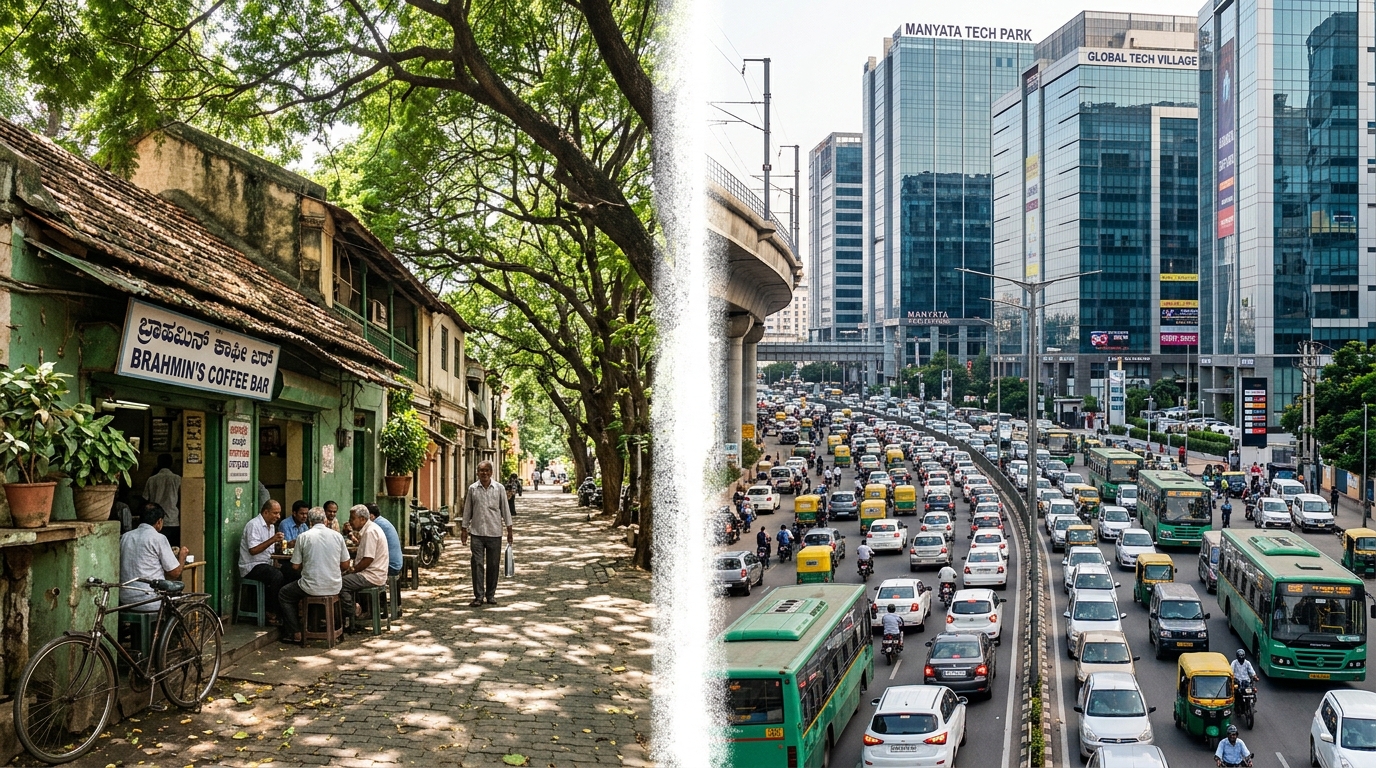
A recent post describing Bengaluru as a 'performative Silicon Valley' ignited a familiar firestorm online, tapping into a deep well of grief and defensiveness among its citizens. The phrase 'Bengaluru has lost its soul' has become shorthand for an emotional debate that transcends typical city planning. It is a raw, viral reckoning with identity, pitting nostalgic memories of a 'Garden City' against the concrete reality of a global innovation hub. This isn't just a conversation about potholes and traffic; it is a public negotiation over the city's very essence, asking whether a metropolis can host millions of new dreams without erasing the old ones.
The Digital Flashpoints of a Nervous City
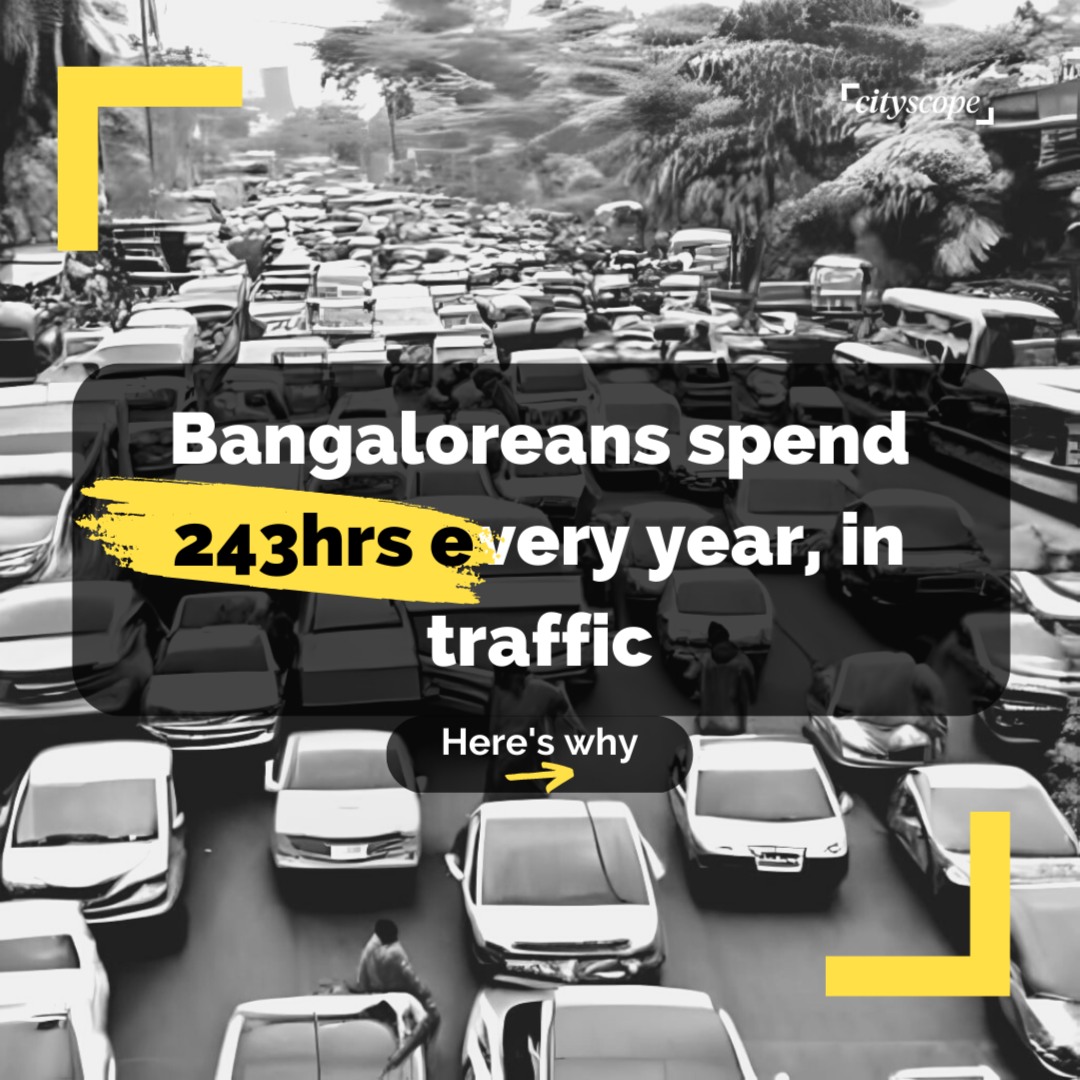
The narrative of decay is driven by highly specific, viral grievances. A frustrated resident's Reddit rant, 'Why living in Bengaluru has become irritable recently,' painted a visceral picture of daily life covered in a layer of dust. The user described 'cars caked in dust, packed metros, and constant construction' as the new normal. This sentiment was echoed in another viral post titled 'Bengaluru Has Had Enough, It’s Time to Stop Inviting More People,' which argued that the city, 'once called the Garden City of India,' can no longer handle the weight of corporate development and housing projects. These posts don't just complain about logistics; they mourn the loss of a sensory experience—the clean air, the uncluttered skyline, and the sense of peace that has been replaced by perpetual, irritable motion.
Mapping the Soul: The Leafy Lanes of Basavanagudi and Malleswaram
In stark contrast to the tech corridors, a counter-narrative locates Bengaluru’s true soul in its older residential pockets. A viral X debate sparked by user Nilisha Mantri insisted that 'Bengaluru is more than tech hubs,' writing off Outer Ring Road areas like Marathahalli and Whitefield as places 'where laptops live.' Instead, users pointed to the tree-lined streets of Malleswaram and Basavanagudi, the ritual of filter coffee, and the smell of idlis and dosas as the city's authentic heartbeat. These neighborhoods, alongside Jayanagar and JP Nagar, are characterized by a human scale—walkable markets, rain trees that form natural tunnels, and local eateries that have served generations. A pained post about Jayanagar’s 'lost soul' lamented the erosion of this quiet, close-knit community under pressure from chain outlets, capturing a grief that is as much about losing a sense of belonging as it is about architecture.
The Concrete Corridors: Life in Bellandur and Whitefield
If Jayanagar is mourned as a lost soul, the Outer Ring Road–Bellandur–Whitefield belt is often positioned as the symbol of the new, techno-centric Bengaluru. This is a landscape defined by glass-fronted tech parks, gated apartment complexes, and wide arterial roads clogged with vehicles. This is 'where laptops live,' a phrase that underscores the transient and functional identity of these neighborhoods, often perceived as economic zones rather than organic communities. Here, the café culture is inseparable from co-working, with spaces designed for productivity and aesthetics rather than idling. The pressure of hyper-mobility and constant construction defines the daily rhythm, leaving little room for the serene, rain-soaked pavements that haunt the nostalgia pages.
The Ghosts We Miss: Sparrows, Trees, and a Slower Time
Beneath the infrastructure complaints lies a profound sense of loss. A viral thread asking what has 'silently disappeared' from the city triggered a wave of longing for vanished sparrows ('gubbi'), open spaces, and dense tree cover. This ecological grief is striking; a widely shared post claims Bengaluru has lost 86% of its tree cover since 1973, explicitly framing this not just as an environmental crisis, but as a cultural one. The disappearance of greenery is equated with the disappearance of the city's soul. An old photograph of 1950s Bengaluru went viral by appearing as a 'paradise' of clean, spacious roads, while a 1980s photo of a leafy MG Road—later torn down for the Namma Metro—became a poignant symbol of what many call 'growing backwards.' The past is mourned not as a different time, but as a superior version of reality.
The Counter-Narrative: Innovation Is Not a Crime
Yet, for a significant portion of the city, particularly newcomers and young professionals, Bengaluru is not dying—it is evolving. Defenders of the new city argue that the tech ecosystem has opened up jobs, international exposure, and a vibrant cosmopolitan culture that is now integral to Bengaluru's identity. They see the café and nightlife scene, the start-up energy, and the global connectivity not as a 'performative' veneer, but as the authentic present. A Canadian influencer even stirred the pot by rejecting the 'Silicon Valley' tag entirely, arguing that Bengaluru’s chaotic fusion of tradition and tech is 'one of a kind' and shouldn’t be judged by Western analogies. From this perspective, reducing the city to its IT corridors is as blind as ignoring them; the city's identity is layered and resilient.
Filter Coffee and Flat Whites: The New Spaces of Belonging
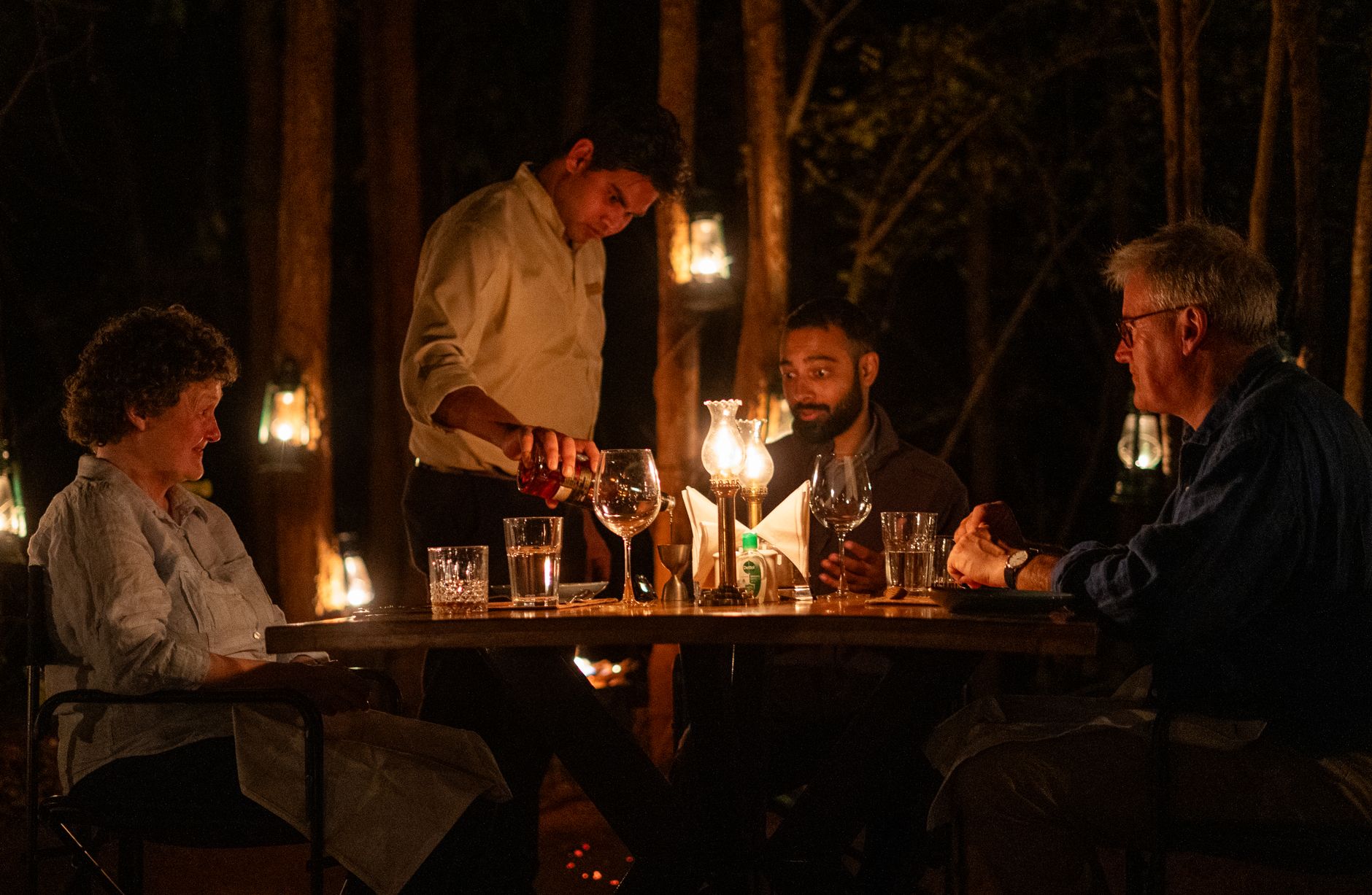
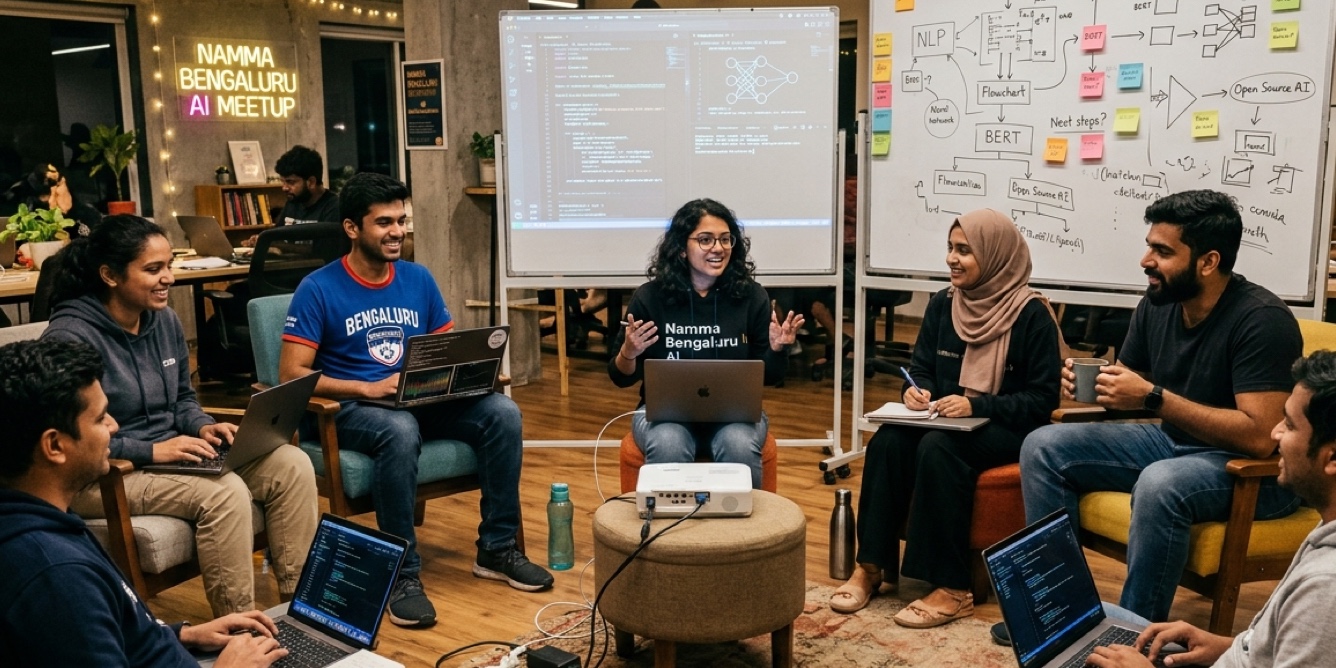
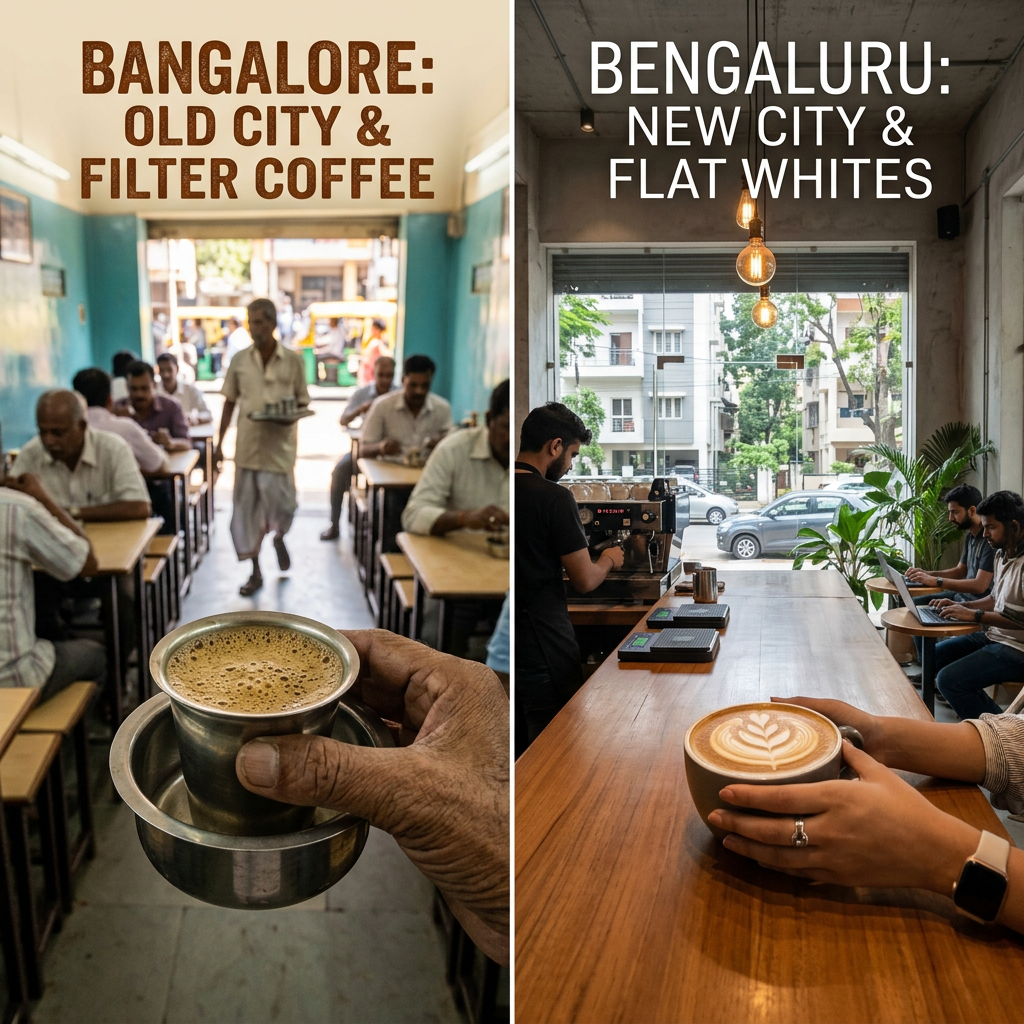
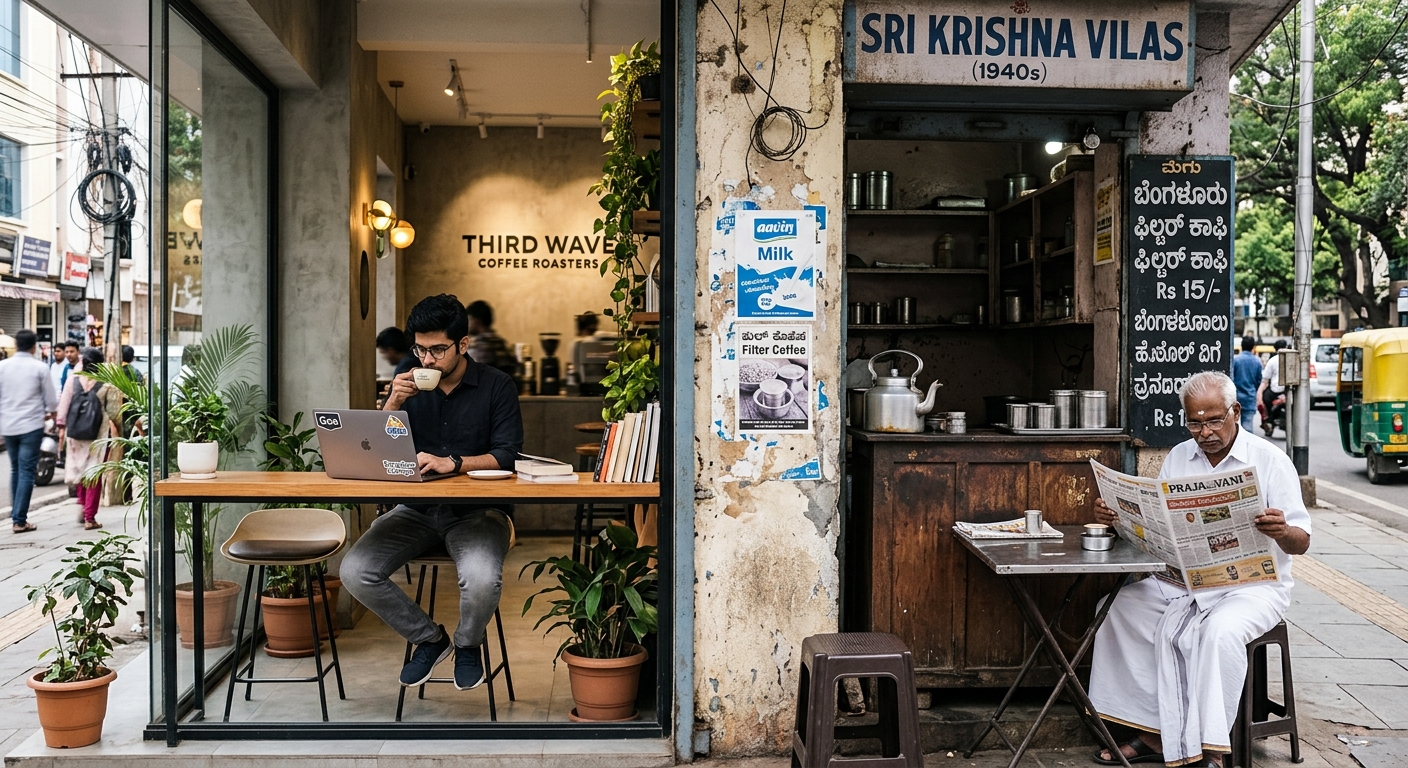
The tension between preservation and change is nowhere clearer than in Bengaluru’s evolving café culture. For some old-timers, the rise of minimalist roasteries in Indiranagar and Koramangala symbolizes the 'performative' tech city—exclusive, English-first spaces that displace family-run darshinis. But for a younger generation, these cafés are the new community anchors, hosting open mics, coding meetups, and civic circles. Crucially, in older areas like Basavanagudi, these worlds are beginning to blur. It is now possible to find a decades-old filter-coffee joint sharing a wall with a Scandinavian-style work café. This collision isn't necessarily a war; it is a visible negotiation of what 'Namma Bengaluru' means in the 21st century, a space where you can have your flat white and your by-two coffee, too.
Walking the Memory Lane: Heritage and the Fight to Remember
Against the tide of glass and steel, residents are actively reclaiming the city's narrative through physical acts of memory. Community-led heritage walks through neighborhoods like Basavanagudi, Malleswaram, and the old Pete market have surged in popularity, attracting both long-time residents and curious newcomers. These walks transform static nostalgia into a dynamic engagement with history, framing ancient temples, legendary eateries, and colonial architecture as living repositories of the city’s soul. This offline movement is mirrored online by accounts dedicated to archiving old photographs and stories of KR Market and Chickpet. These efforts are a form of civic resistance, insisting that the city’s identity is rooted in its pre-tech history and demanding that progress not be predicated on historical erasure.
Can a Megacity Have a Soul?
The viral debate over Bengaluru's charm ultimately asks an unanswerable, deeply personal question. The 'paradise' of 1950s Bengaluru also had fewer people, different social hierarchies, and a vastly different economic reality that nostalgia often sanitizes. The city’s soul might not be a fixed aesthetic of red-tiled roofs and rain trees, but rather a persistent everyday texture: the ethos of the corner idli stall, the fierce civic activism around a threatened lake, or the coding meetup turned community cleanup. It exists in the overlap where heritage walks end at a modern café, and where the anger of a Reddit rant transforms into organized action. Bengaluru’s identity crisis is, in itself, a sign of life—a city refusing to accept its transformation passively, insisting that somewhere between the filter coffee and the flat white, its soul continues to beat.
Sources
- 'Bengaluru has lost its soul': Social media debate over the city's identity draws strong reactions
- From gubbi to greenery: 15 things that slowly vanished from Bengaluru, according to internet users
- Reddit user recalls Bangalore days says Bengaluru has lost its old charm
- 'Cars caked in dust, packed metros': Frustrated Bengaluru local posts long Reddit rant on how city has lost its charm
- "I Miss My Bangalore": Viral Reddit Post Sparks Debate About City's Lost Charm
- Viral Reddit Post “Bengaluru Has Had Enough” Speaks for Millions of Residents
- 'We are growing backwards': This viral 1980s Bengaluru photo leaves residents lamenting a lost city
- 'Bengaluru is more than tech hubs': X debate erupts over city's calm neighbourhoods
- 'Bengaluru Has Lost 86% Tree...': Viral Post Sparks Debate on Urbanisation and Green Loss
- Garden City Or Traffic Chaos? Harsh Goenka’s Post On Bengaluru Gets Mixed Reactions
- 70-year-old picture of 1950s Bengaluru goes viral. Netizens call old Bangalore 'paradise'
- Bengaluru man’s emotional post on Jayanagar’s lost soul sparks citywide nostalgia. Netizens pour out their pain
- Canadian Influencer Says Bengaluru Doesn't Need 'Silicon Valley' Tag