
From Raj Mandir to Mall Multiplex: Jaipur’s Cinema Journey Through Nostalgia and Loss
Trace Jaipur's cinema journey from the iconic single-screen Raj Mandir to today's multiplex culture, weaving in nostalgia, film festivals, and social media conversations about what we've lost.
A Night at the Cinema Palace
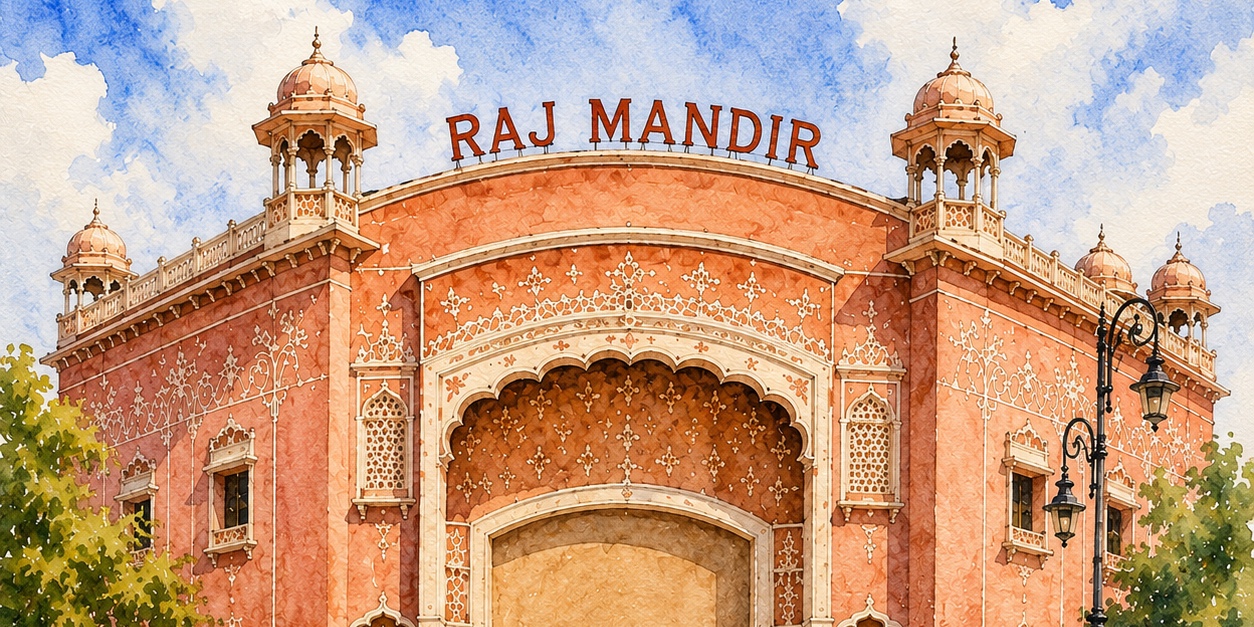
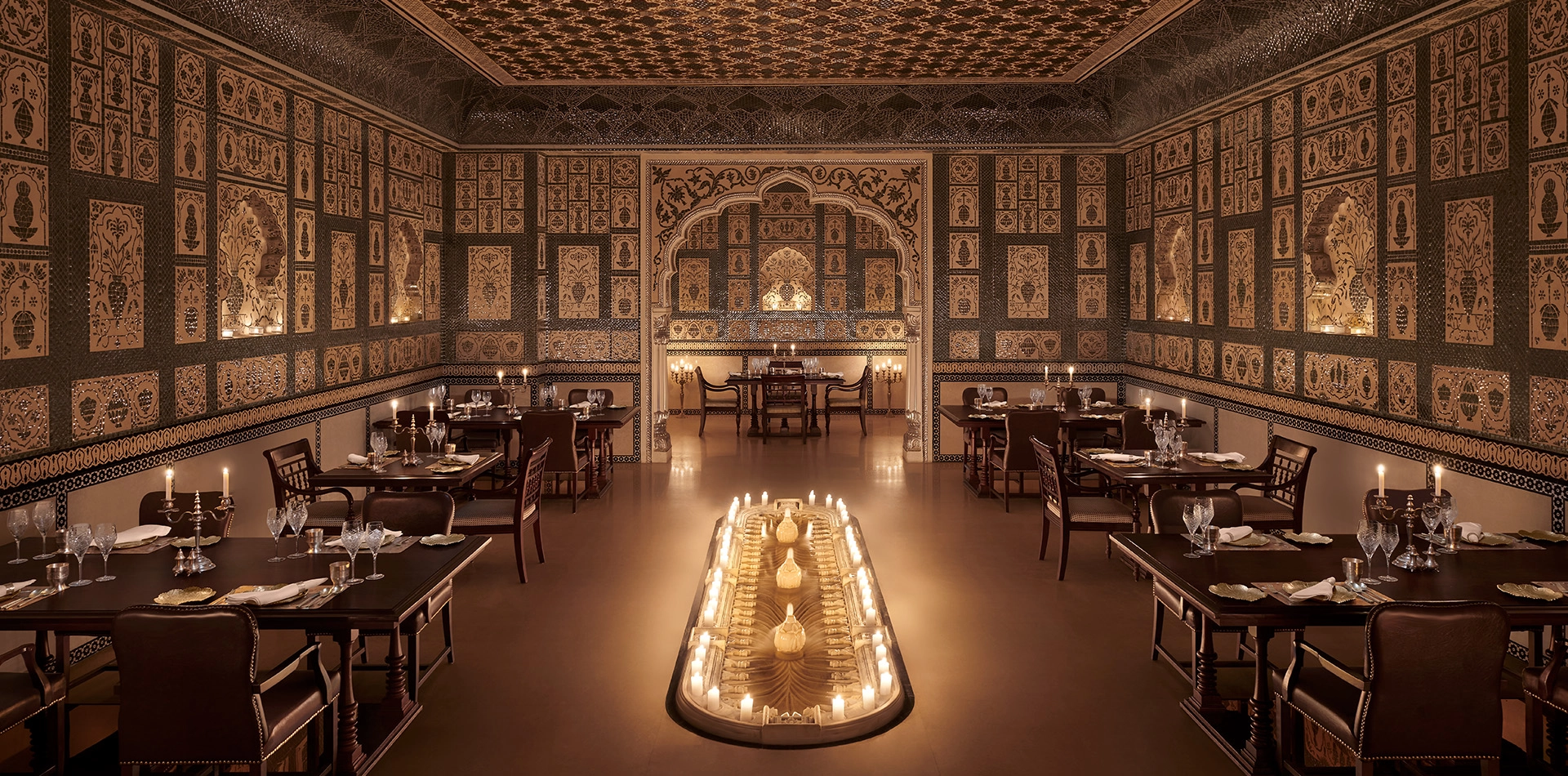
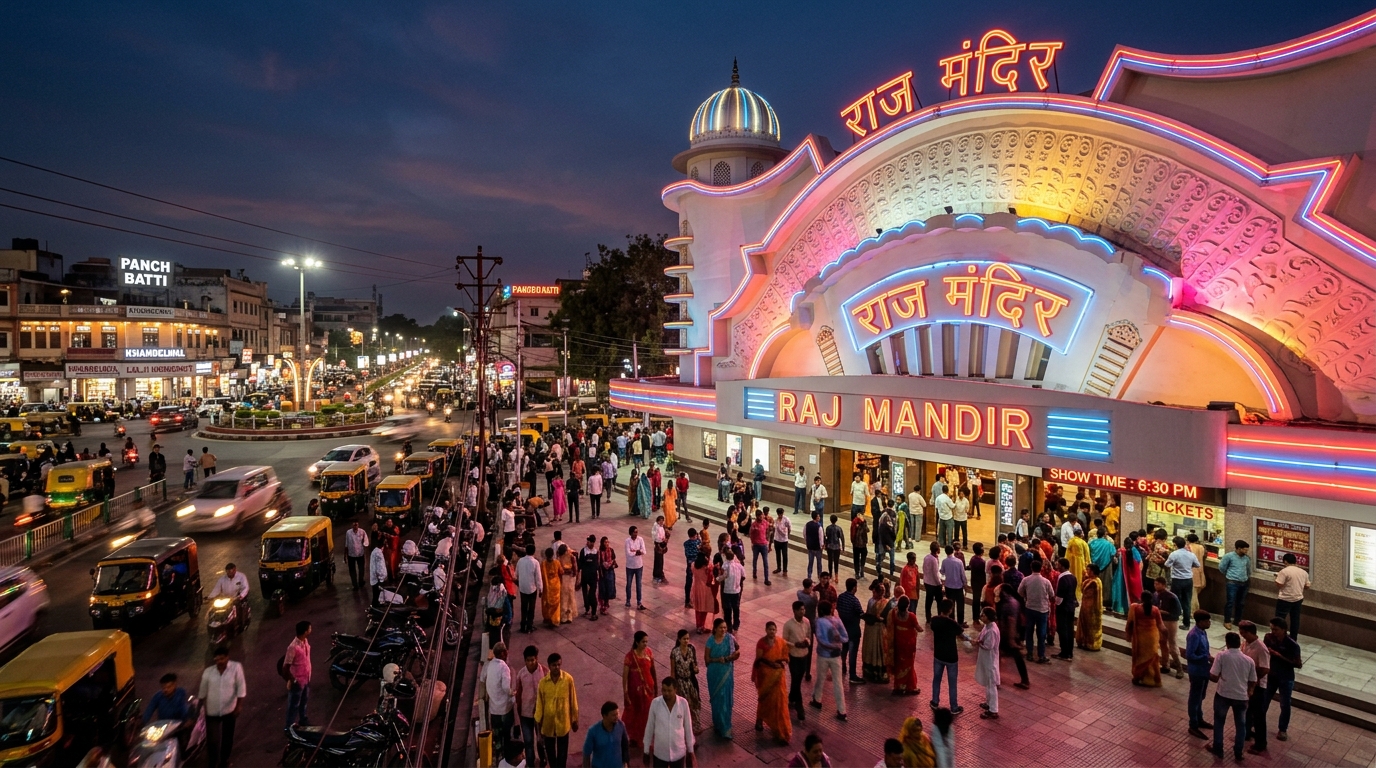
As dusk settles over Jaipur’s Panch Batti crossing, the white meringue-like façade of Raj Mandir begins to glow, its soft curves and neon signage pulling crowds like a beacon from another era. Couples pose for selfies, families queue under the ornate entrance, and the air hums with an anticipation that feels almost ceremonial. Inside, the auditorium unfolds as a pastel dream: a star-studded ceiling twinkles above 1,100 plush seats, concealed lighting washes scalloped balconies in pink and gold, and thick carpets swallow every footstep. This is not merely a movie hall; it is “Cinema ka Mandir,” a temple of film that, in 2026, marked its 50th anniversary as one of Asia’s largest and most opulent single-screen cinemas. To step into Raj Mandir is to enter a living monument to communal viewing—a ritual that, for half a century, has defined Jaipur’s relationship with the moving image.
When Jaipur Watched Films Together
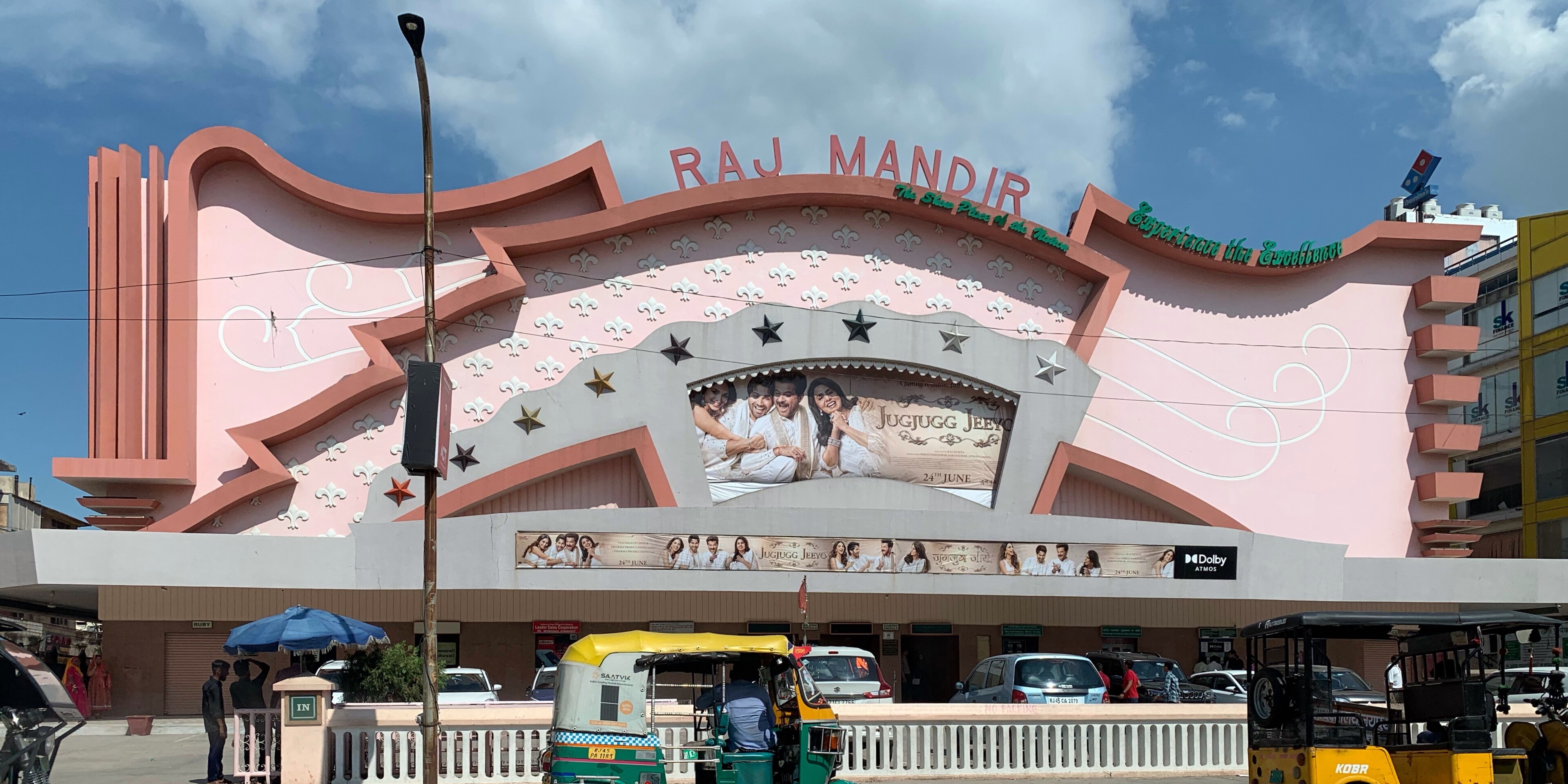
When Raj Mandir opened on 1 June 1976, it was an immediate city icon, built by the prominent Surana family of jewelers as an extension of their aesthetic and social influence. Located where the old walled city meets the planned avenues of ‘new’ Jaipur, it quickly became the stage where Bollywood and local audiences physically met. Films like ‘Maine Pyar Kiya’ (1989) and ‘Hum Aapke Hain Koun..!’ (1994) ran for weeks to packed houses of over a thousand people, who clapped, whistled, and threw confetti in unison. Going to ‘see the film at Raj Mandir’ was not just an entertainment option; it was a city-wide ritual. The hall’s Art Deco-inspired design, with its stage-like screen framed by layered curves reminiscent of a royal palace, made the building itself a spectacle, embodying a pre-multiplex social world of shared entry, uniform pricing tiers, and limited show choices that created a powerful simultaneity of experience.
The Mall Years: How Multiplexes Rewrote the Script
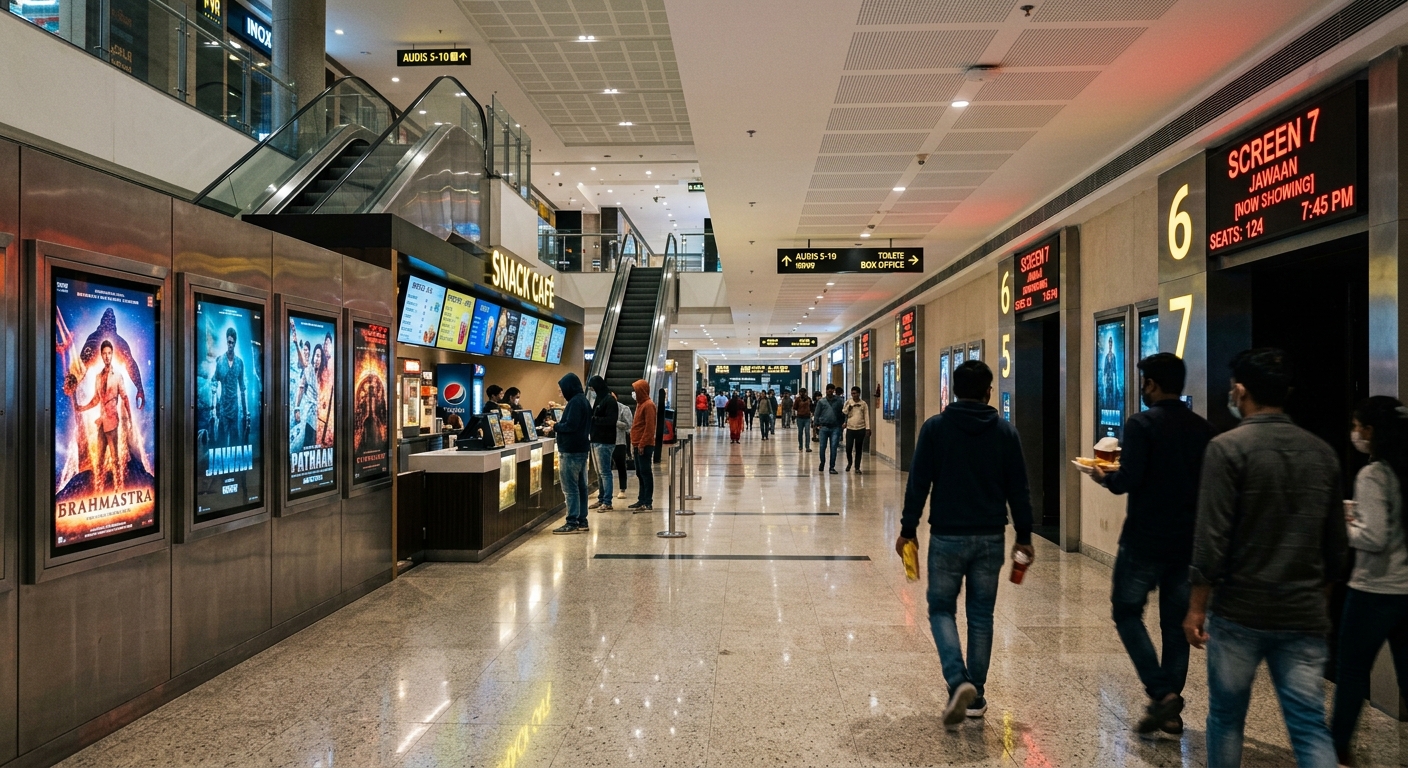
From the 2000s onward, Jaipur followed the pan-Indian trajectory of cinema’s transformation. As India’s single-screen count plummeted from over 13,000 to roughly 6,000, the city’s movie-going center of gravity shifted decisively to mall-based multiplexes. The shared experience of standing in a long, chattering queue was replaced by just-in-time online booking and assigned seating in anonymous black-box auditoria. Where Raj Mandir once gathered a thousand strangers from diverse backgrounds for a single evening show, multiplexes now distribute audiences into dozens of smaller, isolated clusters throughout the day. This fragmentation is also a class segmentation: higher ticket prices and food costs implicitly exclude poorer and working-class viewers, turning cinema into a controlled, aspirational space rather than a messy public commons. In this landscape, Raj Mandir survives as a self-described ‘unicorn,’ its daily shows of mainstream Hindi cinema now upgraded to Dolby Atmos, yet stubbornly retaining its old-world décor as a material reminder of what has been lost.
JIFF and the Festival City: A Brief Cinephile Republic
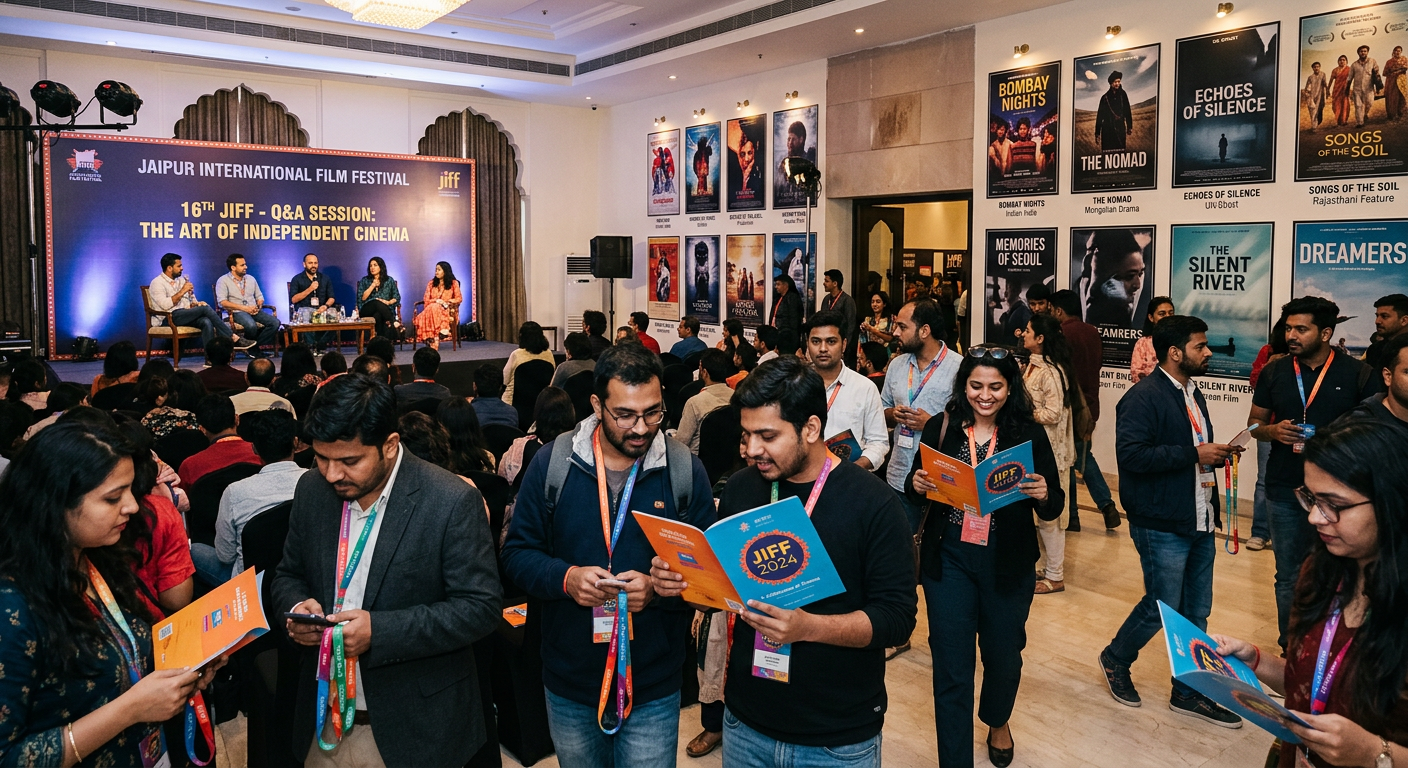
For a few days each January, a different kind of film culture flickers to life in Jaipur. The Jaipur International Film Festival (JIFF), founded in 2009, transforms auditoriums and university halls into a bustling hub for world cinema, Indian regional movies, and independent shorts. Here, cinephiles, students, and filmmakers queue for passes, watch films back-to-back, and debate them in corridors—rituals of shared time and attention that stand in stark contrast to the silent, transactional efficiency of a mall multiplex. JIFF positions Jaipur as a node on the global cinema map, showcasing Rajasthani stories alongside international features. It briefly recreates the communal excitement of the old single-screen era, but for a more niche, globally oriented audience, proving that the desire for meaningful, collective viewing persists, even if it is now routed through festivals rather than everyday movie-going.
Online Grief and the Mourning of ‘Old Jaipur’
The emotional weight of this transformation is palpable in Jaipur’s digital spaces. On Reddit, a widely upvoted post declares its author ‘genuinely heartbroken’ about what is happening to the city, with comment sections lamenting rapid commercialization, the loss of a relaxed, polite ethos, and the rise of a status-obsessed urban center. In these threads, old cinema halls are invoked alongside street food joints and markets as places where people once mixed across class lines. Another discussion dissects a ‘silent bullying culture’ where markers of class, caste, and English fluency become grounds for subtle exclusion—a social dynamic that the controlled, high-cost environment of mall multiplexes neatly mirrors. For many locals, Raj Mandir’s opulent, shared space has become a powerful metaphor for a more porous, communal Jaipur that feels increasingly out of reach.
The Architecture of Memory and Anonymity
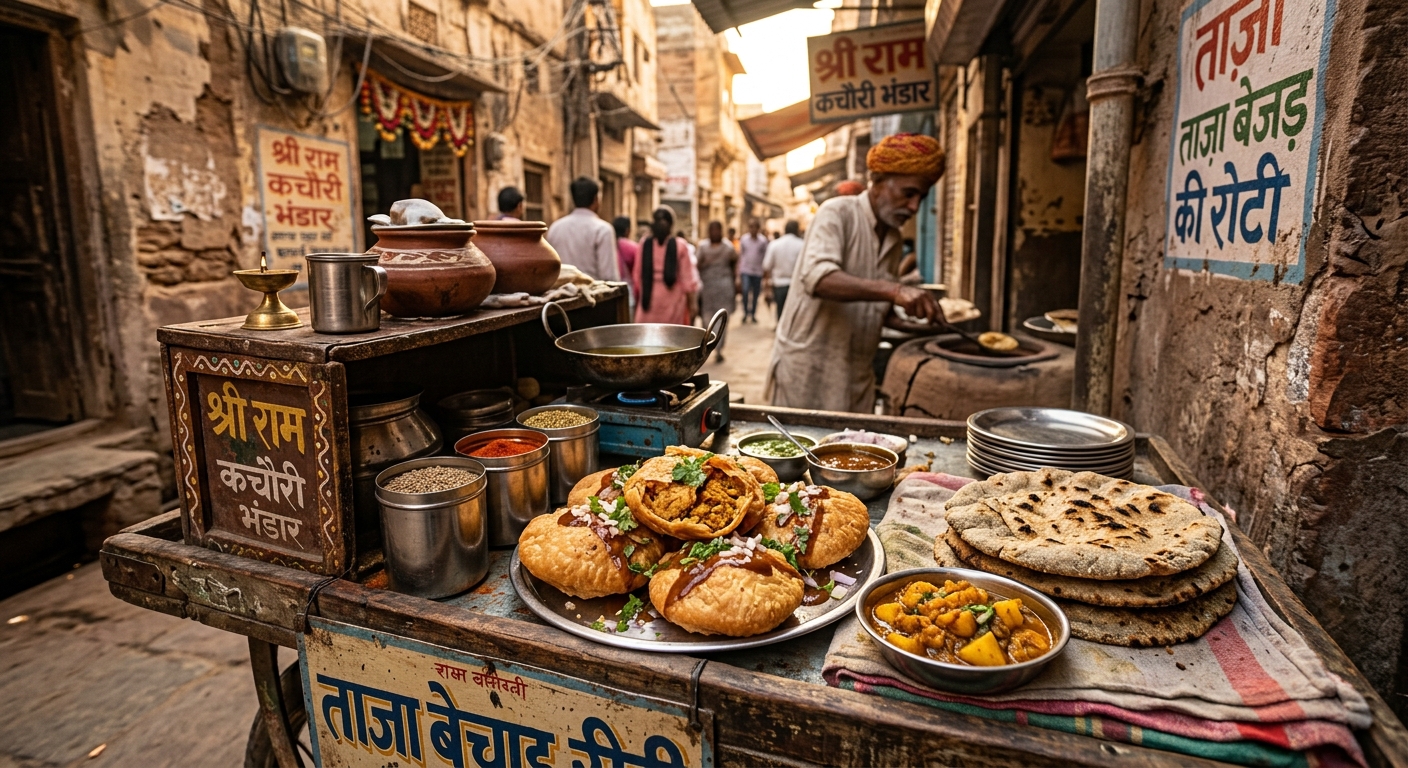
The visual contrast between these two cinematic worlds tells its own story. Raj Mandir’s sweeping, pastel curves and twinkling ceiling connect directly to Jaipur’s image as a heritage city of pink facades and havelis. It is conspicuously ornamental, a building that announces itself as a unique place of the city. Multiplexes, by contrast, embody a generic, global modernity: glass, steel, branded interiors, and glowing seat indicators that look the same in every Indian city. For older residents, cinematic memories are tied to the geography of standing outside Raj Mandir to glimpse a star’s arrival or walking from nearby markets for an evening show. For a younger generation, those memories are more likely formed in food courts and parking lots, within spaces that prioritize convenience and status over a sense of local identity.
Persistence Within Change
Despite the multiplex’s dominance, Raj Mandir’s survival suggests a persistent demand for spectacle and heritage. Its 50th anniversary was marked by the screening of five free movies and a wave of local and national coverage celebrating ‘five decades of movies, memories and magic.’ The hall continues to run daily shows, attracting both tourists treating it as a monument and locals seeking a dose of collective nostalgia. Simultaneously, JIFF’s growth indicates a parallel hunger for depth and diversity, a counter-programming to the commercial mainstream’s narrowing focus on tentpole releases. Together, they represent two different strategies for keeping a communal film culture alive in an era of atomized, algorithm-driven leisure.
Watching the Credits Roll
On a late evening, a show lets out at Raj Mandir. Tourists and locals spill onto Bhagwan Das Road, still buzzing from a shared gasp or a collective laugh. A short distance away, a young cinephile leaves a JIFF screening, a program booklet tucked under their arm, perhaps walking past a glowing mall multiplex on the way home. In that single frame, multiple Jaipurs coexist: the heritage city of opulent, communal spectacle; the anxious, stratified city of anonymous consumption; and the globally aware festival city trying to forge a new cultural identity. The desire to sit together in the dark and watch stories unfold endures, even as the architecture and social codes that shape that experience continue to shift. For now, Raj Mandir’s star-lit ceiling still twinkles, a stubborn and beautiful reminder that cinema was once the city’s most dazzling public dream.
Sources
- Raj Mandir Cinema - Wikipedia
- Raj Mandir: The jewel of Jaipur's cinematic legacy for half a centuty
- 50 Years Of Rajmandir Cinema Jaipur | 5 Free Movies Showing | Inside Of Rajmandir Theatre
- From single screen to city icon: Jaipurs Rajmandir cinema celebrates 50 years - The Tribune
- How Raj Mandir In Jaipur Redefined Movie-Going For Indians 50 ...
- Raj Mandir at 50: Five Decades of Movies, Memories and Magic - The Times of India
- Raj Mandir Cinema – Wikipedia
- India's Most Royal Cinema | Raj Mandir, Jaipur (Dolby Atmos) | Inside Tour & Review
- Raj Mandir अपने 50 साल पूरे कर रहा है. 1 June 1976 को इसका ...
- Why Bollywood loves Rajmandir cinema, Jaipur's single-screen hall ...
- Raj Mandir Cinema Jaipur | Raj Mandir Cinema Hall Jaipur | Raj Mandir Cinema Hall Jaipur History
- Raj Mandir Jaipur: Asia Ka Most Royal Cinema Hall | History, Design & Secrets
- Bollywood loves Rajmandir Cinema. Jaipur hall is a unicorn
- The Pride of Asia, Rajmandir Cinema - Instagram
- "Raj Mandir Cinema, Jaipur: A Jewel of Indian Cinema" -