
Udaipur’s Bagore-ki-Haveli: Folk Dances Go Viral on Reels
Explore how local creators are turning Bagore-ki-Haveli’s ghoomar dances and puppet shows into viral Reels, blending edutainment and heritage tourism in Udaipur’s 2026 social media scene.
A Nightly Ritual Goes Global
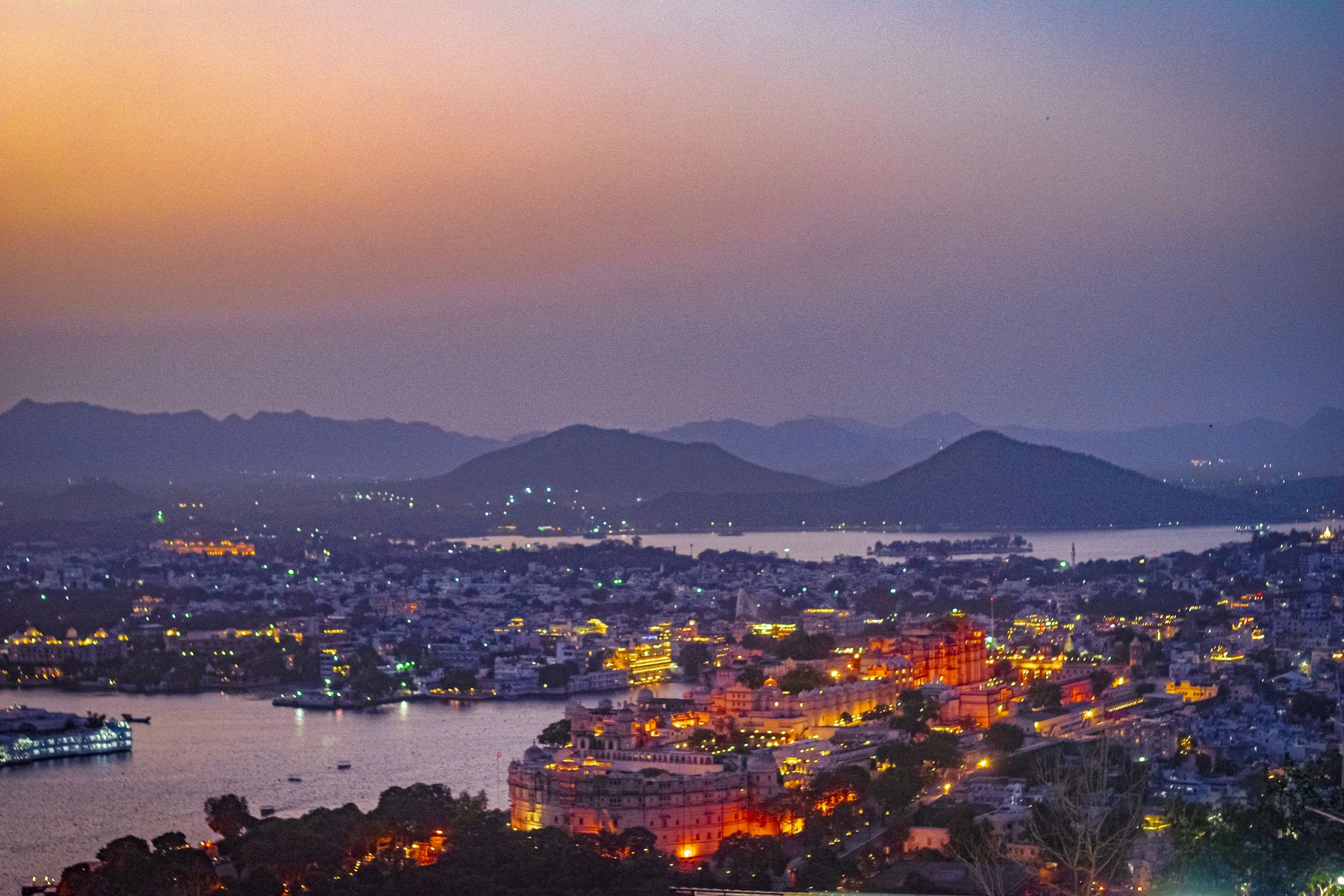
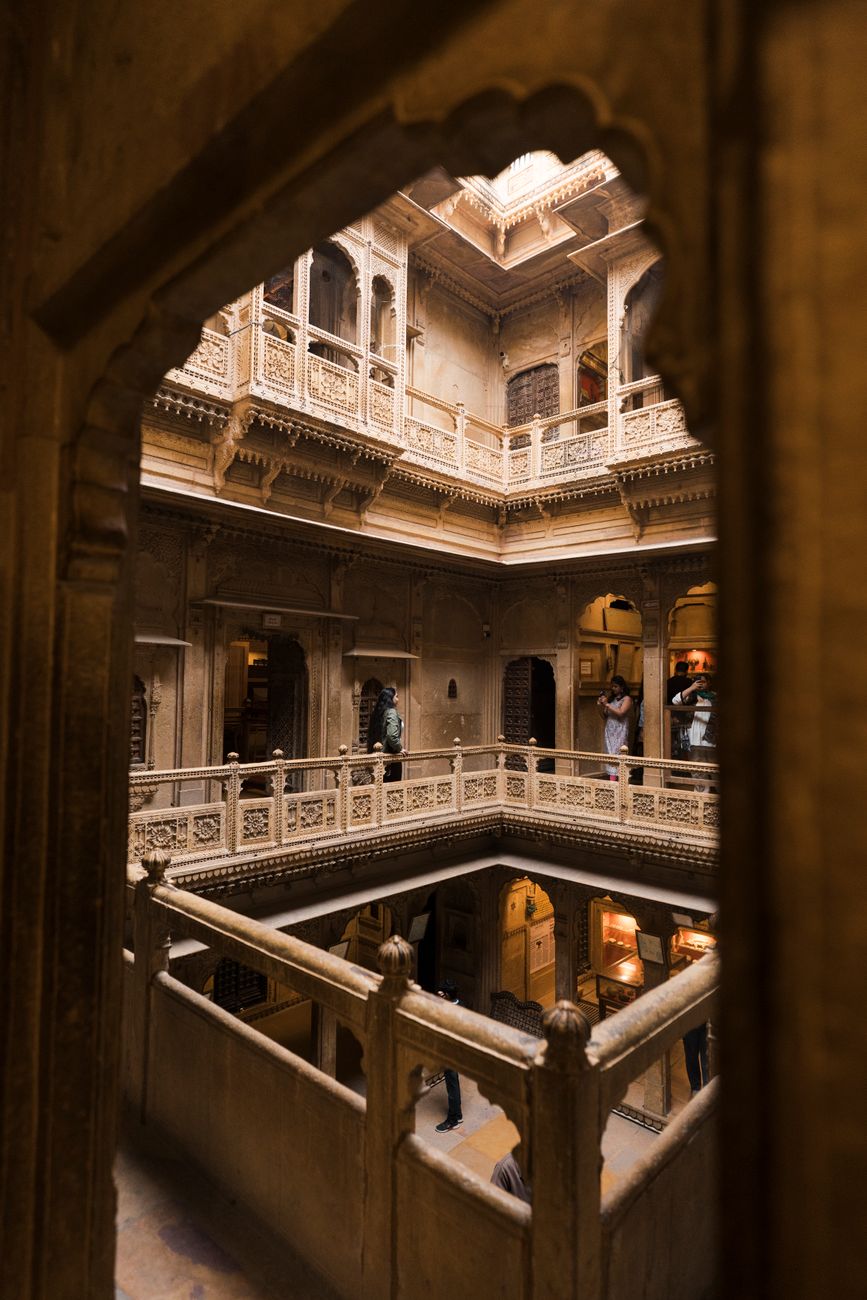
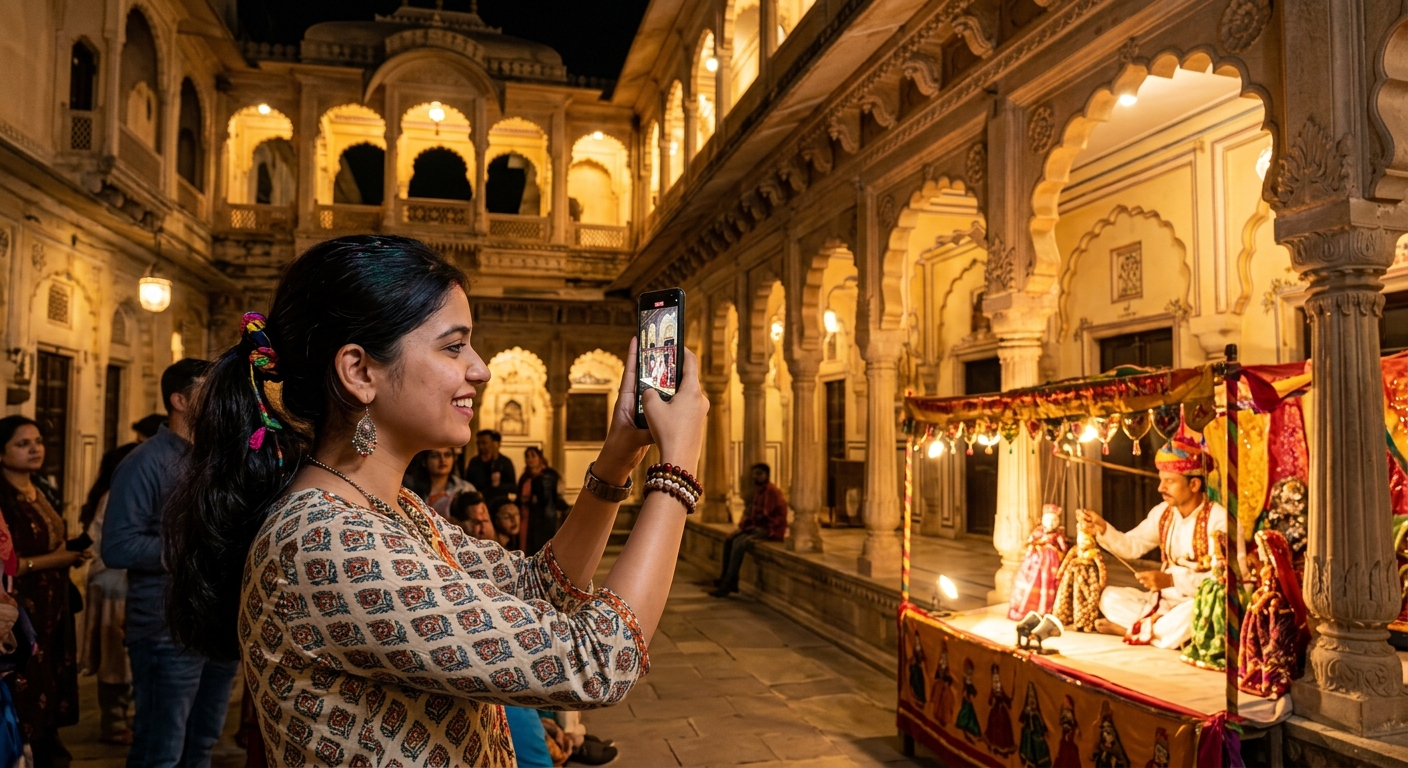
As the sun sets over Lake Pichola, the courtyard of Bagore-ki-Haveli fills with anticipation. Tourists and locals alike settle onto floor cushions, their phones already angled vertically. Within minutes, the Dharohar Folk Dance Show begins—a whirl of ghoomar spins, the rhythmic clapping of terah taali, and the comic antics of kathputli puppets. This nightly performance, once a local secret, now travels far beyond Udaipur’s ghats. Thanks to a wave of local creators, 15-second clips of these traditions are racking up millions of views on Instagram Reels, transforming intangible heritage into some of India’s most shareable cultural content.
Bagore-ki-Haveli: Where History Meets Performance
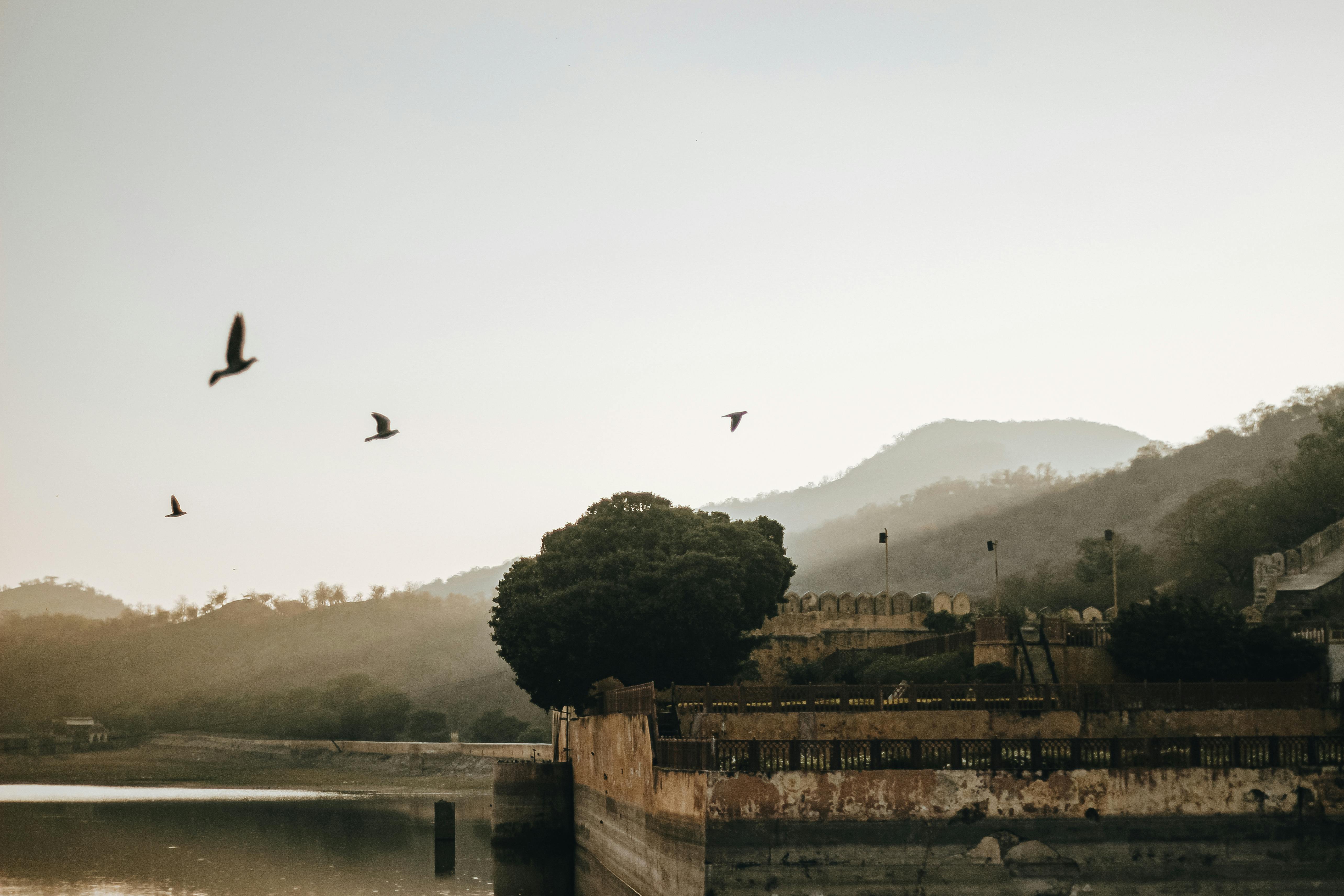
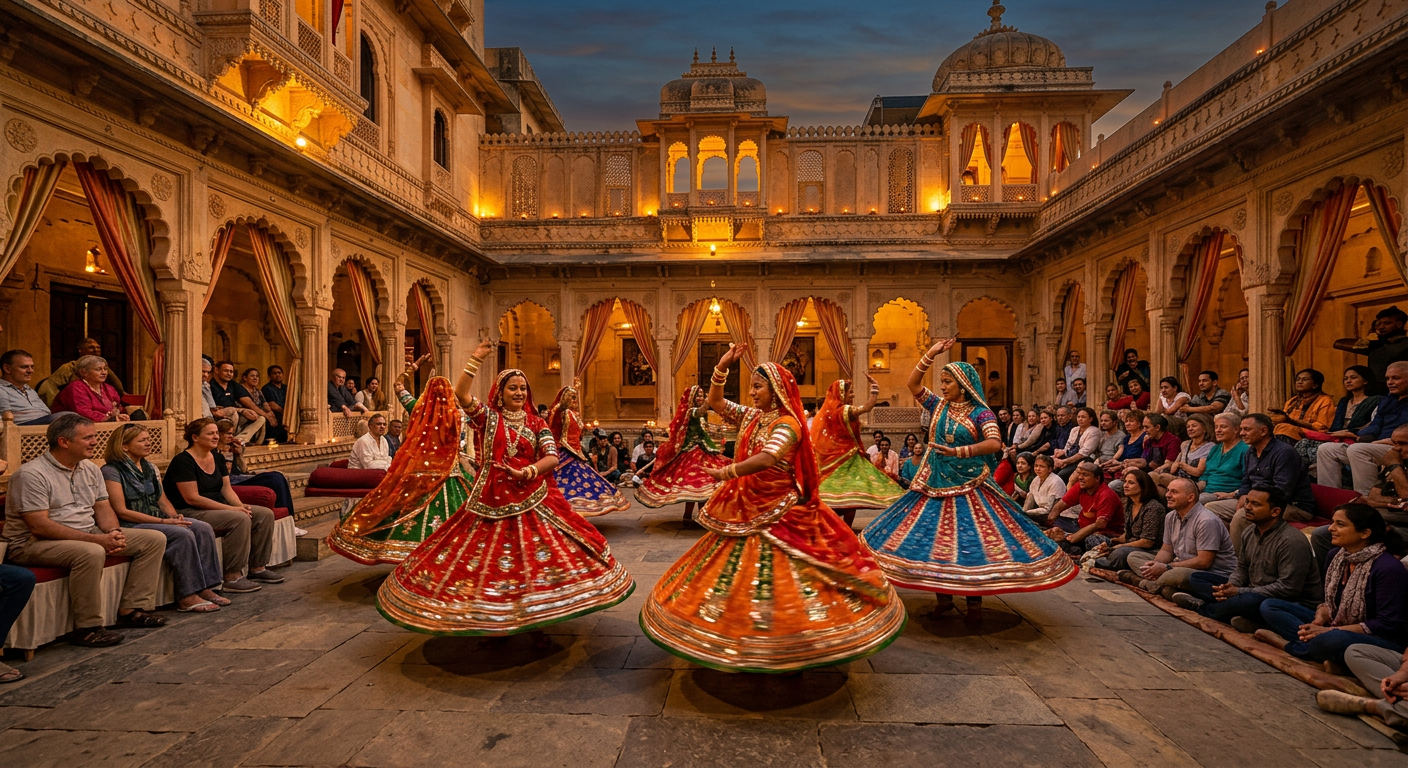
Built in the 18th century on the banks of Lake Pichola, Bagore-ki-Haveli is a museum by day and a cultural stage by night. The Dharohar show, held daily from 7:00 to 8:00 pm, packs an astonishing variety of Rajasthani folk arts into one hour. Audiences witness ghoomar (a women’s circular dance), bhavai (pot-balancing), terah taali (devotional dance with manjeeras), and a string-puppet show, all accompanied by live folk music. With tickets priced between ₹90 and ₹125 and a modest camera fee, the experience is both accessible and visually arresting—a combination that makes it irresistible for short-form video creators.
Why This Show Was Made for Reels
The Dharohar show’s format aligns almost perfectly with the demands of vertical video. Self-contained acts last just a few minutes, providing ready-made highlights. The vibrant ghagras, dramatic lighting, and feats like dancing on stacked pots or balancing lit candles deliver instant ‘wow’ moments that stop thumbs mid-scroll. Creators take advantage of the predictable schedule, arriving early to secure a front-row spot and capture specific sequences—the ghoomar spin, the puppet skit, the audience applause. Reels now follow familiar templates: ‘POV: You’re at Bagore ki Haveli in Udaipur,’ split-screen transitions from courtyard to performance, and quick-fact overlays about ticket prices and show timings. The venue has become an analog content factory for the digital age.
The Local Creators Turning Folk Art into Edutainment
A new breed of Udaipur-based influencers is specialising in cultural content that educates as much as it entertains. The ‘City Heritage Vlogger’ uses Hindi and English voiceovers to explain the history behind each dance, overlaying on-screen text with show timings and practical tips. The ‘Folk Arts Educator’, often a dancer or musician themselves, pauses Reels to dissect costume symbolism or the meaning of a specific mudra. Meanwhile, tourism entrepreneurs—homestay owners and café operators—incorporate the Dharohar show into ‘perfect Udaipur 24 hours’ itineraries, tagging local businesses and artists. Their shared goal: to make Rajasthan’s living traditions not just seen, but understood. This approach mirrors the 2026 social media trend that rewards ‘authentic edutainment’—content that is raw, informative, and deeply rooted in place.
Edutainment and the 2026 Algorithm
By 2026, short video platforms have made clear that audiences crave more than spectacle. The algorithm favours clips that hold attention by teaching something new, whether it’s a historical fact, a cultural insight, or a behind-the-scenes detail. At Bagore-ki-Haveli, this translates into Reels that label dance forms, translate folk lyrics into English, and explain why certain performances are reserved for women or specific communities. Creators are blending ambient sound—the dhol, the ghungroos, the crowd’s murmurs—with minimal editing, leaning into an aesthetic of ‘realness’ that outperforms hyper-polished productions. The result is a digital archive of intangible heritage that serves both a global audience of culture-curious travellers and a domestic audience rediscovering regional pride.
The Authenticity Debate: Packaged Show or Living Tradition?
The very qualities that make the Dharohar show Reels-friendly also fuel a long-running debate. Critics argue that the tightly curated, one-hour format—with fixed seating, camera fees, and a nightly schedule—reduces complex, ritual-rooted traditions to a tourist spectacle. Ghoomar becomes a three-minute act, puppetry a slapstick routine, stripped of its social context. Yet supporters point out that the show provides stable livelihoods for performers from regional folk communities and enables intergenerational transmission in a time when village-based patronage is waning. For many visitors, this is their first encounter with Rajasthani folk arts. Reels amplify both sides: when creators add context and credit artists, they become digital advocates; when they chase trends with unlabelled snippets, they risk commodifying the culture further. The debate is not just about the show, but about who gets to tell these stories—and how.
From Phone Screen to Physical Experience: How Reels Drive Tourism
The viral clips have a direct impact on Udaipur’s cultural tourism. Travel planning now often starts with a Reel: a viewer sees a ghoomar clip, saves it, and later searches ‘Bagore ki Haveli show timing’ or ‘Udaipur folk dance tickets.’ The ‘sunset boat ride plus Dharohar show’ combo has become a default evening itinerary, boosted by Reels that spell out practical details. This digital word-of-mouth reduces uncertainty for first-time visitors but also shapes expectations. Some arrive expecting a cinematic experience and are surprised by the crowded, informal seating; others leave delighted that reality matches the feed. Organisers have begun adapting, subtly adjusting lighting and pausing for applause—a quiet acknowledgment that the audience now includes thousands of invisible viewers watching through a phone lens.
Can Reels Help Safeguard Intangible Heritage?
Beyond marketing, the explosion of Bagore-ki-Haveli Reels raises a tantalising possibility: could short video become a tool for cultural preservation? When creators consistently tag dance forms, name performers, and link to community organisations, they build a searchable, living archive of traditions that might otherwise fade. Some artists are now collaborating directly with influencers, co-creating content that ensures their stories are told on their own terms. The future may see more community-run channels, profit-sharing models, and even live-streamed performances that connect village troupes with global audiences. For now, the courtyard at Bagore-ki-Haveli remains a nightly reminder that heritage is not static—it spins, it claps, and it travels at the speed of a Reel.
Sources
- Enjoy the Bagore Ki Haveli Dance Show by Dharohar ... - Instagram
- Experience the Vibrant Folk Dance Show at Bagore ki haveli, Udaipur | Family Traveller
- Folk Performances at Bagore-ki-Haveli | Udaipur - What to Expect
- Rajasthani Folk Dance Show @ Bagore Ki Haveli - a must see
- Bagore Ki Haveli Udaipur (2026) – Best of TikTok ... - Airial.Travel
- Bagore Ki Haveli: Exploring the Allure of Vibrant Folk ...