


Why Mumbai Floods Every Year: Causes and Solutions
Mumbai's annual flooding is due to outdated drainage, encroachments, and climate change. Learn about the causes and ongoing efforts to mitigate this issue.
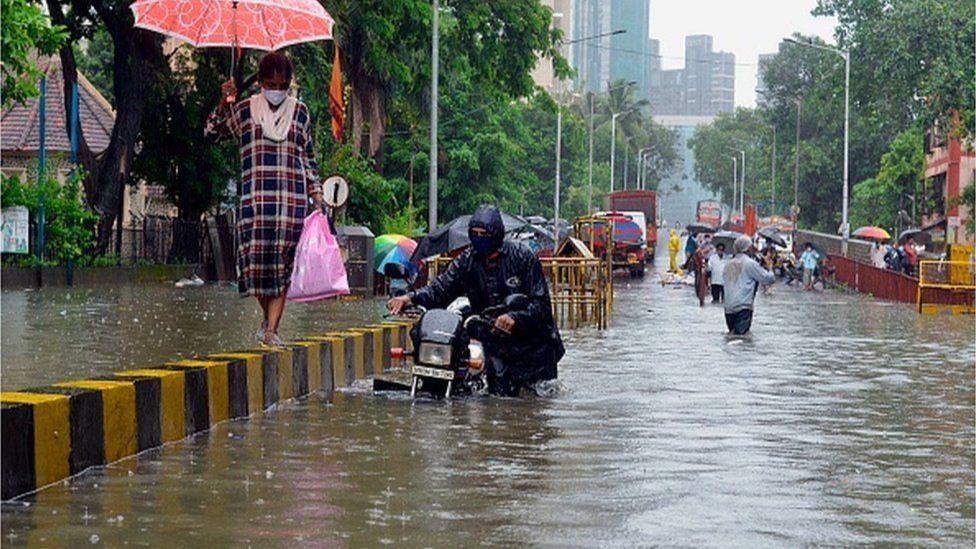
The financial capital of the country also happens to be one the rainiest areas of our country 2168 mm of annual rainfall.
Mumbai experiences flooding almost every year with the city coming to a standstill, it brings a temporary pause to businesses, the stock market and essential services and strands thousands of Mumbaikars in their houses or workplaces. Moreover, these flood waters act like a breeding ground for several water-borne diseases like leptospirosis.
If you live in Mumbai, you probably want an immediate response to the following question: Can Mumbai ever welcome the rains without flooding and putting the entire city to a standstill? While you wait for the waters to subside and the city to step up its drainage efforts, there are important factors at play that you should be aware of.
Here are some reasons for Mumbai flooding every year:
Heavy Rains and Rising Sea Levels:
At the beginning of the monsoon season, Mumbai experiences heavy rainfall with a magnitude of more than 2000mm annually.
However, after the monsoon sets in and moves into its active phase, the situation is conducive to the occurrence of very heavy rains over Mumbai, when they are collectively a result of the development of a low-pressure belt over the sea & as the folks say global warming is causing an intensive rise in sea levels which results in high tides during the monsoons in Mumbai.
Extensive reclamation and low-lying topography
It is obvious from the city’s planning history, that in the course of home development and setting up industries, the waterways that allowed the stored rainwater to flow out, have been dramatically diminished.
The reclamation of the seven islands was intended to connect all of them, eventually, the reclaimed area acted as an area to accommodate the housing need of the city's expanding population, part of this construction has, however, gone further and crept over the city's existing stormwater drains.
Areas such as Khar Subway, Sion and etc that have been built up on reclaimed land see extensive water-logging.
Faltering Drainage Systems
Mumbai's current stormwater drainage system has played a significant role in the city's flooding. The stormwater drainage system for the city is essentially made up of straightforward drains, rivers, creeks, drains, and ponds.
The network consists of a hierarchy of roadside surface drains (about 2,000 km, mostly in the suburbs), underground drains and laterals (about 440 km in the island city area), major and minor canals (200 km and 87 km, respectively), and more than 180 outfalls that discharge all surface runoff into the rivers and the Arabian Sea (see accompanying figure). Some of these outfalls flow into the Arabian Sea directly, while others discharge into Mahim Creek, Mahul Creek, or Thane Creek.
Additionally, some out-fall discharge stormwater from the western suburbs directly into the ocean, while the remainder discharges their contents into the Mithi River, which eventually merges with the Mahim Creek.
Encroachment of Mumbai’s Natural Drain: Mithi River
A significant part of the city's Storm Water Drainage (SWD) system is the Mithi River. Since the river separates the city from its suburbs, the placement of the river is significant from the perspective of the city. Thus, it's flooding directly or indirectly impacts the disruption of the traffic on the five transport corridors viz. Central Railways, Western Railways, Western Express Highway, Eastern Express Highway & the Harbor Railway Line.
A significant area, number of households, and workshops have been on its banks often by encroaching the floodplains
Additionally, the Mithi River’s course has been diverted near Mumbai’s airport for its runway expansion, this has caused the river to swell up on its banks and flood the nearby areas.
Tides — Ups And Downs Of The Sea
The stormwater drainage system in Mumbai drains into the ocean. To stop seawater from flooding back into the city's drainage system at high tide, as the sea level rises, gates are placed in front of the drains.
Even worse, employing pumps is required to drain the area due to high tides and persistent rain. The drainage system starts working again once the tide subsides. However, it might take up to six hours.
Methods implemented by the Brihanmumbai Municipal Corporation to prevent flooding
A report published by the International Journal of Scientific and Research Publications stated that the Brihanmumbai Municipal Corporation (BMC) made plans to overhaul the city’s SWD systems right after July 26, 2005 deluge which was called BRIMSTOWAD or The Brihanmumbai Stormwater Disposal System.
The BRIMSTOWAD included Increasing the 'Storm Water Drains' capacity. The earlier stormwater drains were constructed under the British Raj and had a capacity of 25mm per hour. The project involved enlarging the stormwater drains to a 50mm per hour capacity.
However, increasing the size of stormwater drains was not possible now as the foundations of the high-rise buildings ran deep into the ground.
n after increasing the capacity of the SWDs, their outfall was still in the sea so, during high tides the water as usual surged back into the drains instead of coming out and remained stagnant in the city creating a flooding situation.
These have been seen as temporary solutions and have not led to a reduction in changes in flooding of the city.
References: International Journal of Scientific and Research Publications , Indian Express
Cover Image: BBC
Like this article? Share it with your friends


