


Teaching in the Pandemic: Lessons from Rajasthan
Uncover how educators in Rajasthan adapted to pandemic challenges. Learn valuable lessons from their resilience. Explore the story now!
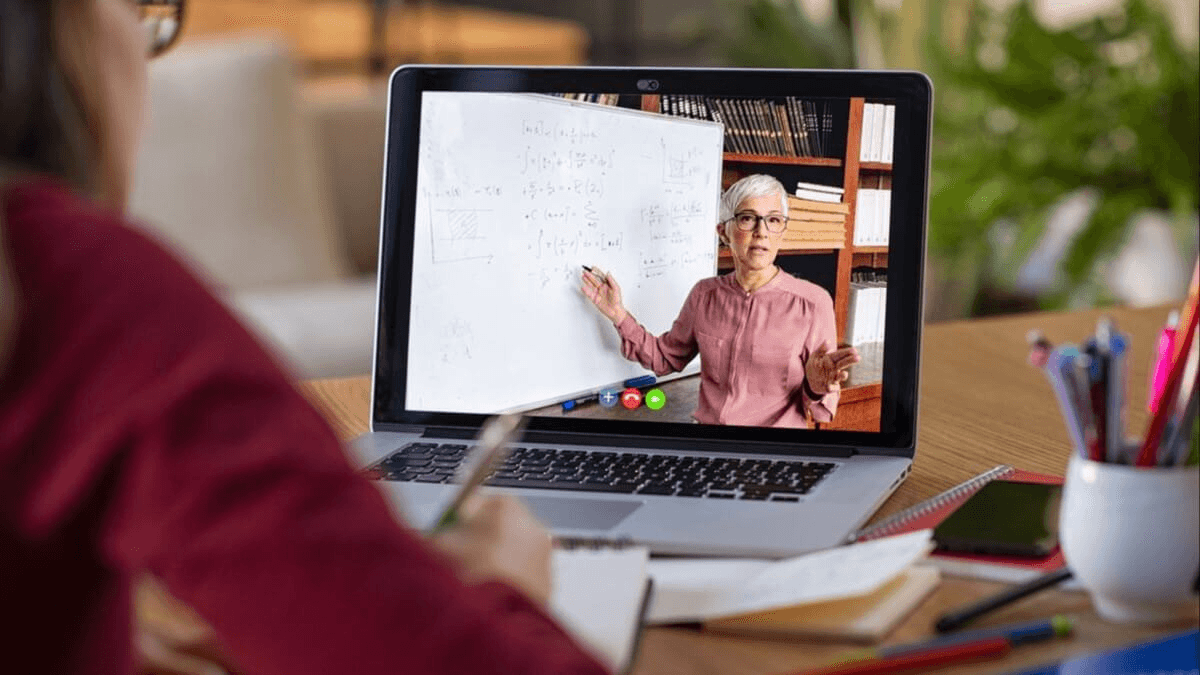
If you are one of those who landed up completing your education before the COVID-19 pandemic struck India, it is likely that you would have learnt your lessons on the traditional blackboards. However, after March 2020, this changed. All the students across the country did not have a choice but to attend classes virtually.

Illustration by Pratyush Thaker
While students have been encountering multiple challenges because of the new medium of learning, teachers too are in dire straits. This is moreso the case with the faculty members working in government schools.
Rajasthan which has 16,000 secondary schools and more than 10,000 higher secondary ones as of 2013 has been consolidating schools and endeavouring to improve the quality of education over the years. So, how are the teachers spreading knowledge here during the pandemic? Let’s find out.
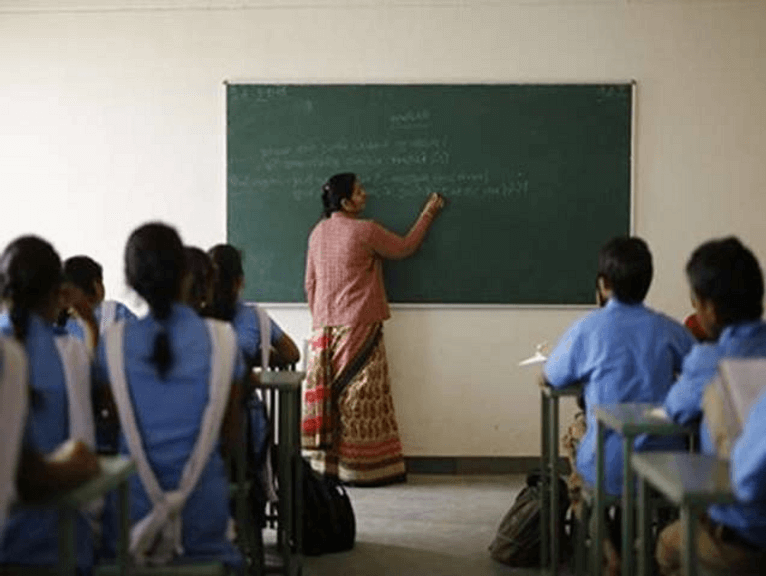
Teachers in the traditional chalk and duster blackboard settings, before the COVID-19 pandemic struck the world (Image credit: Jagran Josh Rajasthan)
Conducting classes with a new lens
Teaching online has been the most effective way to ensure continuous learning among children during the health crisis. Hence, communication platforms such as Zoom, Google Meet and Microsoft Teams are proving to be the most reliable tools for teachers to conduct classes.
However, this metamorphosis has not been easy for them. Vijay Kumar Gupta, an English teacher at a government senior secondary school at Pratapnagar in Bhilwara, Rajasthan, says that he misses the in-person interactions he used to have with the students before the pandemic set in.
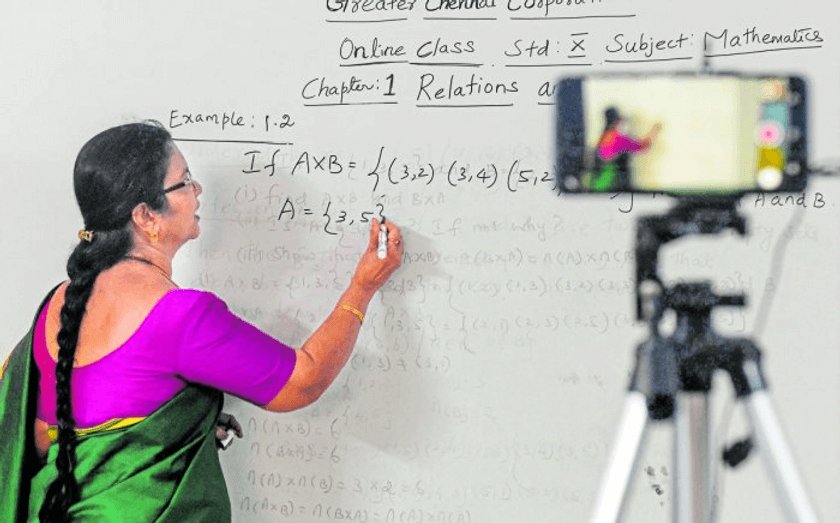
Shankar Khatik, a PT teacher at a government school at Dhawadi in the Lasadiya tehsil of Udaipur, explains the transformation in the overall pedagogy and administration of examinations.
“All of us in the school are connected through Whatsapp and other digital platforms, where we receive links for online classes from the management team. We then forward these links to the students via email,” Khatik says.
Keeping up with changes
Most of the teachers in the age group of 25 to 30 who are usually active on their smartphones and other devices have been able to adapt to the new way of working and conducting classes virtually. However, it is not the same case with the older lot.
"A lot of the middle-aged teachers are not very tech-savvy and are used to operating feature phones. It has been quite difficult for them to get comfortable with using a laptop and navigating through a smartphone to teach online. But now, they are picking up," notes Khatik.
Dealing with job losses and overwork
The COVID-19 pandemic has induced several layoffs and created a shortage of staff across several organisations and entities in the country. The scenario is no different when it comes to schools and educational institutions. Teachers of government and private institutions in Rajasthan and across India, have faced the brunt of losing their jobs due to the pandemic.
Mridul Sisodia, the spokesperson of the Private Schools Forum of Rajasthan (PSFR), talks about the kind of impact the pandemic has on teachers and educators.
“14 school owners in Rajasthan have committed suicide and thousands of teachers have been laid off”, he says.
As per a study conducted in July 2020, over 40,000 teachers in the private sector lost their jobs in Karnataka. The school associations in Maharashtra claim that COVID-19 affected the livelihood of more than 60,000 teachers as of August 2020.
On the other hand, teachers like Gupta and Khatik, who were fortunate enough to have their jobs, were overburdened with work.
“I am working with the IT department of the school, to ensure smooth functioning of the online sessions. Due to these additional tasks, my working hours are getting stretched. Before the pandemic, I used to be present in the campus till about 1.30 or 2pm, but now, by the time I wind up with everything, it is 6 in the evening,” Gupta observes.
Khatik too has been working a lot more. In addition to physical training, he is teaching moral science to students from class 7 and 8.
Sending emails to students and parents, drafting lesson plans on MS Word and keeping a track of assignments on MS Excel are a few other tasks which seem to be taking a considerable amount of time for teachers to complete these days.
What is in store for teachers?
Amitabh Kant, the CEO of Niti Aayog, says that the future of learning in India is tied to ed-tech, and believes that teachers play a pivotal role in this.
Kant highlights the four main elements that will shape the ed-tech space in India according to him, “Providing access to learning, especially to disadvantaged groups; enabling the process of teaching, learning, and evaluation; facilitating teacher training and continuous professional development; and improving governance systems including planning, management, and monitoring processes is the crux.”
At the same time, Kant clarifies that technology cannot be a substitute for schools or teachers. Instead of portraying the future as ‘teachers versus technology’, we need to create an environment for ‘teachers and technology to go hand in hand’.
Edited by Roshni Shroff
Some resources and links to help you learn more about teaching through the pandemic:
Teaching through the pandemic: A mindset for this moment
Like this article? Share it with your friends


