


Rajasthan's Sacred Orans: Cultural Heritage at Risk
Rajasthan's sacred Orans, vital for biodiversity and community livelihoods, face threats from projects. Communities are uniting to protect these cultural oases.
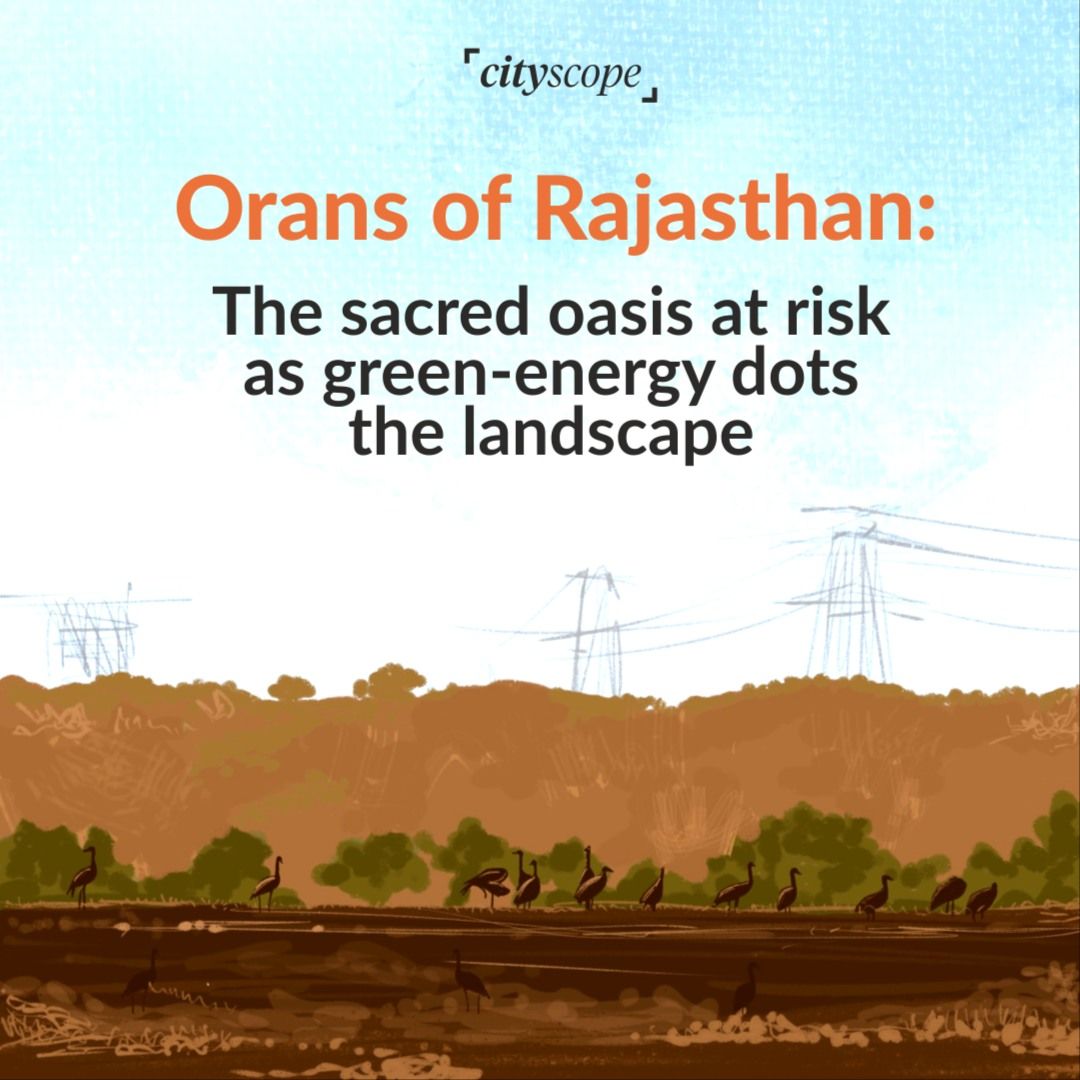
The village commons are of great significance to the livestock-dependent residents of Rajasthan, much like in many pastoral societies. These communal pastures, known as Orans, have served as grazing areas for cows, sheep, and goats and camels for generations. They are conserved by the community and are rich in biodiversity, often featuring a temple and a water body.
Protected in the name of local deities, Orans are open to the entire community, regardless of caste or creed, as long as certain regulations governing their use are followed. The area forbids any tree or plant from being cut, and only seasonal animal grazing is allowed, in keeping with tradition.
Sadly, the state has increasingly allocated these common areas to mining, solar, and other sectors, thereby endangering the ecological health of the land. In recent times, the people of Jaisalmer, Rajasthan, have come together to launch a campaign to prevent wind and solar energy corporations from acquiring their sacred land.
Following are excerpts from the interview with Sumer Singh Bhati:
Orans are a complex and unique ecological system that reflects the co-dependence of the community with the environment. Given this complexity, how do you envision development in such areas?
Sumer Singh: We do not oppose development in principle, but development that leads to destruction is unacceptable. Our culture is being compromised in the name of development. Solar projects, for instance, have led to the abrupt felling of 500-600 year old trees. We are protesting against such practices, and suggesting that solar projects be set up near canals and other suitable areas. Moreover, we stress the need for scientific approaches in developing these regions, to ensure that we do not lose our ecological heritage irreversibly.
Could you elaborate on some of the current challenges that the community is facing, particularly with respect to the Deg Rai Mata Oran, which is also your place of origin?
Sumer Singh: The livelihoods of around 20 villages depend on the resources provided by this Oran. The area is home to one of the highest density of camels in India, along with 50,000 goats and sheep. If these animals are disrupted, the people who rely on animal husbandry and related occupations will be severely affected.
Additionally, the orans feature 35 large ponds that form an integral part of their unique ecology, creating a stunning and peaceful environment that is also home to diverse wildlife. Researchers from around the world frequently us to study its natural habitat. Thus, preserving the orans is not just important for human communities but also for the wildlife and nature that coexist in this habitat.
Furthermore, the orans provide a significant source of food, including dry vegetables, for the local population, many of whom are economically underprivileged. If we take this away from them, their survival will be at stake, posing a grave challenge to the entire community.
How has the community's primary livelihood, based on animal husbandry, been impacted by ecological changes? Have any migration patterns emerged due to loss of livelihood, and what measures are being taken to address shrinking pasture lands resulting from solar park installations?
Sumer Singh: In response to these questions, it is worth noting that livestock owners have planned and relocated their herds to other areas beforehand. In recent times, the weather patterns have changed dramatically, despite the local community being accustomed to hot weather conditions of 50 degrees Celsius and above. However, the changes have been abrupt and affected every aspect of life in the area. The environmental balance is shaken. Animals now have to travel as far as 15 kilometers in search of water, which poses a significant challenge to their survival.
What is the issue of revenue records?
Sumer Singh: The issue of revenue records in our region is a significant concern. During the settlement process, there were gaps in the information, and the public was not adequately informed about the laws and regulations governing land ownership. As a result, many people did not anticipate that their land could be taken away from them in the future.
Although younger generations are now becoming educated and aware of these issues, it is essential that we address these concerns to avoid complications for future generations. That is why the Oran Yatra was initiated, covering a distance of 1500 km to raise awareness and educate people about the importance of standing up for our villages and forests. Without them, we are nothing, and our young generation will have nowhere to go.
Recently, the Oran Jyot event was held, with an impressive turnout of around 19,000 people. What started with only 4-6 people has now grown to a movement with over 10,000 participants. We firmly believe that with sincerity and truth, we can move forward and overcome these challenges. We urge more people to join us and raise their voices for the protection of our natural resources and community lands.
What happened to the project of placing bird flight diverters on power lines? Were they successful in their attempt?
Sumer Singh: Unfortunately, the project was not successful. Although 1.5 lakh were committed, only 5,000 have been installed, and their quality is poor. They have been installed on roads and highways, but not in forests or dense areas. Moreover, within 10 days of installation, they fall down and end up doing more harm than good.
Are there any ongoing state-level or district-level conversations or collective efforts to address the conflicts related to environmental preservation?
Sumer Singh: The movement has already started and spread across Rajasthan. Take the example of Bikaner, where people came together and formed a human wall in protest. There are more discussions taking place now than ever before, indicating that people have awakened to the issue. However, the government and NGOs have been relatively silent.
As for my personal aim, I strive to do my part in preserving the environment and protecting the forests for future generations. I have already witnessed the changes that have taken place over the years, as the number of animal species has dwindled since my childhood. Having lived in different cities across the country, I feel a deep connection to this place where I was born and raised. My humble request to all is to kindly assist us in reaching out to as many people as possible.
Like this article? Share it with your friends


