

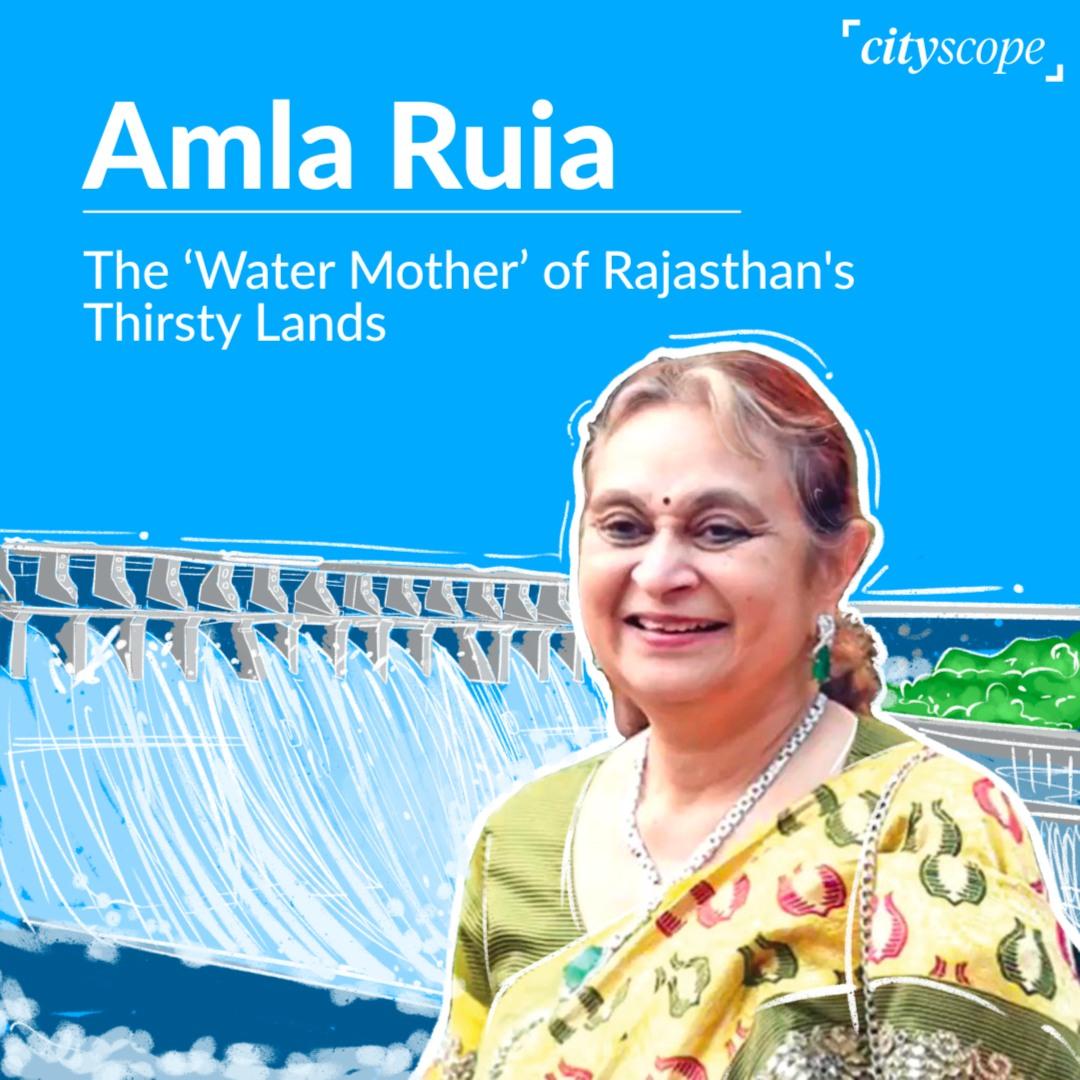
Amla Ruia: Transforming Rajasthan's Water Landscape
Discover how Amla Ruia, known as the 'Water Mother,' has revitalized over 300 villages in Rajasthan through sustainable water conservation initiatives.
Mahatma Gandhi once said, "The future of India lies in its villages." However, today, many of these villages face significant challenges. Some remain in darkness, while others endure long journeys for water, prompting villagers to migrate to cities. A few years ago, Devkaran was among those who moved to Haryana in search of work. Today, his fortunes have transformed, thanks to the availability of water in his village, allowing him to live prosperously with his tractor, two motorcycles, and 10 buffaloes.
If a 3rd World War is to happen, it will likely revolve around the issue of water. Rajasthan, India's largest state, is battling a severe water crisis, with 219 tehsils facing acute scarcity. The state government has warned that groundwater could deplete at any time in these areas, affecting the livelihoods of farmers who make up two-thirds of the state's population. Many have been forced to become agricultural laborers. However, the efforts of Amla Ruia are making a difference, encouraging people to return to their villages.
Amla Ruia, through her "Aakar Charitable Trust," has built check dams across Rajasthan, revolutionizing water conservation. Known as the "Water Goddess," her initiatives have made over 300 villages, home to 3 lakh villagers, self-sufficient in water. This has enabled them to cultivate crops up to thrice a year, altering the landscape from dry and barren to fertile and productive.
Amla Ruia, often hailed as the "Water Mother" or the "Water Harvesting Queen of India," is a notable social worker from Mumbai. Born in Uttar Pradesh in 1946 into a family that valued literature and spirituality, Ruia was never drawn to material wealth. Her upbringing was marked by simplicity and discipline, fostering a deep sense of social responsibility from an early age.
Amla Ruia's Journey: Inspiring Steps to Initiate Change in Rajasthan's Water Crisis
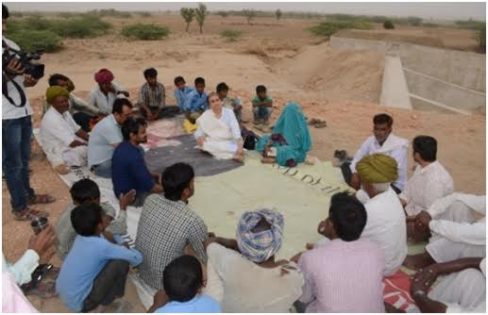
In 1999-2000 and again in 2003, Rajasthan's drought captured the headlines of news channels and newspapers, deeply impacting Amla Ruia.The distressing reports of the drought's impact prompted her to take decisive action. Moved by what she read, Amla made the journey to Rajasthan, determined to understand the situation firsthand. During her visits across the state, she encountered numerous villages facing critical water shortages. It was the sight of women laboriously fetching water that particularly struck her, highlighting the urgent need for intervention in these communities.
During her visit, Amla shares a particularly poignant experience: "In the Marwar region, I met a group of women fetching water from a well. Trying to lift a water pot from one of them, I was struck by its weight, unable to hold it for more than a few seconds. This encounter deeply touched me, highlighting the daily struggles faced by these women. It was a pivotal moment, sparking the idea to build check dams. I began to explore how I could help alleviate their hardship, and the concept of utilizing check dams to conserve water started to take form in my mind."
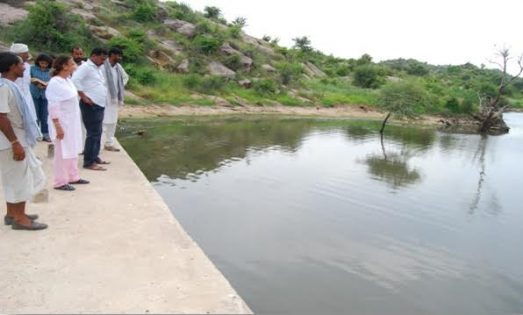
During her visits, she noticed that villagers collected rainwater for farming, but there was no proper system to save this water, leading to a lot of waste. This realization led her to think about rainwater harvesting. To address this issue, she established the "Aakar Charitable Trust," initiating the construction of dams to conserve rainwater and encourage water conservation in the villages. Through her trust, Ruia succeeded in constructing dams across several villages at a minimal cost, thus providing essential water resources to the communities.
The 'Aakar Charitable Trust' has pioneered a sustainable model for water conservation by funding 70% of the construction costs of these check dams, while the villagers contribute the remaining 30%. This collaborative approach not only secures essential water resources but also vests the responsibility of maintenance and sustainability of the dams with the local communities. With an initial investment of just Rs. 15 crore by the Ruia Foundation, complemented by the villagers' contributions, this partnership has made a one-time investment in building the check dams. Remarkably, this investment has catalyzed a yearly collective net profit of Rs. 500 crore, underscoring the profound economic impact and viability of conserving water through this initiative.
What is a check dam?
A check dam is an ancient technique used to address water scarcity. It is also known as "Khadin" in some regions. Check dams work by holding back rainwater. When there's heavy rainfall, the water spreads over a catchment area, increasing moisture in the soil. This helps to conserve water and maintain soil moisture, which is crucial for agriculture and recharging groundwater.
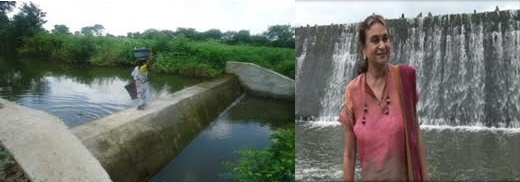
From Mandawar to Villages Across Rajasthan: Aakar Charitable Trust's Check Dam Legacy
In 2005, Aakar Charitable Trust built the first check dam at Mandawar in Alwar, Rajasthan.This initiative marked a turning point for the village. The conservation of water by the dam led to the rejuvenation of 150 ancestral wells, revitalizing the local aquifers. The process is simple yet effective: water retained by the dam seeps into the soil, replenishing the underground layers and eventually reaching the subterranean streams. Through capillary action, this moisture is drawn into the wells, enabling irrigation across the fields via pumps. This development allowed Mandawar's farmers to cultivate wheat for the first time, a crop far more lucrative than traditional gram crops, catapulting the village into prosperity with a profit of 1 crore in the very first year. Today, this village is making an annual net profit of Rs. 12 crore.
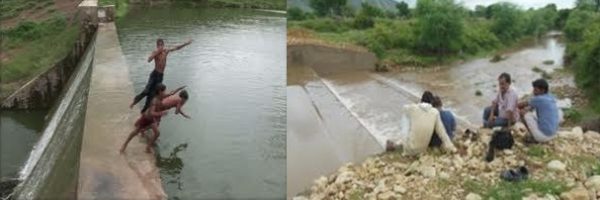
Following this success, the Trust extended its efforts to build check dams throughout Rajasthan and beyond, erecting around 260 dams in 156 villages across Dausa, Alwar, and Sikar. This expansion has significantly uplifted around two lakh individuals, boosting the collective annual income of these villages to more than 300 crore rupees. Among these, the most notable check dam resides in the Marwar region. By 2005, the Trust had also constructed 200 drinking water pools across Rajasthan, ensuring the annual collection of 1 crore liters of fresh water in these reservoirs, further testament to the sustainable impact of their work in combating water scarcity and enhancing community well-being.
Impact of Check Dams: Transforming Lives and Empowering Communities
These check dams have completely transformed the lives of farmers in the area, putting their lives on a new track. Farmers have highly benefited from the check dams we have collaboratively constructed. The water collected in these dams is used for farming, leading to better crop yields. Previously, they were involved in farming thrice a year, which includes kharif, rabi, and vegetable vegetation. Earlier, they could not satisfactorily involve themselves in farming even once a year. Today, they have become lakhpati and crorepatis, thanks to the availability of water. They have also started animal husbandry, as fodder for cattle is easily available now. Animal husbandry has indeed overtaken the income generated from crops. Every household in these regions has more than one two-wheeler and lives a life of dignity and fulfillment. Women have become economically independent through animal husbandry. They have started earning through making ghee and khoya. Female children were not sent to schools earlier as the womenfolk had to walk several km to fetch drinking water. Now the scenario is different. They go to school, as clean drinking water is now available at the doorsteps. With 4-8 cattle heads at almost every household, the menfolk have also started small-scale industries like repair jobs, etc. The men do not migrate to the cities in search of work now. Besides, earlier, no one was ready to get their daughters married to the men living in these dry villages. That is not a problem anymore. 115 villages have been transformed through our innovative water harvesting techniques. 1 lakh 56 thousand villagers have become crorepatis. Around 193 villages have been impacted with 1 lakh 30 thousand people positively affected. In total, approximately 300 villages comprising 3 lakh villagers have benefited from this.
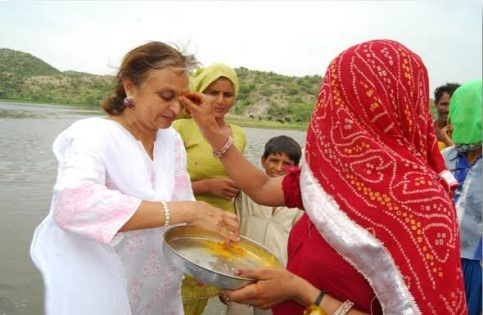
Amala Ruia's efforts have not been limited to Rajasthan; she has also worked in several regions of Madhya Pradesh, Maharashtra, and Dantewada Chhattisgarh. Ruia Foundation built 250 check dams in total – 16 in Maharashtra, 1 in Bihar, 1 in Odisha, 1 in Haryana, 2 in Jhansi in the Bundelkhand region, and the rest 229 in Rajasthan. The count is increasing by the year. They wish to cover more drought-prone regions across India in the future.
The Gundavali check dam in Maharashtra, which involved an investment of 25 lakh (11 lakh contributed by the villagers), has transformed 7 villages. From a mere 2%, now 98% of the farmers are involved in successful farming. In an interview on a popular television show, she mentioned that she has already resolved the water issues of over 600,000 people. In conclusion, Amala Ruia's initiative of constructing check dams has been instrumental in alleviating water scarcity in rural India, bringing about positive changes in the lives of millions of people.
Like this article? Share it with your friends


