


12th Nov|4m read
Unraveling the Controversy Surrounding Subhash Chandra Bose's Death
Explore the mystery of Netaji Subhash Chandra death, delving into accounts, alternative theories, and calls for DNA testing of his remains to resolve the debate.
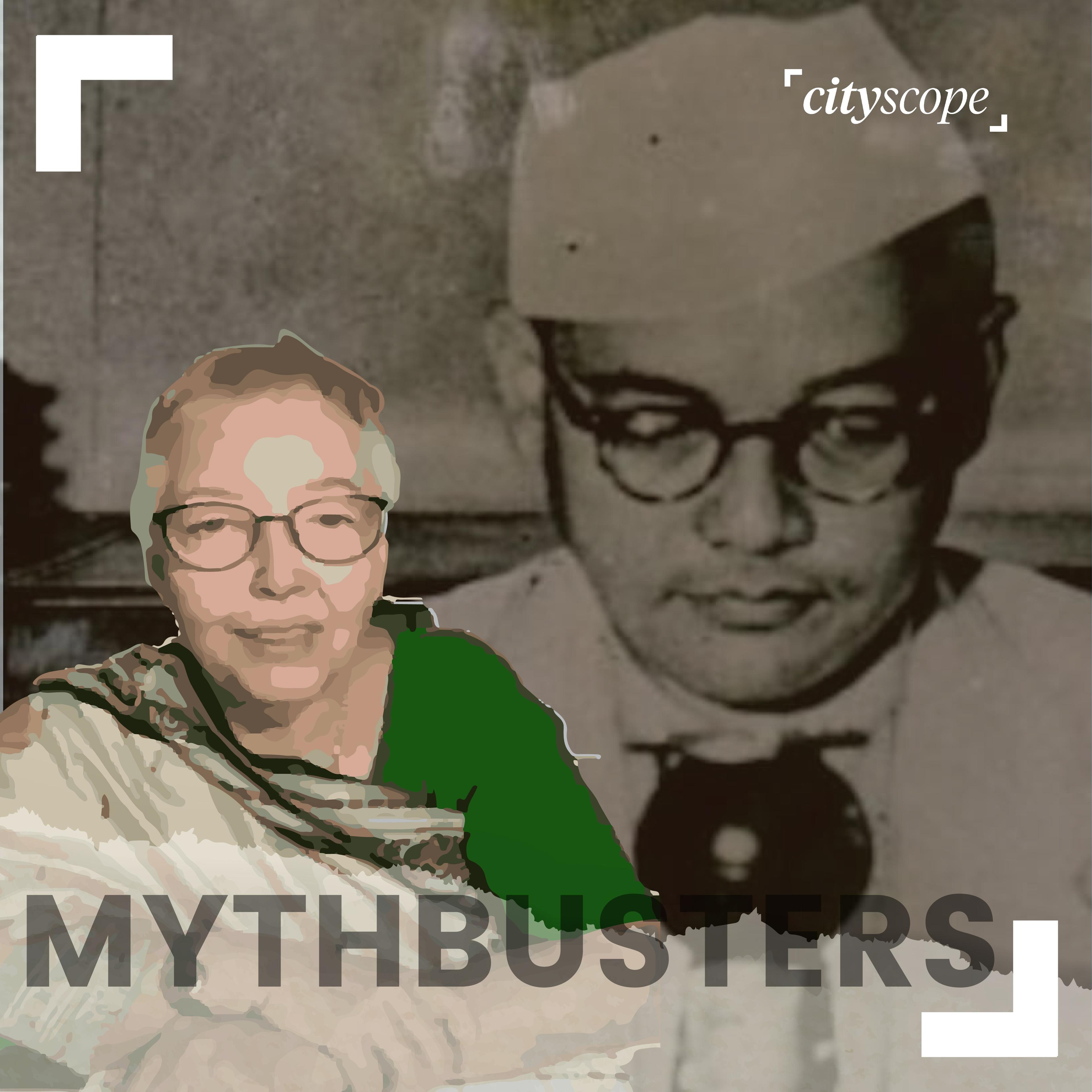
Of all the conspiracy theories shrouded in mystery across the Indian subcontinent, the death of Netaji Subhash Chandra Bose is one that has had the longest shelf life.
77 years after he reportedly died from third-degree burns after his plane crashed over Japanese-occupied Formosa (now Taiwan), a section of his supporters, most of them from Bengal, have consistently maintained that Netaji is still alive.
Now, his daughter—Anita Bose Pfaff—has said she will get to the bottom of the mystery surrounding her father’s death once and for all.
Anita is expected to soon approach the Indian and Japanese governments for a DNA test of Netaji’s ashes currently at Tokyo’s Renkoji Temple.
"I, as the daughter of Netaji, want this (mystery) to end in my lifetime,” she told PTI. “I would soon officially approach the Indian government with the request to conduct a DNA test. I will wait for some time for their response, if I get a response, it's good, and if I don't, I will get in touch with the Japanese government. If the government agrees or if they ask me to move forward and don't want to get involved, then I can take it forward.”
The Government of India, since independence, has instituted three inquiry commissions to unravel the mystery over Bose’s disappearance and death.
The Shah Nawaz Commission and Khosla Commission—both formed during Congress governments at the Centre—concluded that S.C. Bose had died in an air crash on August 18, 1945.
However, the Mukherjee Commission, formed by the BJP-led NDA government, claimed that he (Bose) didn’t die in the crash.
Such is the magnitude of mystery behind Bose’s death that in 2015, the West Bengal government released a total of 64 files on Netaji—all of which were previously in possession of the Home Department. The following year, the Narendra Modi government released another 100 files on him.
Bose was a legend long before conspiracy theories immortalized him in 1945. His appearance in Germany back in 1941—at a time when Congress leaders were in jail during the ongoing Quit India Movement—was the beginning of creating a sense of mystery about him. During his two years in Germany, Bose earned the admiration of many people and was very much seen as an “Indian Samurai.”
After his death, Bose’s other lieutenants, who had accompanied him to Manchuria (but were left behind in Saigon), claimed that they had never seen a body. No photographs were taken of the injured Bose, nor was a death certificate issued.
According to historian Leonard A. Gordon: “The war was ending; all was chaotic in East Asia, and there were no official reports released by the Governments of India or Britain. These governments did nothing to prevent the confusion. Even members of India's Interim Government in 1946 waffled on the matter. Bose had disappeared several times earlier in his life, so rumors began again in 1945 and a powerful myth grew.”
Later in the 1950s, sporadic stories began appearing claiming that he (Bose) had become a sadhu. Most of these myths were spun by an organization called “Subhasbadi Janata” which comprised of some associates of Bose from two decades ago.
For Anita Pfaff, who is a German, her father’s death is not a mystery. “It is not a mystery for me as there is ample proof that he died in the air crash,” she said. “But, I want his ashes to be brought back to his motherland. I want to do this service to my father.”
Pfaff also claims that she had approached the Indian government for a DNA test when the Congress government was in power, but never received a reply.
“This time, I won't dillydally much longer,” she said. “This COVID situation has already delayed the matter by two years. I would parallelly get in touch with the Japanese government. Initially, the Japanese government decided to keep the ashes as they thought they would be for a few months. But now it has been 77 years.”
According to her, the BJP government at the Centre has been doing more than its previous Congress counterpart to honor the legacy of her father. "But at the same time, I don't see a reason they should take the initiative without my pushing them," she said.
"To those who still doubt whether Netaji died on August 18, 1945, or not, it (DNA testing) offers a chance to obtain scientific proof that the remains kept at Renkoji Temple in Tokyo are his," she said.
Like this article? Share it with your friends


