

Pichwai Art: Rajasthan's Spiritual Masterpieces
Discover Pichwai art from Rajasthan vibrant cloth paintings depicting Lord Krishna's tales, crafted with devotion, capturing the region's spiritual essence.
Discovering the Artistic Legacy and Spiritual Essence
Nestled in the heart of Rajasthan's Rajsamand district, Nathdwara is a serene town celebrated for its profound spiritual and cultural heritage, located merely 50 kilometers from the lakecity, Udaipur. It's well-loved for its deep cultural roots and spirituality. Nathdwara is famous for its culture and traditions. One of its treasures is Pichwai paintings, which are special artworks showing Lord Krishna, a Hindu god, in bright colors.
The name 'Pichwai' comes from ancient Sanskrit, where 'Pich' means 'behind' and 'Wai' means 'to hang.' Simply put, Pichwai translates to 'hanging at the back.' This term beautifully captures the essence of where these paintings are traditionally displayed.
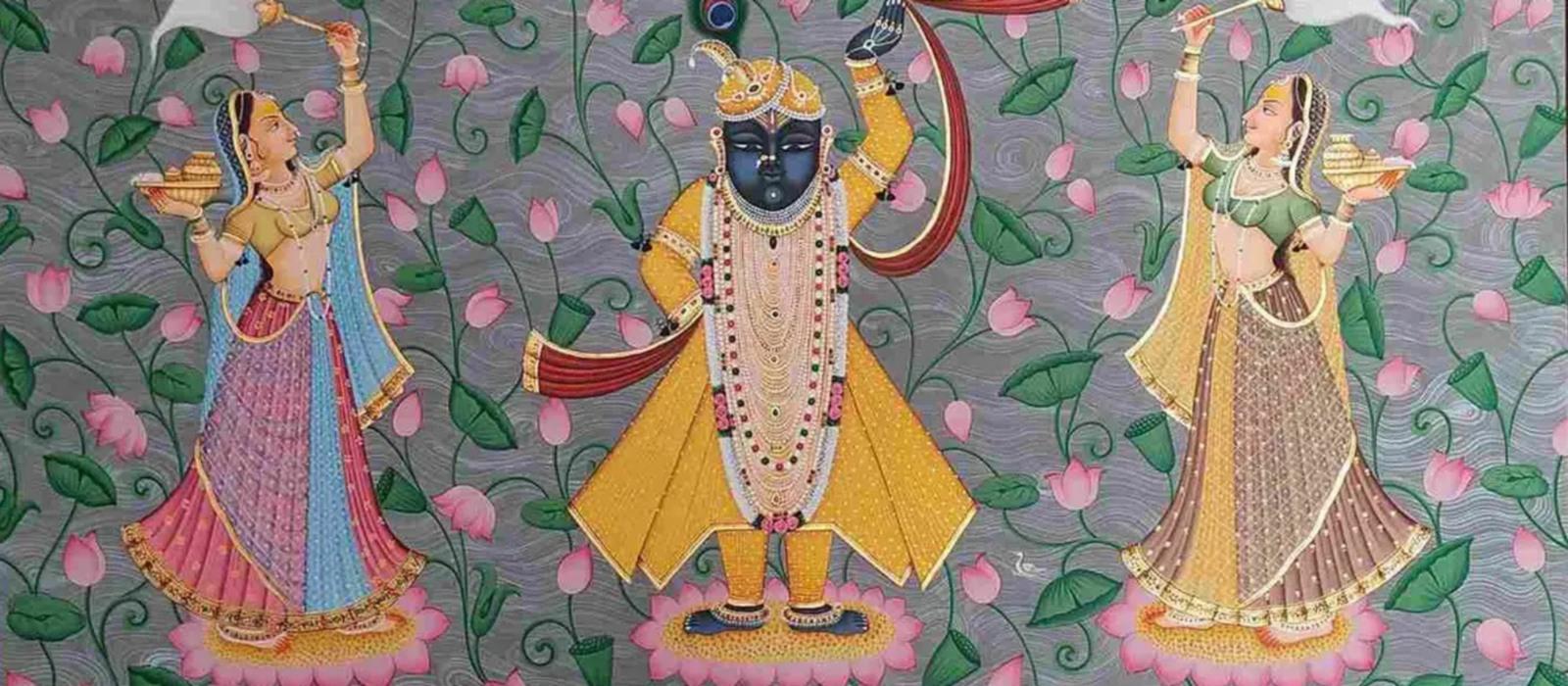
These beautiful artworks are more than just paintings. They blend deep devotion with stunning visuals, showcasing different aspects of Lord Krishna in bright colors. Pichwai paintings are detailed pieces of Hindu art, usually made on cloth. These large and impressive works primarily feature Lord Krishna and hold a special place in Hindu temples, especially in Nathdwara.
How Did Pichwai Paintings Start?
A Journey Through Time: The Origins of Pichwai
Pichwai art started around the 16th century when Vallabhacharya, a religious leader, established the Shreenathji Temple in Nathdwara. This temple focused on Lord Krishna. Followers of Vallabhacharya began creating Pichwai paintings to depict the various stories and magical moments from Lord Krishna's life. Over time, crafting these paintings became a special way to honor and remember Lord Krishna. To show love and respect for Krishna, people started making Pichwai paintings, showcasing his stories and adventures.
What Do Pichwai Paintings Show?
Pichwai Art: A Divine Canvas Depicting Krishna's Life and Leelas
Pichwai art is like a beautiful storybook of Lord Krishna's adventures. Imagine paintings that dance with the colors of Krishna's playful moments and the festivals that celebrate him. These artworks are like windows into scenes filled with joy and devotion, from the magical moment when Krishna lifts a mountain to protect his friends, to the enchanting dance of love and the vibrant splashes of Holi.
At the heart of each Pichwai is Shreenathji, a special version of Lord Krishna adored by many. It's as if each painting whispers different tales from Krishna's life, wrapping viewers in a blanket of devotion.
Imagine a painting not just as art, but as a calendar of celebrations, changing with each day to match the rhythm of rituals and festivities. These paintings are a symphony of stories, where every brushstroke signs of Krishna's playful thefts, miraculous deeds, and the sweet romance with Radha. Each piece is a unique celebration, capturing moments of joy, devotion, and the divine dance of life with Lord Krishna.
Making Pichwai Paintings
Crafting Pichwai Art: Colors, Techniques, and Brilliance
In the world of Pichwai paintings, the creation process is a journey back to nature and tradition. Crafting Pichwai paintings is an intricate artistry. Artists begin by reinforcing the fabric to ensure its durability. Next, they apply natural colors with meticulous techniques, not just any hues, but those born from the heart of nature itself. They coax out vibrant shades from plants, painting a spectrum that sings of the earth's own beauty. But the alchemy doesn't end there. To make these colors cling to the fabric, artists turn to the humble babul tree, harvesting gum arabic as a natural adhesive. Some Pichwai paintings even incorporate real gold and silver, adding a touch of brilliance to the art.
The creation of Pichwai paintings is a labor of love and devotion, requiring not just artistic skill but a deep spiritual commitment. Each stroke of the brush is imbued with reverence for Lord Krishna, making the crafting process a form of worship in itself. The time invested in creating a single Pichwai painting can range from a few weeks to several months, depending on the complexity and size of the artwork. This painstaking attention to detail ensures that every aspect of the painting, from the intricate patterns to the vibrant colors, is a testament to the artist's dedication to their craft and their devotion to the divine. This process highlights the unique blend of artistry and spirituality that Pichwai paintings represent, making them not just artistic masterpieces but also profound expressions of faith.
Pichwai Paintings Today
Pichwai Paintings: From Temples to Tourists
Not just for temples, people now hang Pichwai paintings in their homes too. They are popular with visitors from other countries as well. Artists from Nathdwara and nearby places keep making these beautiful paintings, keeping the tradition alive.
The Regional Roots and Community of Pichwai Artists
Pichwai artists predominantly hail from three main sub-groups: "Aadi Gaur" from Udaipur, "Jangir" from Jaipur and Jodhpur, and the lesser-known Mevada. Many of these skilled artists reside in the vicinity of Nathdwara and work closely as a community.
Voices of Tradition: Prominent Pichwai Artists
To bring the essence of Pichwai paintings closer to heart, let's share a reflection from Sushil Soni, one of the notable artists in the realm of Pichwai art. He embarked on his artistic journey at the age of 10, starting alongside his father. Sushil Soni, also known as the 'Pichwai's Pied Piper,' received formal art education and continued to hone his skills.
'For me, Pichwai is not just an art form; it's a meditation, a way to connect with the divine. Every brush stroke carries a prayer, and with each color, we narrate the divine play of Lord Krishna. It’s a tradition that has been passed down through generations in my family, and it’s an honor to continue this sacred legacy,' says Soni.
Sushil Soni is among the prominent Pichwai artists, along with Praveen Moonat, Raghunathan Sharma, Suresh Sharma, Kalyanmal Sahu, Shahzad Ali Sherani, Kuldeep Soni, Kalyan Joshi, Rajendra Sharma, Lalit Sharma, Laxman Sharma, Vijay Sharma, Rajaram Sharma, Shri Ghasiram Sharma, Bhuri Lal Sharma, Khoobi Ram Sharma, B.G. Sharma, Reva Shankar Sharma, Tulsidas Chitrakar, Narottam Narayan Sharma, Nainsukh Sharma, Dwaraka Das, and Vitthalji Sharma. These artists have made significant contributions to the Pichwai art form.
Pichwai in the Global Spotlight: From Nathdwara to Runways
In recent years, Pichwai art has gained recognition beyond Nathdwara's boundaries, spreading to different parts of India, such as Gujarat, Mathura, and Aurangabad. Pichwai patterns have been used in clothing, appearing in fashion shows around the world. Designers have embraced traditional colors, printing techniques, and Pichwai patterns, incorporating them into clothing and showcasing them on prestigious international platforms like Lakme Fashion Week and more. This shows how popular and loved these designs are, far beyond Nathdwara.
As Pichwai paintings grace the global stage, their journey from the sacred walls of Nathdwara's temples to the runways of international fashion shows not only celebrates the art form but also revitalizes the local communities that sustain this tradition. The international acclaim has opened new avenues for Pichwai artists, enabling them to reach a wider audience and secure a better livelihood. Moreover, the global spotlight on Pichwai art has encouraged collaborations between local artists and international designers, creating a fusion of traditional and contemporary styles that honor the past while innovating for the future. This cross-cultural exchange not only enriches the art form but also strengthens the economic foundations of the artist communities, ensuring the legacy of Pichwai paintings continues to thrive and inspire across generations.
In conclusion, Pichwai art is more than just a type of art – it's a way of expressing devotion and tradition. These paintings help us feel closer to Lord Krishna's life and his amazing stories. Plus, they let us appreciate the beauty of Rajasthan's art and culture. So, beyond being art, Pichwai paintings connect us to something deeper and take us on a journey into Rajasthan's rich heritage.
Like this article? Share it with your friends


