


How AI is rewiring the way India discovers it's own cities
From Udaipur's bylanes to Bengaluru's basements, artificial intelligence is becoming the invisible guide that connects people with experiences their city has always had but never knew how to surface.
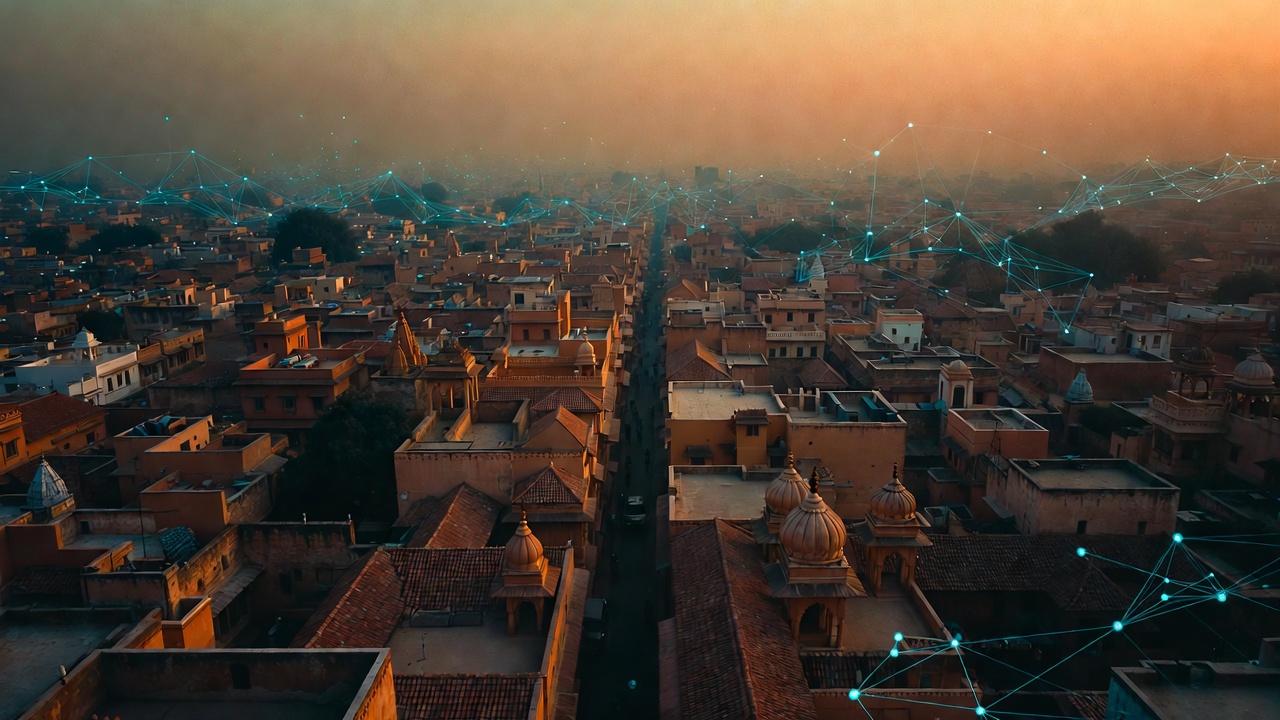
Search "things to do in Jaipur" and you'll get the same 10 results that have been ranking since 2015. Amer Fort. Hawa Mahal. A cooking class. The internet's understanding of an Indian city is a postcard, not a living, breathing place.
Meanwhile, a 3rd-generation block printer in Sanganer is quietly teaching weekend workshops. A rooftop chai concept in Jodhpur has no Google presence. A pottery studio in Pune has 200 Instagram followers and zero discoverability. The city knows. The platform doesn't. And the user is stuck in between.
This is the core problem of local discovery in India: an abundance of experience, paralysed by an absence of structure. AI is the infrastructure that finally changes this equation.
The "Near Me" Problem Is Deeper Than You Think
India has over 4,000 cities and towns. The vast majority of local commerce, workshops, experiences, artisan studios, wellness spaces, underground music nights, exists entirely offline or in fragmented WhatsApp groups and Instagram stories. Platforms haven't cracked this not because the demand isn't there, but because the supply side is impossibly hard to digitise at scale.
A local business owner in Udaipur doesn't fill out a structured listing form. They send a blurry poster. They update their hours through a WhatsApp forward. Their "description" is three words and a phone number. Traditional platforms require clean, structured data. India's local economy runs on everything but that.
This is where AI stops being a buzzword and becomes genuinely useful.
Five Ways AI Is Becoming India's Local Intelligence Layer
1. Semantic Search Over Keyword Matching
Old search: "pottery class Jaipur." New search: "something creative I can do this Sunday with my partner that doesn't feel like a tourist trap." These are fundamentally different inputs, and keyword search fails the second one completely.
AI-powered semantic search understands intent, mood, and context. Vector databases convert both listings and queries into meaning-based representations, so a workshop described as "hands-on, earthy, and meditative" surfaces for someone who typed "relaxing activity, not too touristy." The match happens at the level of meaning, not vocabulary.
2. Auto-Structuring the Unstructured
Most Indian local businesses communicate in Instagram captions, voice notes, and WhatsApp messages. AI can extract structured metadata, category, pricing, timing, target audience, vibe, from these unstructured inputs automatically. A platform that can onboard a partner from a single Instagram post, without a lengthy form, suddenly becomes accessible to the thousands of micro-businesses that have been invisible to digital discovery simply because the bar to entry was too high.
3. Personalisation Without a User Profile
Indian users don't fill out preference surveys. They also tend to be first-session explorers, they arrive without history, context, or a login. AI can infer intent from implicit signals: time of day, location, browsing path, device, and seasonal context. A user browsing at 7pm on a Friday evening near Koregaon Park gets a very different feed than someone browsing at 11am on a Tuesday in Jaipur's old city. Personalisation starts working before the user has told you anything about themselves.
4. Conversational Discovery — The Concierge Model
The search bar is a 1990s interface. India's next 200 million internet users are coming through WhatsApp and voice. Conversational AI turns discovery into a dialogue: "I have 2 hours tomorrow evening, budget ₹500, prefer something outdoors, I'm in Indiranagar." The platform responds with ranked suggestions, context, and a booking link, not ten blue links.
This is the model that fits India. Chat-native, low-friction, no app download required.
5. Trend Detection and Demand Forecasting
AI monitoring search patterns, booking velocity, and social signals can surface what's emerging before it becomes mainstream. A pottery café trend building in Bengaluru can be flagged to platform partners in Jaipur as a category opportunity, two months before it would have been obvious. This gives platforms and their partners the ability to move at cultural speed, not reporting speed.
The Real Whitespace: Tier 2 India
AI-powered discovery is advancing fastest in metros, where data density already exists. But the genuine opportunity, and the genuine gap, is in Tier 2 and Tier 3 India. Cities like Jaipur, Udaipur, Indore, Kochi, Nashik, Chandigarh, and Mysuru have extraordinarily deep creative and cultural ecosystems. Heritage crafts, food entrepreneurs, wellness practitioners, performing artists, all operating with near-zero digital discoverability.
A platform with an AI layer that can ingest, structure, and surface this content doesn't just win users in these cities. It creates the market. It makes visible what was always there but never indexed.
What This Doesn't Mean
AI doesn't replace local knowledge. It amplifies it. The warmth of a personal recommendation, the texture of stumbling into something unexpected, the trust built by a curator who actually lives in the city, none of that goes away. What AI does is make that quality of knowledge reproducible at scale, so it works for the millionth user, not just the one who grew up there.
The romance of discovery stays. The inefficiency goes.
The Bottom Line
India's experience economy isn't concentrated in five cities. It's distributed across thousands of them, in workshops, heritage havelis, rooftop studios, underground gigs, and weekend markets that no algorithm has ever indexed. AI is the infrastructure that makes that distribution legible: to users searching for something real, to platforms trying to serve them, and to local businesses that have been building quietly without an audience.
The cities have always had it. Now they finally have the map.
Cityscope is building hyperlocal discovery infrastructure for Indian cities, starting with Rajasthan.
Like this article? Share it with your friends


