

FAST TV's Impact on Online Content Consumption
Explore how FAST TV is reshaping online content consumption by offering linear TV experiences with on-demand flexibility and targeted advertising.
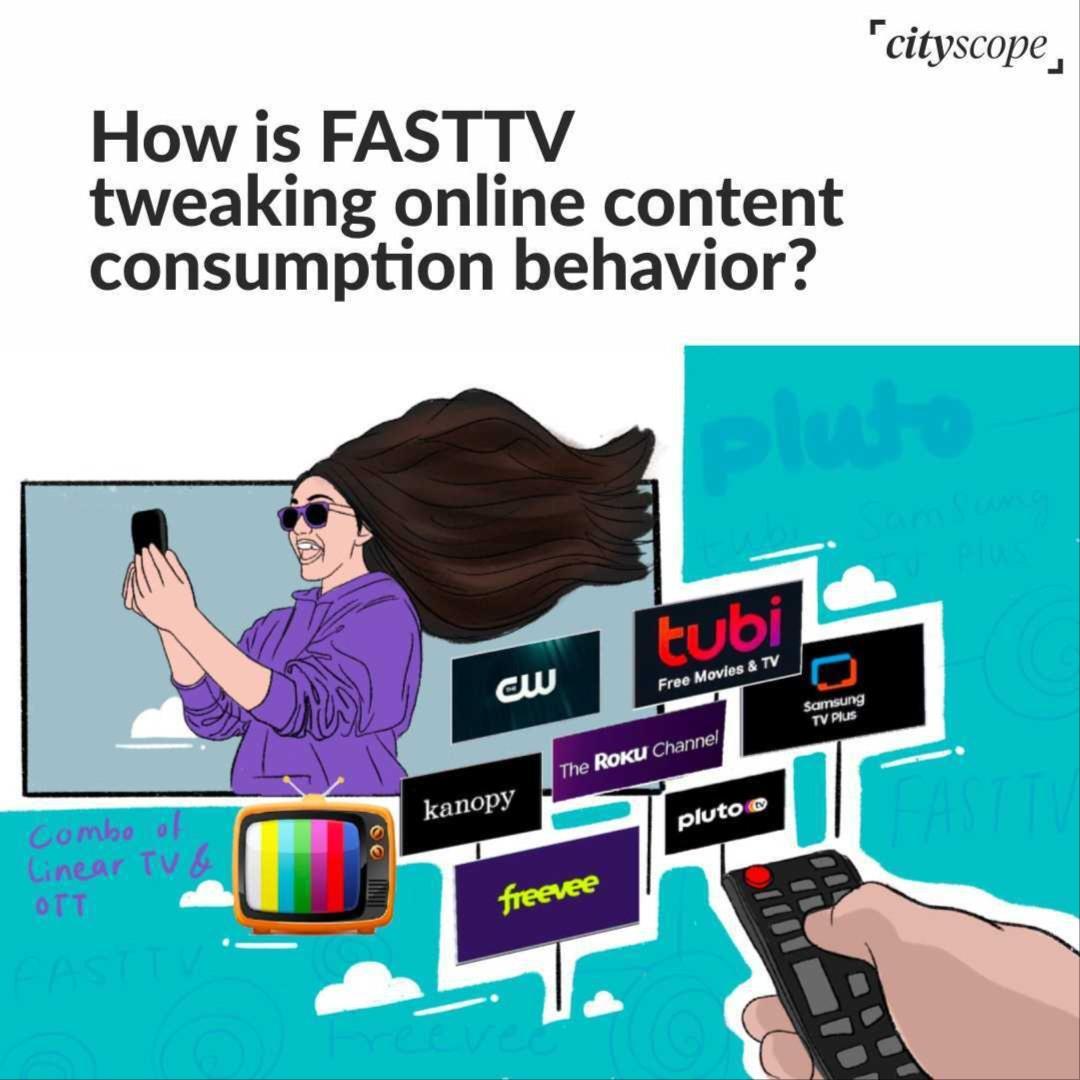
One would agree that growing up watching TV was relatively easy as all one had to do was know what time the content will be broadcasted and sit back, relax, and watch. The downside of linear TV’ airing was one was not able to choose ‘when’ to watch and ‘what’ to watch and be available when the content is being streamed.
This lack of choice was addressed by OTT (Over the top) platforms where the content was streamed over a high-speed internet connection instead of being shared by broadcasters, cable, and IPTV operators.
OTT gives one a plethora of options to choose from. From fiction to non-fiction, movies, TV series, movies, documentaries, and above all content specifically produced for OTT.
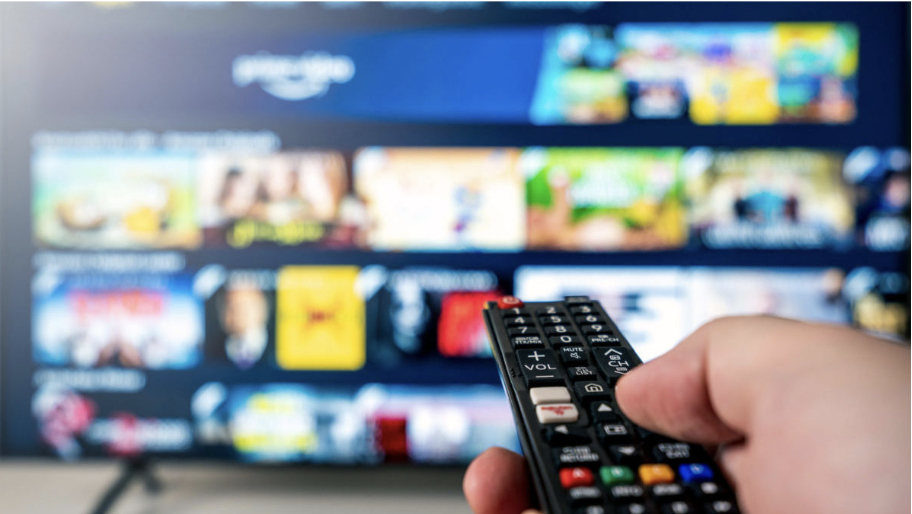
PARADOX OF CHOICE
An average human being makes at least 35,000 choices every day, as per various sources and studies. The list of choices starts from what time to wake up, to whether hit a gym, do yoga or not, and deciding what to wear, and the list goes on. The human mind is programmed to sub-consciously cultivate habits so one does not have to make choices.
With OTT, one was free to choose ‘what’ to watch, and ‘when’ to watch, but users of OTT are confused and wish they did not have to choose from the gazillion choices that they are bombarded with.
FASTTV comes with the best of both worlds
FastTV or Free Ad-Supported Streaming TV brings the best of both worlds where users watch content on channels that are designated for each content along with advertisements. A FASTTV saves the trouble of endless scrolling through OTTs.
For instance, if a user wishes to watch a show, the user must tune in at a fixed time of the day, leading to predictability in the time of content consumption. The show will be interrupted with shorter breaks as FAST channels have lower ad loads of only 10 minutes.
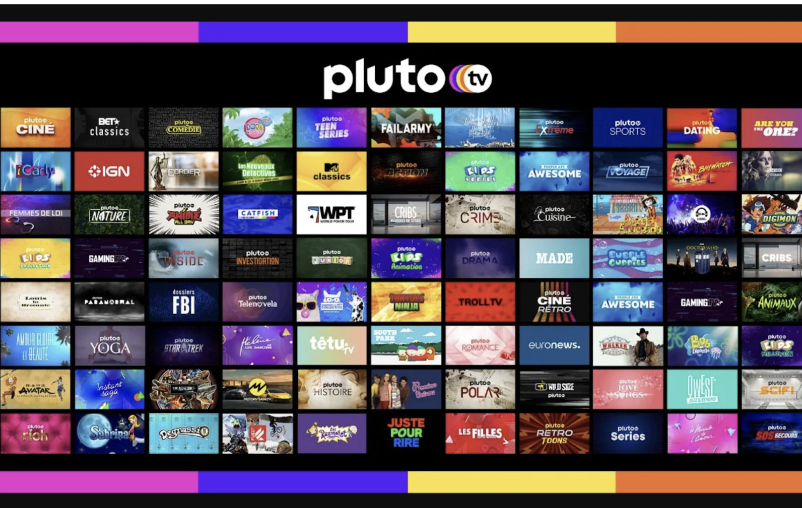
FASTTV saves consumers from the confusion of making choices and marketers from the wrong placement of ads, leading to better conversions and profitability.
Linear TV offers slot buying and programmatic buying of ads, and OTT offers dynamic buying and show-to-show buying. With slot buying, a marketer buys a slot and places an ad, and with programmatic buying, the marketer matches the ad budget and available slots and places an ad. However, users of linear TV always have a choice of skipping commercials by changing the channel, which would translate into less reach until a product is placed on multiple channels.
Dynamic buying is placing personalized ads, on the basis of the likes, dislikes, and preferences of OTT users, and show to show ad-placement is when a marketer pays a show to place their ads, for instance- ads placed in between IPL live streams.
FASTV uses strategic placements of ads leading to better performance, a main reason for FASTTV's exponential revenue growth. FASTTV is expected to generate $12 billion by 2027, as per a study released by Omdia.
Ads are better placed considering viewers' likes, dislikes, and preferences which ensures better ad targeting.
These ads also play a crucial role in generating revenue for FASTTV while they provide content for free. Users of FASTTV will not have to renew their subscription for multiple OTT platforms not pay the monthly cable subscription, but rather sit back and enjoy free content that is being streamed.
And, as rightly quoted by Jonathan Zittrain, when something online is free, you are the product.
Who are the players in the FASTTV market
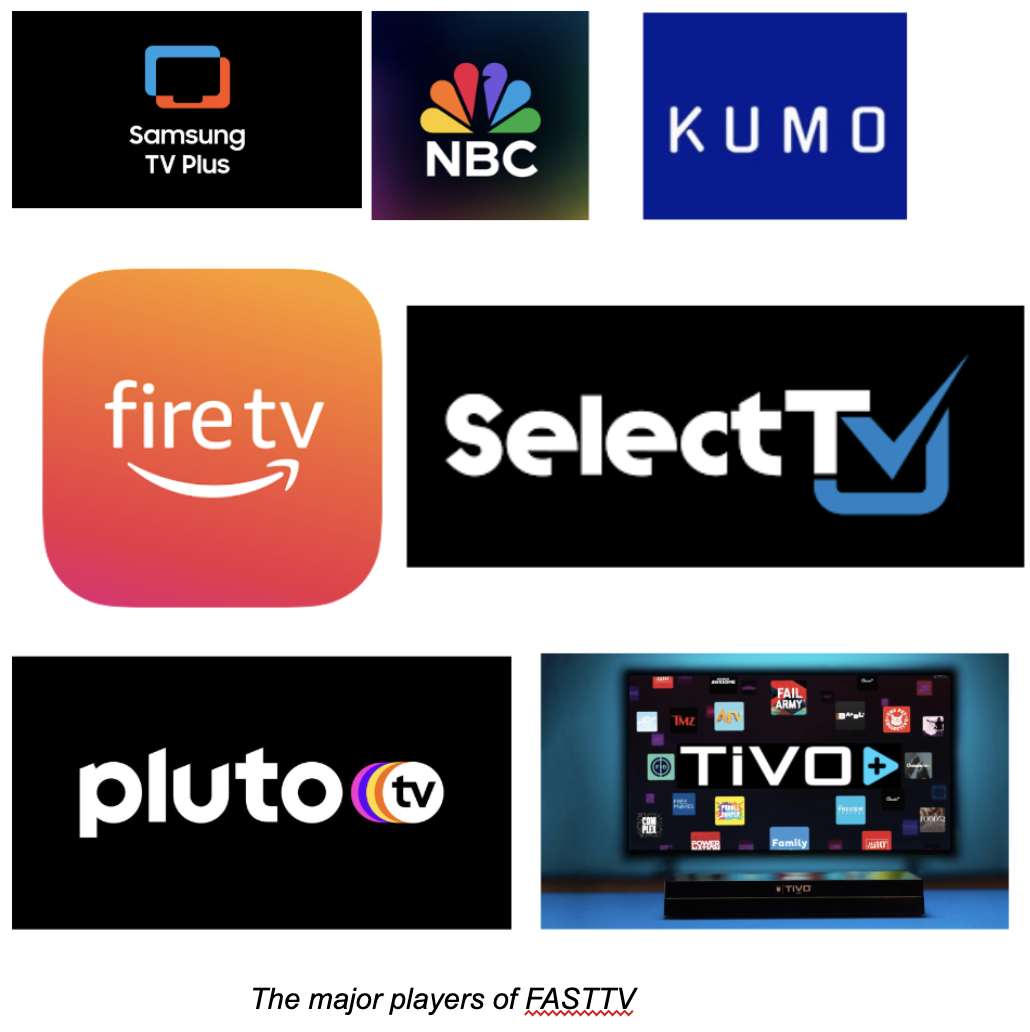
The major players in the FASTTV market include Samsung+, Pluto, NBC, Tivo, Select TV, Kumo, and now Amazon’s Fire TV joining the list. Some of the acquisitions that took place in the FASTTV market include Pluto acquired by Viacom, Xumo, and Peacock by Comcast, and Tubi by Fox.
What does this mean for India?
India currently has 900 million users as per a survey conducted by BARC (Broadcast Audience Research Council) in 2020 and an OTT audience of 353 million, as per Ormax Media’s OTT audience report published in 2021. These numbers show that TV is still a highly preferred mode of content consumption in India.
India’s trajectory on content consumption shows that India unlike other countries would continue its loyalty to linear TV and expand its user base to another 400 million and FASTTV might little longer to tap the Indian market as India is still exploring the possibilities of OTT content while maintaining its loyalty to linear TV.
OTT growth trajectory in India with comparison to the user base
OTT came to India in 2008 with Reliance launching its BIGFLIX having a slow and steady rate of market growth. The pivotal point for change in how OTT consumption was the live streaming of IPL matches in the year 2013, and 2014 by nexGTv and later by Disney+ Hotstar in 2015. These IPL live streaming contributed to the growth of Disney+ Hotstar which would later invest in creating original content for the platform with the introduction of Hotstar Originals.
Other players in the OTT market in India are SonyLiv, Zee5, ALTBalaji, Amazon Prime, Jiocinema, Voot, Netflix, and MXplayer among many other regional OTT platforms.
USERS OF OTT IN INDIA
OTT users account for 424 million users translating into an Indian having 2.4 subscriptions on average, as per Ormax media’s Audience Sizing Report 2022.
72% of Indians are willing to pay for an all-in-one platform for content consumption and 83% wish they had access to share streaming profiles across platforms to enhance their content viewing experience.
The users of OTT in India are faced with similar problems as elsewhere in the world, as many Indians scroll through these platforms to find content and leave the app without choosing one.
Sejal Sharma in her research paper ‘Tyranny of Choices’ pointed out that 74% felt that they were being given a lot of choices, and 61% agreed that choosing ‘something to watch is frustrating.
Will FASTTV be successful in capturing the Indian market?
Traditionally, the domination of Indian’s inclination towards TV over OTT can be noted as a major reason for this Tyranny of choices not to be felt majorly by users. The number of OTT users is expected to grow to 36%, as per Statista.
The gradual shift in content consumption behavior would be inevitable with Indian audiences preferring linear TV experiences while engaging with newer content where they will not be bombarded with choices but rather just have to sit back and enjoy the predictability that FASTTV offers. Additionally, FASTTV offering free content solves the problem of switching from one streaming platform to another in search of content to watch.
Resources
https://www.appsflyer.com/glossary/fast-tv/
Like this article? Share it with your friends


