


Why India's AI Future Might Need Sovereign Clouds, Not AWS
A hospital's patient data should not leave India to be processed by AI in a Virginia data centre.
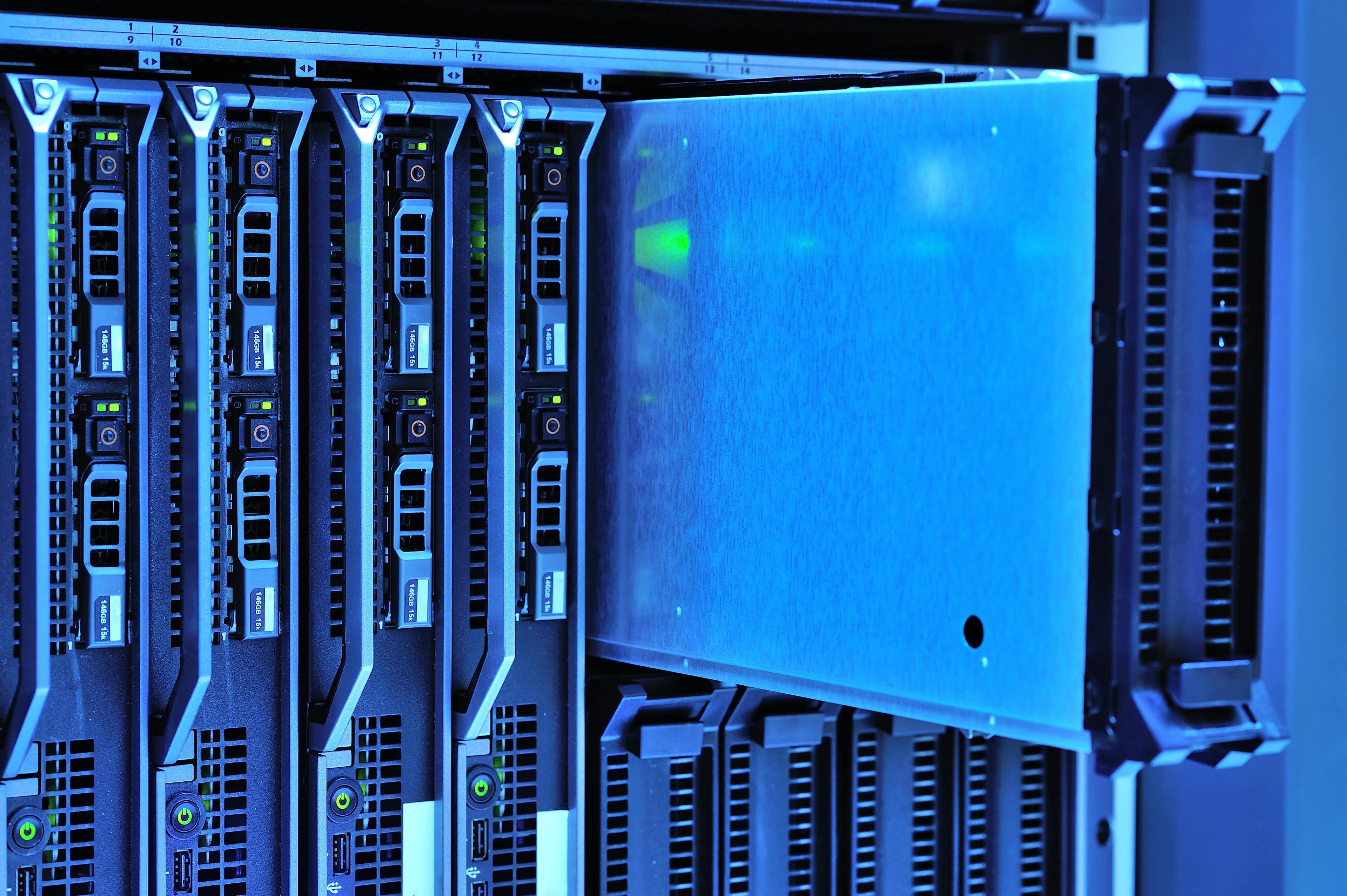
Proximal Cloud's founder Renu Raman has spent 30 years thinking about this problem. His 8th startup is building the infrastructure answer.
Every AI application that requires sending data to a cloud server faces the same structural problem: the data leaves the building. For most consumer applications, this is an acceptable tradeoff. For a government agency's citizen records, a hospital's patient files, an agricultural cooperative's farmer data, or a university's research datasets, sending that data to a hyperscaler in the United States or Singapore is not just a privacy concern — it is increasingly a regulatory, legal, and national security question. Proximal Cloud is the New Delhi startup that believes the answer is to bring the intelligence to the data, not the data to the intelligence.
Renu Raman has a specific philosophy about data infrastructure: compute should live where data lives, not the other way around. After 30 years spanning silicon design, systems architecture, in-memory computing, and cloud infrastructure — and seven prior ventures — he founded Proximal Cloud in 2025 with a mission he articulates with unusual clarity: empower every enterprise to unlock the full value of its proprietary data without ever having to send that data somewhere else.
2025Founded, New Delhi
8thVenture for founder Renu Raman
AMD+ NxtGen + E2E Networks partnerships
30+Years of founder experience in infrastructure
The Sovereign AI Case: Why It's Not Just a Policy Argument
The conversation about AI sovereignty in India has accelerated significantly since the Digital Personal Data Protection Act (DPDPA) came into force and the IndiaAI Mission laid out a national framework for AI infrastructure. But the Proximal Cloud thesis is less about policy compliance and more about a fundamental architectural observation: AI is most valuable when it can operate on the full richness of an organisation's proprietary data. And that data cannot be fully utilised if it can't leave the premises.
Consider a hospital system. A large hospital group has millions of patient records, years of diagnostic imaging, clinical notes, and treatment outcome data. The AI systems that could generate the most value from that data — clinical decision support, early disease detection, population health management — require access to that full dataset. Sending it all to AWS, even with appropriate data processing agreements, involves legal exposure, patient consent implications, and residency risk that regulated healthcare organisations are understandably reluctant to accept. Proximal Cloud's answer: deploy AI compute inside the hospital's existing infrastructure, so the data never moves.
"The most powerful AI applications in regulated industries will be built by organisations that can run AI on their full proprietary data without it leaving their environment. That requires infrastructure built for the edge — not infrastructure built around centralised hyperscalers."
The Technical Architecture: Edge AI and Sovereign Compute
Proximal Cloud's model is enterprise-grade cloud infrastructure that deploys inside client environments — hospitals, government agencies, agricultural operations, universities — rather than in a shared hyperscaler data centre. The company describes this as bringing compute to the edge of where data already resides.
The partnerships with AMD, NxtGen, and E2E Networks provide the hardware and connectivity layer for this architecture. AMD's GPU infrastructure is the compute backbone; NxtGen and E2E Networks provide Indian cloud and connectivity fabric. Together, they form a supply chain that allows Proximal to deploy AI-capable compute nodes in environments that cannot use hyperscaler public cloud — whether because of data residency regulation, connectivity constraints, or organisational policy.
The March 2026 partnership with Instant Systems Inc. — a Silicon Valley-based AI-first venture builder — extends this to startup enablement: Proximal is positioning itself not just as enterprise infrastructure but as the platform on which AI-first startups can build products that require on-premise or hybrid deployment.
Target Sectors: Healthcare, Education, AgTech
Proximal Cloud has been explicit about its initial sector targets: healthcare, education, and agricultural technology. These three sectors share specific characteristics that make sovereign AI infrastructure relevant: they handle sensitive citizen data (patient records, student information, farmer data), they frequently operate in areas with limited or expensive internet bandwidth, and they face increasing regulatory pressure on data localisation.
At the India AI Impact Summit 2026, Proximal showcased real-world AI use cases across all three sectors — indicating that these are live proof-of-concept deployments rather than theoretical applications. The specific use cases were not disclosed publicly, but the Summit showcase is a meaningful signal that the company has moved beyond whitepaper architecture into working implementations.
⚠ Honest Risk Assessment
▲2025-founded infrastructure company: Cloud infrastructure is capital-intensive. A company founded in 2025 with an edge deployment model faces significant hardware, deployment, and support cost challenges at scale. Funding trajectory and capital efficiency are critical variables.
▲Enterprise sales complexity: Deploying inside hospital or government IT environments requires navigating complex procurement, security review, and change management processes. This creates long sales cycles and high cost of sale.
▲Hyperscaler competitive response: AWS, Azure, and Google Cloud are all investing in edge AI products (AWS Outposts, Azure Arc, Google Distributed Cloud). Proximal's window of differentiation depends on execution speed and India-specific regulatory alignment.
▲Reference customer dependency: Infrastructure companies live and die on reference customers. Proximal needs 2-3 highly visible, credible deployments in target sectors to build the trust required for enterprise procurement.
Frequently Asked Questions
What is Proximal Cloud?
Proximal Cloud is a New Delhi-based enterprise AI infrastructure company founded in 2025 by Renu Raman. It provides sovereign cloud infrastructure that deploys AI compute inside client environments — hospitals, government agencies, universities, agricultural operations — so that sensitive data never has to leave the premises to be processed by AI.
What is "sovereign AI" and why does it matter?
Sovereign AI refers to AI infrastructure that keeps data within a specific jurisdiction — in Proximal's case, inside the client's own environment or within India. This matters for regulated industries (healthcare, government, finance) where data residency is either legally required or operationally essential. The alternative — sending data to US or Singapore hyperscaler data centres — creates legal, regulatory, and security exposure for organisations handling sensitive data.
Who is Renu Raman?
Renu Raman is a serial entrepreneur with over 30 years of experience in silicon design, systems architecture, in-memory computing, and cloud infrastructure. Proximal Cloud is his eighth venture. His background spans both hardware and cloud infrastructure, giving him an unusual breadth of perspective for building edge AI systems.
What partnerships has Proximal Cloud announced?
Proximal Cloud has announced partnerships with AMD (GPU compute backbone), NxtGen (Indian cloud infrastructure), and E2E Networks (Indian cloud and connectivity). In March 2026, it also announced a partnership with Instant Systems Inc., a Silicon Valley-based AI-first venture builder, to extend its platform to startup enablement.
Editorial Verdict
Right Problem, Right Time, Right Founder. Capital and Execution Are the Variables.
The problem Proximal Cloud is solving — AI infrastructure that keeps sensitive data in India, inside client environments — is becoming more urgent by the month as DPDPA implementation accelerates and enterprises in regulated sectors face increasing scrutiny about data residency. The timing is good, and the founder's 30-year infrastructure background is a genuine asset for a hardware-and-software problem that most pure software people underestimate.
The challenges are structural to the edge infrastructure business: it's capital-intensive, sales cycles are long, and the hyperscalers are building toward the same use cases with vastly more resources. Proximal's path to defensibility runs through India-specific regulatory alignment, sector-specific deployment depth (especially in healthcare and government), and the reference customer trust that comes from being the first to solve the on-premise AI deployment problem properly.
At 2025-founded, the company is early. The partnerships with AMD, NxtGen, and E2E Networks are strong signals of hardware credibility. The India AI Impact Summit showcase is a proof of concept signal. What comes next — reference customers, follow-on funding, and deployment scale — will determine whether Proximal becomes the foundational AI infrastructure layer for India's regulated sectors.
Sources & References:
Proximal Cloud official website (proximal.cloud) · CIOL India AI Impact Summit 2026 coverage · Tildee sovereign AI feature · Tripura Star News / Proximal-Instant Systems partnership announcement · AMD, NxtGen, E2E Networks partnership coverage · India DPDPA implementation timeline · IndiaAI Mission documentation
This editorial is produced for informational purpose. All figures sourced from publicly available records as of early 2026.
For more important updates and curated information on regular basis, Join our whatsapp community : https://chat.whatsapp.com/DfkQi7r4o4dDduWvYor9dk
Like this article? Share it with your friends


