


UP Signed ₹25,000 Crore Deal With a Bootstrapped AI Startup
Puch AI is a Bengaluru voice-first AI platform built for everyday Indians on WhatsApp and phone calls. Its product makes genuine sense.
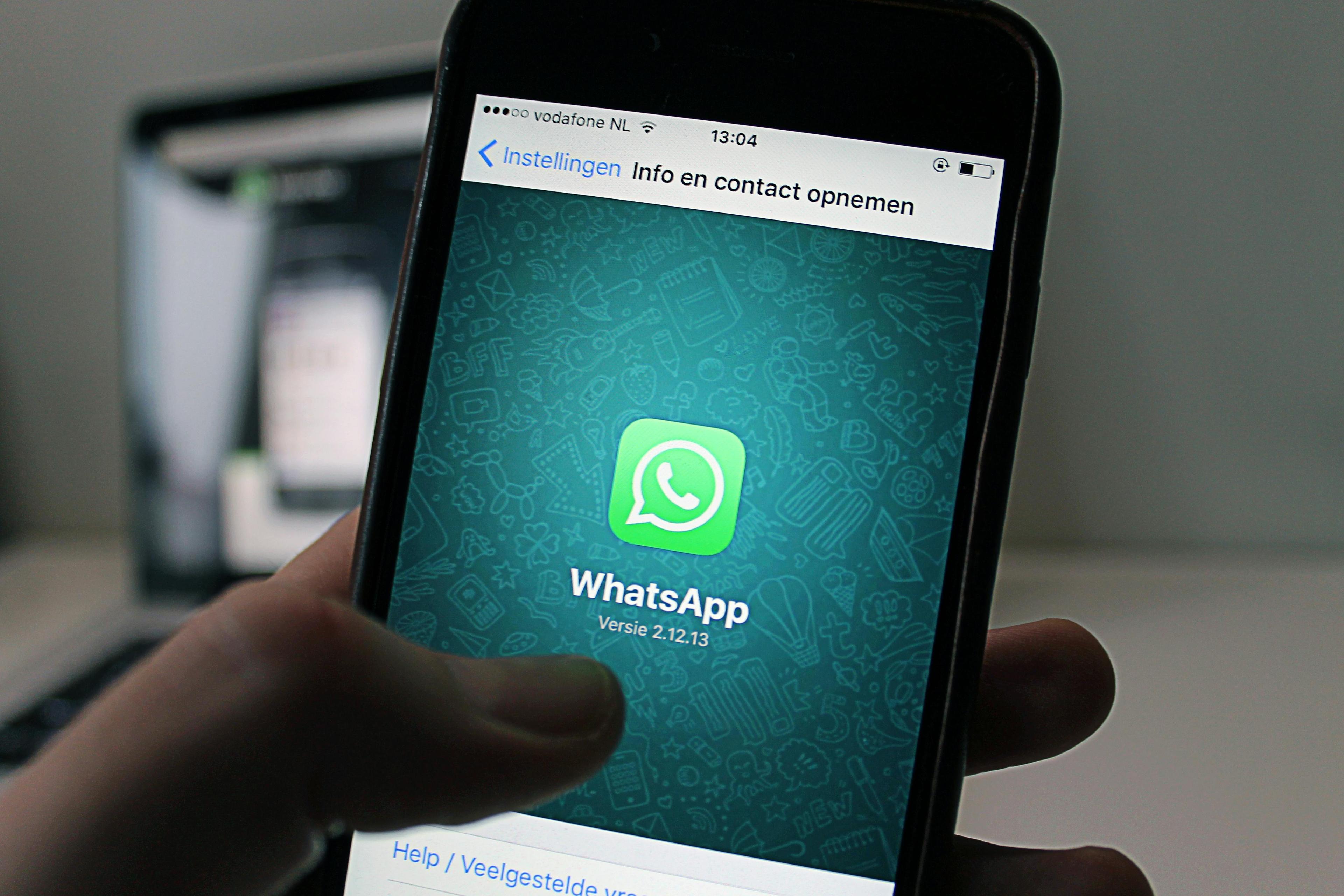
The UP government MoU made national headlines for all the wrong reasons. Both things can be true simultaneously.
When the Uttar Pradesh government announced a ₹25,000 crore Memorandum of Understanding with Puch AI — a bootstrapped Bengaluru startup with ₹42.9 lakh in annual revenue and zero external funding — the internet had opinions. Most of those opinions missed the more interesting question: what is Puch AI actually building, and is it worth building regardless of the MoU math?
An MoU worth ₹25,000 crore signed with a company whose total annual revenue is approximately ₹43 lakh means the agreement is valued at roughly 5,800 times the company's entire earnings. By any metric of financial proportionality, this is an absurd number. The UP government later clarified that the MoU represents an investment intent framework — not an immediate disbursement — but the optics damage was done. What got lost in the controversy was the actual product.
Puch AI was founded in 2025 by Siddharth Bhatia and Arjit Jain. Bhatia brings a PhD from the National University of Singapore and prior experience at Google Research and AWS — not the typical profile of a founder chasing government MoU headlines. The company's thesis is coherent: India has 600+ million smartphone users, most of whom are more comfortable interacting with technology through voice and text in their native language than through English-language UI-heavy apps. Puch AI is building AI infrastructure for that reality.
2025 Founded, Bengaluru
WhatsApp+ Voice call platform
₹25K Cr UP MoU (intent framework)
Free Core services, zero-cost access
The Product: AI Through WhatsApp and Voice Calls
Puch AI's platform allows users to access AI services — chat, image generation, video generation, fact-checking, and information queries — through WhatsApp and regular phone calls, in Indian regional languages. No app download required. No English UI to navigate. No smartphone app that assumes 4G connectivity and UI literacy.
This is genuinely important as a design philosophy. The most successful digital services in India — UPI payments, IRCTC train bookings, government DBT transfers — have succeeded precisely because they met users where they are. Puch AI's WhatsApp-and-voice model does the same for AI services: if you can type in Hindi and press a phone call button, you can use Puch AI.
The free access model — offering core services at zero cost — follows a similar logic. India's most impactful digital services (Aadhaar, UPI, DigiLocker) are free or near-free for end users. If AI is going to reach the 400 million Indians who are not English-speaking, tech-savvy, high-bandwidth app users, it needs a distribution model that doesn't require any of those things. Puch AI is betting that WhatsApp and voice calls are that distribution model.
"The most powerful AI interface for most Indians isn't a chatGPT-style web app. It's the phone call they already know how to make, in the language they already speak. Building for that user is harder — and more important — than building for the Bengaluru tech crowd."
Siddharth Bhatia's Credibility on the Technical Side
The MoU controversy obscured the founder's genuine technical background. A PhD from NUS in relevant computer science, followed by research and engineering roles at Google Research and AWS, is a strong pedigree for building AI infrastructure. The question of whether that pedigree is being applied to a sound technical problem — or to a government relations exercise — is fair to ask but premature to answer. The company was founded in 2025 and is demonstrably early stage.
The MoU: What Government Intents Are and Aren't
Government MoUs in India's AI and tech space are a specific institutional artefact. They are statements of intent, not signed contracts with defined payment schedules. The UP government's clarification that the ₹25,000 crore represents an investment intent framework — meaning: the state intends to deploy this amount toward AI infrastructure over multiple years, potentially with Puch AI as one of several implementation partners — is technically accurate and publicly verifiable.
The problem is that MoU press releases are routinely issued at face value in Indian business media, creating the impression that a small startup has just received a transformative government contract. Netizen skepticism about the UP-Puch AI MoU was not wrong — it was proportionate to the gap between the announced number and the company's demonstrated ability to deploy capital at that scale.
Understanding Indian Government MoUs: An MoU (Memorandum of Understanding) in Indian government context is typically a non-binding statement of collaborative intent, not a purchase order or grant. The ₹25,000 crore figure likely represents a multi-year investment intent across an entire AI infrastructure programme, of which Puch AI would be one component — not the sole beneficiary.
The Actual Opportunity: India's Non-English AI Gap
Here is the version of the Puch AI story that got buried under the MoU controversy: India has roughly 1.4 billion people and approximately 125 million English-proficient internet users. The remaining 1+ billion are served, at best, partially by AI products designed for English-speaking, app-using, high-bandwidth consumers.
Building AI that works via WhatsApp and voice calls, in Hindi and regional languages, addresses a market that is orders of magnitude larger than the English-speaking app market. The monetisation challenge — how do you build a sustainable business on free services for users with limited purchasing power — is real and unsolved. But the market gap is genuine, and the founders' decision to work in it reflects either genuine mission orientation or extraordinary market insight. Possibly both.
⚠ Honest Risk Assessment
▲Revenue model opacity: Offering core services for free to a low-ARPU user base is a noble distribution strategy with an unclear monetisation path. Advertising, B2G contracts, and enterprise upsell are all possible models — none are demonstrated yet.
▲MoU credibility damage: The UP MoU controversy attached reputational volatility to a very early-stage company. Institutional investors and enterprise clients who might otherwise evaluate Puch AI on its merits may now approach it with heightened scrutiny.
▲Competitive intensity: Google (Bard/Gemini in Hindi), Meta (WhatsApp AI), and Sarvam AI are all pursuing variants of the same India-first language AI opportunity with substantially more resources.
▲Infrastructure dependency: A WhatsApp-native AI product depends on Meta's API policies, which can change. Building on someone else's distribution channel is always a strategic vulnerability.
Frequently Asked Questions
What does Puch AI do?
Puch AI is a voice-first AI platform that provides AI services — chat assistance, image and video generation, fact-checking — through WhatsApp and phone calls in Indian regional languages. It is designed for users who are more comfortable with voice and native-language text than with English-language apps.
Who are Puch AI's founders?
Puch AI was founded in 2025 by Siddharth Bhatia (CEO, PhD National University of Singapore, ex-Google Research and AWS) and Arjit Jain (Co-Founder and CTO).
What was the UP government MoU controversy?
The Uttar Pradesh government signed an MoU with Puch AI worth ₹25,000 crore, while the company had annual revenue of only ₹42.9 lakh. This generated widespread skepticism online. The UP government clarified the MoU represents a multi-year AI investment intent framework — not an immediate payment to Puch AI — but the controversy highlighted the gap between the announced figure and the company's early-stage reality.
Is Puch AI funded?
No. Puch AI is bootstrapped with zero external venture capital funding as of early 2026. This makes the scale of the UP MoU discussion especially incongruous with the company's current stage.
Editorial Verdict
The Product Logic Is Sound. The MoU Was a Distraction.
Puch AI is solving a real problem: AI for India's non-English, voice-native majority, distributed through the channels they already use (WhatsApp, phone calls). The founders' technical backgrounds are serious. The product philosophy — meet users where they are, offer services for free, support regional languages — is coherent and addresses an underserved market.
The UP MoU controversy was an own goal. Announcing a ₹25,000 crore intent framework for a company with ₹43 lakh in revenue drew scrutiny that, while missing the product's merits, was proportionate to the numbers involved. The reputational volatility it created is a real cost for an early-stage company trying to build institutional credibility.
Strip away the controversy and Puch AI is a 2025-founded bootstrapped startup with a coherent thesis, talented founders, and zero proof of sustainable monetisation. That's a perfectly normal description of a company at this stage. The next 18 months of user growth, engagement data, and revenue model development will determine whether the product thesis translates into a business.
Sources & References:
Puch AI official website (puch.ai) · Free Press Journal MoU coverage · SparkNets "Voice-First AI to Every Indian" · Whalesbook UP Govt clarification · APAC News Network UP MoU announcement · Tracxn company profile · India language and digital access statistics (IAMAI 2025)
All figures sourced from publicly available records as of early 2026.
For more important updates and curated information on regular basis, Join our whatsapp community : https://chat.whatsapp.com/DfkQi7r4o4dDduWvYor9dk
Like this article? Share it with your friends


