


The invisible infrastructure of tech recruitment
HackerEarth became the invisible infrastructure of tech recruitment and few noticed until it was already everywhere.
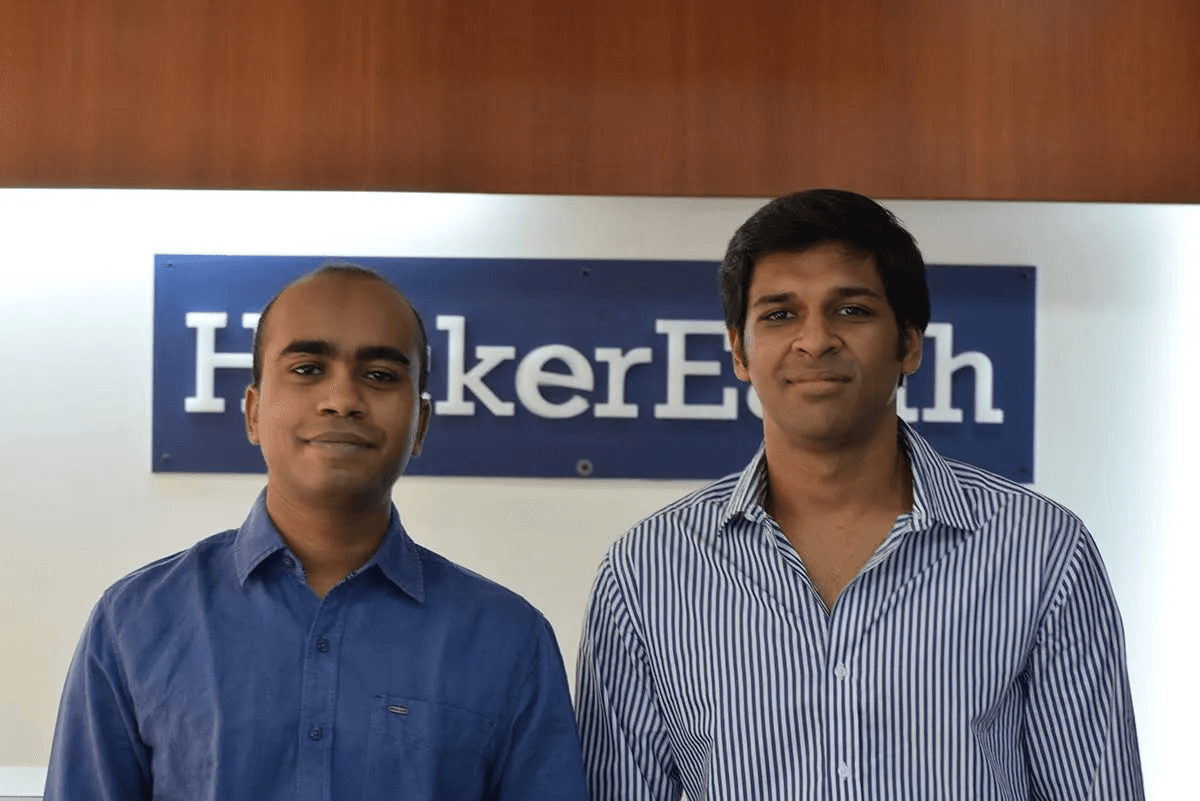
There's a company that has touched the hiring process of virtually every major tech employer in India and dozens globally — without ever becoming famous. That's not a coincidence. HackerEarth is infrastructure. Infrastructure doesn't need a brand. It just needs to work.
It's 2019. A major Indian bank is hiring 500 engineers for its digital banking initiative. The recruiter doesn't have time to screen thousands of resumes. She sets up a HackerEarth assessment: 90-minute coding test, auto-graded, with plagiarism detection. Three days later, she has 50 candidates worth calling. She doesn't know the company behind the platform. She doesn't need to. It worked.
HackerEarth was founded in 2012 by Sachin Gupta and Vivek Prakash — two IIT Roorkee alumni who identified a structural problem in tech hiring: the resume was a terrible signal, and coding interviews at scale were logistically impossible. Their solution was a platform that let any company run structured, automated coding assessments — and that built a community of 10 million developers alongside it.
The community was the strategic masterstroke. Most assessment tools are purely B2B — they serve companies, not candidates. HackerEarth built a two-sided flywheel: a developer community that practiced on the platform (building loyalty), and an enterprise product that harvested those developers as a talent pool (building stickiness). The result is a defensible position that neither side can easily replicate alone.
The Structural Problem They Solved
Before assessment platforms like HackerEarth, technical hiring at scale was a mess. Phone screens were time-consuming, resume signals were noisy, and engineering managers spent weekends interviewing candidates who turned out to be unqualified. The industry needed an automated pre-screening layer that was objective, scalable, and hard to game.
HackerEarth built this — and kept building it. Over 12 years, the platform has evolved from basic coding tests to a full assessment suite: project-based evaluations, video interviews, pair programming exercises, and hackathon platforms used by companies like IBM, Amazon, and Walmart for large-scale engineering recruitment events.
10M+
Developers
1000+
Enterprise Clients
12
Years Operating
G2 #1
Best Software 2024
The Moat: Network Effects in Hiring Infrastructure
HackerEarth's moat operates on two levels. At the enterprise level, once a company integrates HackerEarth into its ATS (Applicant Tracking System) workflow, switching costs are high — not technical, but organizational. Hiring managers build familiarity, HR teams trust the scoring, calibration data accumulates. Changing assessment providers mid-cycle is disruptive and politically contentious.
At the developer level, the 10 million-strong community creates a network effect that assessment-only competitors cannot match. Developers who practice on HackerEarth trust assessments administered through it. They know the interface, the IDE, the problem format. Candidates who dread "unknown" testing platforms are comfortable on HackerEarth — which reduces candidate drop-off rates and improves data quality for clients.
"The assessment market is winner-takes-most. HackerEarth built the community moat that pure-play enterprise tools can't buy. That's a 12-year advantage you can't shortcut."
The Hackathon Business: Underrated Revenue Stream
HackerEarth's hackathon platform deserves separate attention. Companies like IBM, Shell, and Siemens use it to run large-scale innovation challenges — sometimes with 100,000+ participants globally. These events serve multiple purposes simultaneously: recruitment pipeline development, employer branding, product innovation, and community engagement.
For HackerEarth, each hackathon is a high-margin event: a single IBM Global Hackathon on the platform might generate more revenue in one event than 50 standard enterprise subscriptions combined. The hackathon product has also opened doors to markets outside India — it's one of the company's primary international growth vectors.
The AI Disruption Question
The elephant in the room: with GitHub Copilot, ChatGPT, and a dozen other AI coding tools in widespread use, does coding assessment still mean anything? This is a serious question that HackerEarth has had to address head-on.
The answer, as of 2025, is nuanced. HackerEarth has integrated AI proctoring and evolved its assessment formats toward project-based work and architectural thinking rather than algorithm puzzles — areas where AI assistance is less decisive. The platform is also piloting AI-generated assessments that adapt in real time to candidate performance, reducing the "memorize LeetCode" gaming problem.
The deeper question is whether human coding assessment is the right signal at all when AI tools are becoming co-pilots. HackerEarth's most interesting product bet is arguably around AI-augmented assessment — testing how candidates use AI tools effectively rather than testing whether they can write code without them. This is a genuine paradigm shift, and the company that navigates it best will own the next decade of tech hiring infrastructure.
Risk Factors to Watch
AI changes the signal: If LLMs make standard coding tests gameable by all candidates, the quality of assessment degrades. HackerEarth must evolve its format faster than AI capability grows.
HackerRank competition: The US-based competitor is well-funded and targeting the same enterprise market. HackerEarth's India moat is strong; globally, the race is ongoing.
Hiring market cyclicality: Tech hiring contracted sharply in 2022-23. Assessment platforms see direct revenue impact during hiring freezes. Diversification into skill development (not just assessment) is the hedge.
Developer engagement retention: Keeping 10M developers active requires continuous investment in learning content, contests, and community features — all of which cost money and require editorial investment.
Frequently Asked Questions
What is HackerEarth and what does it do?
HackerEarth is a developer assessment and hiring platform founded in 2012 by IIT Roorkee alumni Sachin Gupta and Vivek Prakash. It provides enterprises with automated coding assessments, hackathon platforms, and developer evaluation tools. It also operates a community platform for 10 million+ developers globally, creating a two-sided marketplace that benefits both hiring companies and job-seeking developers.
Who uses HackerEarth?
Over 1,000 enterprise clients across technology, banking, consulting, and manufacturing sectors. Major clients include IBM, Walmart, Amazon, and hundreds of Indian tech companies. G2 ranked HackerEarth as Best Software in 2024. The developer community spans 10 million practitioners across 100+ countries.
How does HackerEarth compete with HackerRank?
HackerEarth has a stronger position in the Indian market and a more developed hackathon product. HackerRank is stronger in the US enterprise market. Both are well-established; the differentiation lies in community size, enterprise feature depth, and geographic focus. HackerEarth's India-first approach has given it deep relationships with Indian IT firms and the Indian developer community that HackerRank hasn't replicated at the same depth.
Will AI make developer assessment platforms obsolete?
Unlikely, but the format will change. Standard algorithm puzzles are increasingly gameable with AI assistance. Assessment platforms that evolve toward project-based work, architectural thinking, and AI-augmented problem solving will remain relevant. HackerEarth is actively investing in this transition — the question is speed of evolution versus speed of AI capability growth.
The Verdict
HackerEarth is a 12-year-old company that built something genuinely hard: a two-sided platform connecting 10 million developers with 1,000+ enterprise clients, in a market where the signal (coding ability) is both crucial and contested. The G2 Best Software recognition in 2024 is a meaningful validation from the market itself.
The existential question is whether the company can evolve its core product fast enough to stay relevant as AI tools change what "coding ability" means. The companies that figure out AI-augmented assessment first will own the next decade of technical hiring. HackerEarth is well-positioned to be one of them — but the window is not indefinite.
Watch for: A strategic acquisition by an enterprise HR platform (SAP SuccessFactors, Workday, or similar), or an independent IPO if the hackathon and international business scales to justify it.
Sources & References
HackerEarth company website · G2 Best Software Awards 2024 · Crunchbase company profile · LinkedIn official data · Inc42 HR tech coverage · Primary research, March 2025.
This article is an independent editorial analysis. Analog Ventures Research has no commercial relationship with HackerEarth.
For more important updates and curated information on regular basis, Join our whatsapp community : https://chat.whatsapp.com/DfkQi7r4o4dDduWvYor9dk
Like this article? Share it with your friends


