


Revolutionizing Convenience: The Rise of Quick Commerce in India
Explore how India's commerce industry, led by platforms like Zepto, delivers groceries in a minutes, transforming habits and setting standards in convenience.
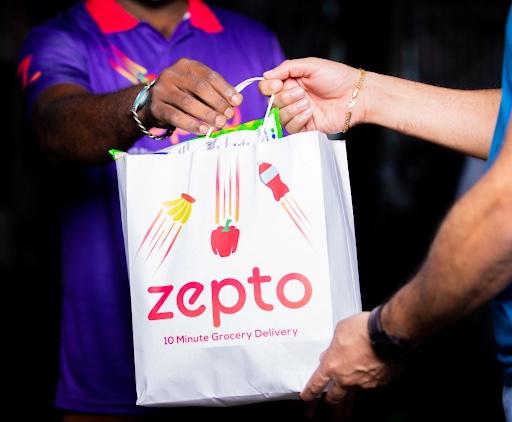
The era of instant gratification and quick-fix solutions has led to the increasing popularity of quick commerce companies in India. From Zomato to Swiggy, Dunzo, Zepto to TATA 1mg, the quick commerce companies are now on a boom.
Quick commerce companies work like the kirana stores - storing all necessary essentials required for a small area. The only difference is you get these groceries delivered to your homes within 10 minutes of placing an order on the app.
These companies have a secret formula for their success - delivering convenience for money.
Groceries are delivered within 10-15 minutes, thus revolutionizing the shopping experience by replacing the brick and mortar stores.
Zepto, an online delivery platform managed to capture the market within a year of its launch by decoding the secret formula and beating the existing top players in the market which includes DMart, BigBasket and JioMart emerging as one of the top quick commerce companies in India. Zepto majorly operates in a few tier-1 cities like Bangalore, Mumbai, Pune, Delhi, Noida and Ghaziabad.
HOW DID ZEPTO ACHIEVE THIS?
Zepto decoded this secret formula of delivering groceries within 10 minutes of placing an order. This move by Zepto then revolutionized the quick commerce industry.
This startup bridged the gap of delivery timing motivating the other major players to switch to delivering groceries in 10 minutes.
HOW DOES DARK STORE MODEL WORK?
These dark stores (mini-warehouses) are located at a distance of 1.8 km- 3 km away from the user’s location. Zepto currently has 80 dark stores in major cities and is planning to expand across more cities where they are experiencing more orders.
The dark stores cover over 10,000 to 20,000 sqft, super-quick packaging and short distance for delivery all making Zepto a success model to work. Zepto placed emphasis on revolutionizing shopping experience convenience and shortening the delivery time, placing it ahead of competition who were waging price wars. The system is organised and optimised to an extent that an order is packed and ready for delivery within 76 seconds of placing order, says Aadit Palicha in an interview given to Business Today. These darkstores enable Zepto with a median delivery time of 8 minutes and 47 seconds.
Zepto initially started with a free-delivery strategy which helped it climb above the competition. But with challenges and difficulties in making a profit, they had to switch to a model where they charge Rupee 25 for all orders below Rupee 149 and free deliveries for purchase of Rupee 149 or above.
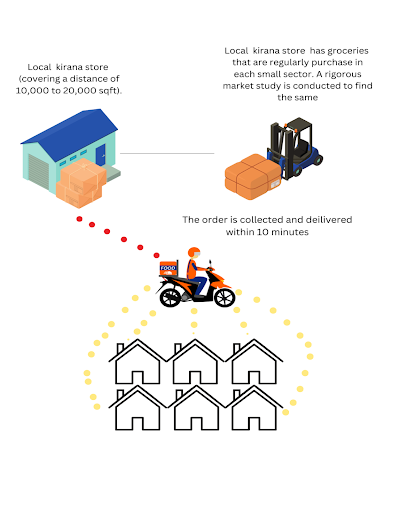
Caption: The dark store model. Image credits: Aishwarya Kumar, Cityscope Media
IS DARKSTORE a BOON or BANE?
The quick commerce industry has its own set of challenges. Zepto is no exception.
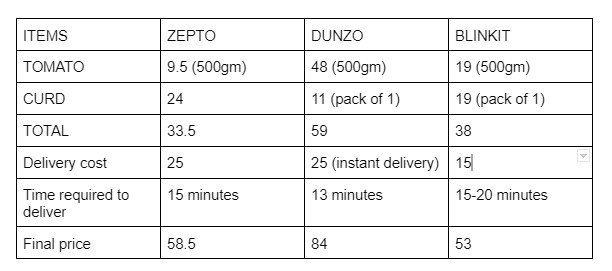
A customer would compare and then choose the platform before placing the order. The app platform which gives them the best deal, they prefer over others.
The competitive advantage of Zepto is its 10-minute delivery with delayed deliveries means customers choose other platforms over Zepto.
-
Lack of Customer loyalty:
Customers of the quick commerce industry are in lookout for who gives the best deal. Some choose discounts and free deliveries, while some demand quick deliveries over discounts and offers.
This puts these online retailers in a competitive position, where they always gain or lose customers on the basis of their competition and not on the basis of service quality they provide. For instance, a quick example can be used to understand this:
-
Speedy deliveries are expensive
Speedy deliveries and free deliveries are difficult to go hand in hand and maximising profit is only possible with more number of orders per day and higher customer retention.
The quick commerce model is also not stable and it becomes difficult to sustain the 10-minute model without burning a lot of cash, says Anup Jain, the managing director at Orios Venture Partners.
Apart from this, Zepto finds it difficult to place itself in the tier-2, tier-3 cities as these cities have a kirana store in close proximity to their homes. Most of them prefer to directly purchase with options of home delivery by a helper of the kirana store.
If a kirana store decides to start its own online store, especially with applications like duNow and IK Kirana, it becomes easier for macro, micro owners to start their own online stores, thus making it convenient for buyers.
Navigating through all these challenges and sustaining in a fast-paced market of delivering convenience would require Zepto to tweak and address more needs in the quick commerce industry.
Amidst all these challenges, Zepto is also planning to enter the instant food delivery industry with its cloud cafe kitchen.
Cover image: Tech crunch
Like this article? Share it with your friends


