


19th Dec|5m read
Rajasthan's National Highways: Alarming Death Spots Identified
Rajasthan's national highways have been identified with black spots, leading to a number of fatalities. Efforts are underway to address these hazardous zones.
What is a “black spot”?
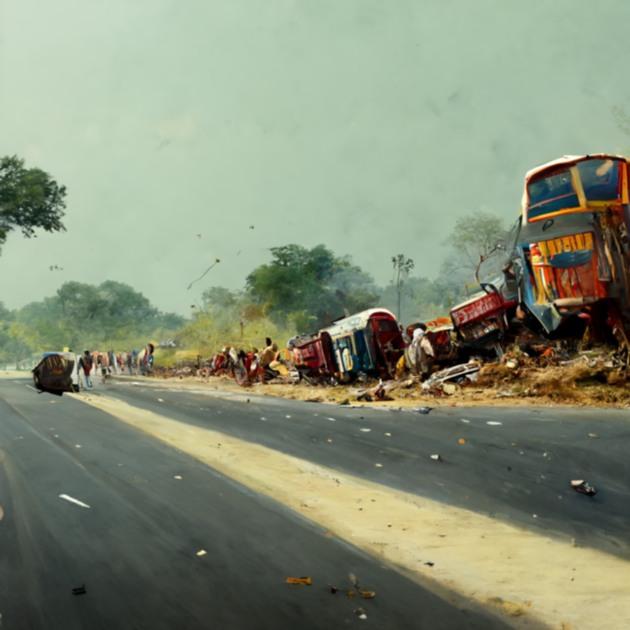
A “black spot” is a particular stretch on a road where traffic accidents have historically been concentrated. Now such a spot on a National Highway, where cars are generally found cruising around 80-100 Kmph, should be a major cause of concern, right?
In 2015, the Transport Research Wing (TRW) of the Ministry of Road Transport and Highways (MORTH) had collected the Black spot data from States/UTs, based on their assessment, and had forwarded it to the concerned agencies for further action, but the authorities seemed to remain unbothered.
In fact, a report on the MORTH website dated 2015 presented an analysis of the 25 black spots found in Rajasthan, along with suggestions to make the areas safer. Now, some of these suggestions were very simple and easily doable, like- “provide traffic lights” and “provide street lights, install caution boards and speed breakers in accident-prone areas.” Yet, these black spots have continued to exist to this date, killing, wounding, and hurting many in several accidents through the years.
Inaction
While these black spots have effectively become death spots, the authorities responsible for making reforms are busy making excuses and shifting blames. A report published in TOI talks about how three accident black spots between the Aamjhar narrow overbridge and the Dara Yact overbridge on an 8-km single-lane stretch of the Kota-Jhalawar four-lane national highway (NH) 52 have been posing a serious threat to the lives of people traveling on it.
Sign boards announcing ‘danger’ and ‘accident-prone zone’ along with speed breakers abound at these black spots. The agencies responsible for public safety, such as the National Highway Authority of India (NHAI), the public works department (PWD), and the forest and wildlife department, are pushing the onus on one another instead of fixing the problem.
To give you a clearer picture of exactly how dangerous these black spots have become, Cityscope analyzed the data available on the Rajasthan government’s website.
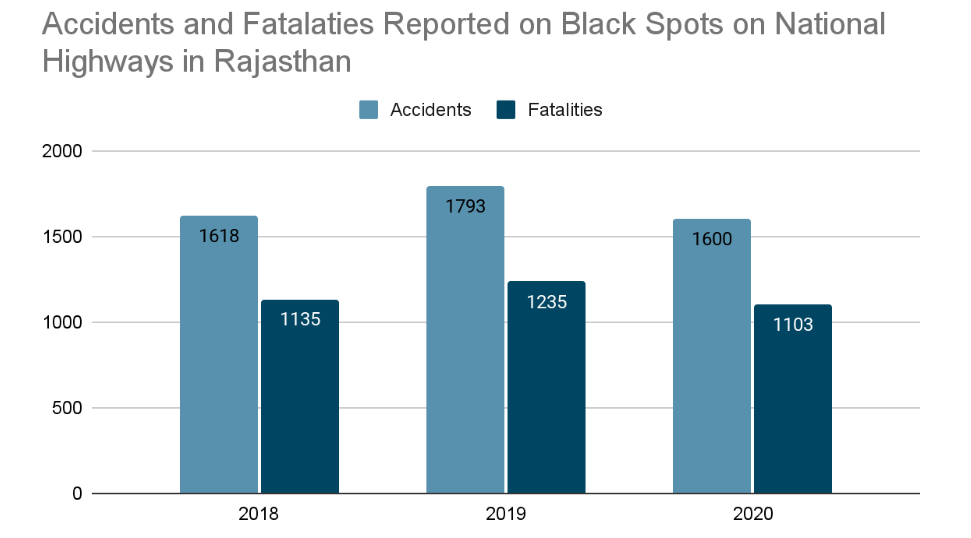
It’s important to note here that these were only the reported accidents; the government has absolutely no clue about the cases that go unreported on these accident black spots.
According to data published on MORTH, in 2018, a total of 3,874 people lost their lives on National highways in Rajasthan. Out of which, 1,135 have died on these already flagged accident black spots. I.e., around 30% of these people could have been saved if adequate measures were taken on these black spots.
Overspeeding remains the primary reason behind the majority of the accidents caused in Rajasthan in 2018. Simple solutions like setting a speed limit, installing speed cams, constructing speed breakers, and cutting more challans for over-speeding could have helped curb the situation.
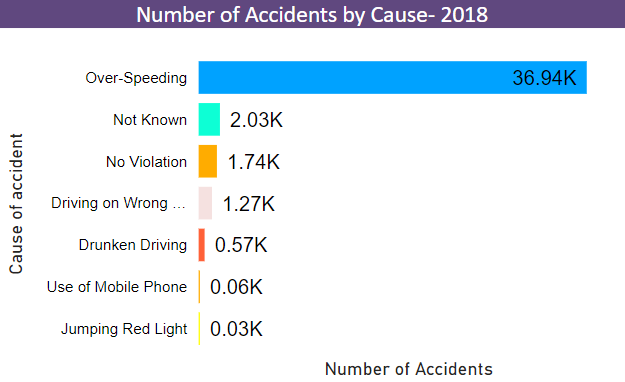
Number of accidents by cause in Rajasthan 2018 (source: MoRTH)
Solid Reforms
Road traffic accidents are one of the leading causes of death around the globe. As per the Global Burden of Disease (GBD) 2016, road injuries were India's 8th leading cause of death. In India, road injuries are among the top four leading causes of death and health loss among persons of the age group 15-49 years. The alarming fact is that persons aged 18-45 years accounted for a share of 68.6% (103,409 persons) of the total road accident fatalities in the year 2016.
In the last few years, the Government of India has taken numerous initiatives to formulate policies aimed at reducing the loss of lives on National Highways in the country. One of the practical tools that the government is using– is the identification and rectification of the black spots on these national highways.
After identification, the next step is rectification, which has two ways– short-term measures and long-term measures. Short-term measures include installing rumble strips, reflective stickers at junctions, fixing signboard/cautionary board, providing signages, and various other speed restrictions. While long-term measures include the construction of underpasses, flyovers, widening of the lanes, and so on.
While the government has done a commendable job in identifying these black spots on National Highways, State Highways, and other motorable roads, the rectification bit still needs to be worked out. Although the government has, over the years, formulated several policies at the central level to improve road safety, they have failed to achieve their goals.
Timeline of the Government of India’s initiative to improve road safety (source: Assessing the Black Spots Focused Policies for Indian National Highways)
Despite their continuous efforts, the government has not been able to effectively solve the safety issues prevalent at the identified black spots, and the casualty numbers just keep on piling. Looking at this, the government set up the Supreme Court Committee on Road Safety (SCCRS) to assess the road safety scenario on NHs, SHs, and MDRs.
After conducting several audits across different states, the committee had given out some important recommendations: Other than that, experts have said, “the definitions of black spots has to be country-specific, and even sometimes locality specific. The identification process adopted also varies based on geographical boundaries, also with the advancement in technology as well as in research. It was observed that agencies have started following the scientific procedures for identifying and rectifying the black spot locations.”
While suggestions and recommendations keep on piling up, their execution is what the government needs to start working on. We can’t afford to lose more people over a problem that’s already been identified.
Like this article? Share it with your friends


