


Rajasthan 2023: Women Candidates' Representation Falls Short
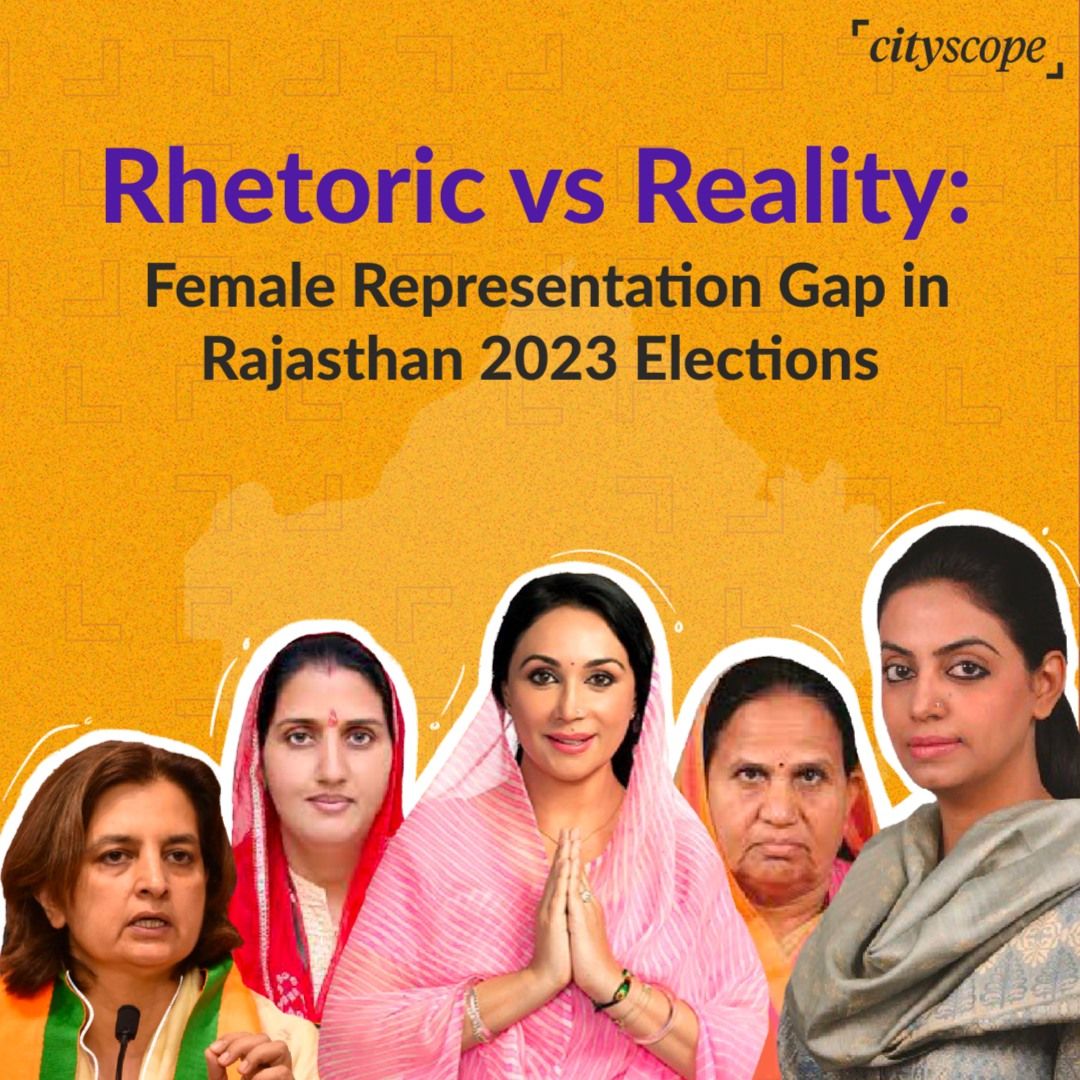
Only 10% of Rajasthan's new MLAs are women, showing a 2% decline from the previous assembly. Gender disparity in politics remains a significant challenge.
On September 19, 2023, Prime Minister Narendra Modi announced the 'Nari Shakti Vandan' bill from the newly constructed Parliament building.
Just a month ago, on September 19, 2023, Prime Minister Narendra Modi, in a momentous policy announcement, addressed the nation on the 'Nari Shakti Vandan' bill from within the esteemed confines of the newly constructed Parliament building. During his address, Modi revisited a deeply cherished goal, stating, "This was an unfinished dream that God chose me to fulfill." He emphatically reiterated his administration's pledge to secure a 33 percent reservation for women in the Indian Parliament, thereby reinforcing his commitment to gender equality in the legislative domain.
This pronouncement set the stage for the Bharatiya Janata Party (BJP) to lead by example in the upcoming Rajasthan Legislative Assembly Elections 2023. It was anticipated that the party's slate of candidates would closely mirror the bill's gender parity ethos. However, the reality of the BJP's candidate selection has thus far fallen short of expectations. Of the 200 names listed, a scant 19 are women, tipping the scales at a paltry 9.5 percent. This figure marks a regression from the previous election's statistics and paints a discordant picture compared to the central leadership's vocal support for women's empowerment and representation. In an unexpected turn of events, the BJP has replaced two female candidates, who were initially set to contest the Kolyat and Bara-Ataru seats, with male contenders. Poonam Kanwar Bhati, once the chosen candidate for Kolyat, has been supplanted by her son Anshuman, while Pel Sarika Choudhary of Bara-Ataru finds herself substituted by Radheshyam Bairwa.
In comparison, the Congress party has demonstrated marginally more gender inclusivity in its electoral approach. Out of 199 candidates, Congress has fielded 28 women, roughly accounting for 14.07 percent of its political aspirants. This figure slightly outpaces the BJP by 9 additional female candidates and shows an incremental rise from the previous year. Looking back at the year 2018 reveals a similar narrative. The BJP's manifesto then ambitiously promised a 33 percent reservation for women in Parliament and legislative assemblies. Yet, only 23 of their 200 candidates were women, a mere 11.5 percent. The Congress, too, fell short, albeit with a marginally higher 13.84 percent, translating to 27 women among its 195 candidates. As the 2023 elections approach, these percentages underscore a continuing challenge: Out of 200 seats, only 7 feature a direct contest between BJP and Congress women candidates. Additionally, there are no women candidates in 81 out of 200 assembly seats.
BJP MP and candidate from Vidhyadhar Nagar, Diya Kumari, recently projected a future where the party's candidate lists would reflect their professed commitment to female reservation. However, the current reality contradicts her assurances. In the upcoming legislative assembly elections, a total of 299 female candidates have filed their nominations. In the last elections, 281 candidates had filed for nomination, out of which 189 were women. Only 24 women managed to win the election, and 138 women lost their deposit. Observers and constituents alike now await the BJP's explanation for the apparent disparity between its declared objectives and the actual candidate selection—a situation that puts the spotlight on the party's strategies and its ideological consistency when it comes to gender representation in Indian politics.
Like this article? Share it with your friends


