


Mumbai Coastal Road Project Halves Fisherfolk Incomes, Study Finds
A TISS study reveals that the Mumbai Coastal Road Project has reduced fisherfolk incomes by 50% and daily catch by half, severely impacting their livelihoods.
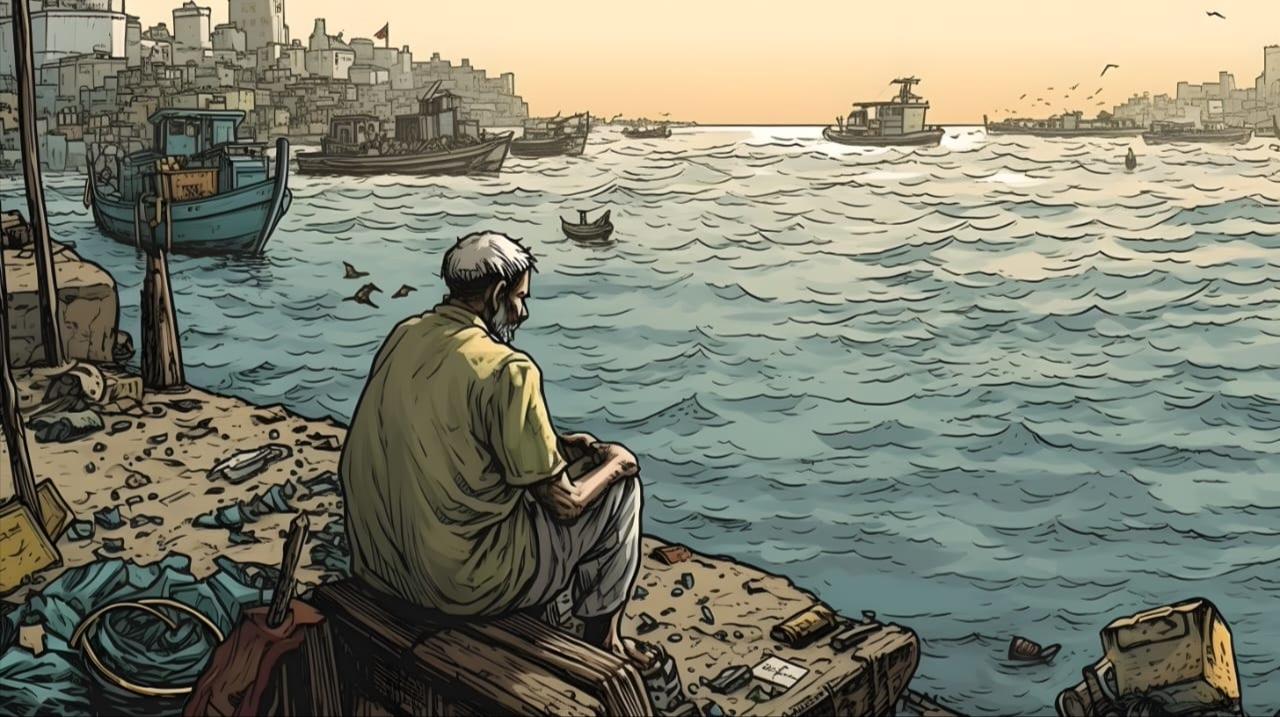
Mumbai is often regarded as the city of dreams, however, a small but prominent community of fisherfolk which are also known as Kolis and Agris have suffered due to Mumbai’s rapid infrastructure upgrade.
The incomes and daily catch of the fishermen have decreased by half since work on the Mumbai Coastal Road Project (MCRP), a connection between Marine Lines and Worli, began in October 2018, according to a Tata Institute of Social Sciences (TISS), Mumbai report that was released in February 2023 and was commissioned by the Brihanmumbai Municipal Corporation (BMC).
The report “Compensation Policy and its implementation plan for project affected fisherfolk of Mumbai Coastal Road Project” stated that the small-scale fisherfolk are more vulnerable than boat owners who occupy the upper rungs of the social hierarchy. The study has proposed that this section of people be compensated for a more extended period. “It is clear that shoreline fishing is on the verge of extinction due to the reclamation of the seashore for development projects,”
Construction and reclamation harming marine life
Construction activities have negatively impacted hand-picker fisherfolk by causing a decline in fish populations and reducing their catch. The species they catch rely heavily on the intertidal ecosystem, mainly the small rocks and uneven seabed, which have been significantly affected by the reclamation process. The filling of small holes in the rocky seabed and the deposition of construction waste into the sea have severely impacted these species.
The 680 project involved fishers whose replies were used to construct the report. Of these, 560 belonged to Worli Koliwada, while 120 came from Lotus Jetty (Haji Ali), a smaller fish landing site run by relatively poor fishers (comprised of a significant number of women, migrants, and Muslims), who have had a more significant impact on catch and income.
Pradip Tapke speaking to CityScope, a member of the Akhil Bharatiya Matsya Vayasai revealed that the concerns of the fisherfolk based out of Worli, Bandra and other areas were not considered while building the project and environmental impact was downplayed.
“The seabed and rocks in this area are destroyed owing to dredging and building trash, thus marginal fisherfolk like hand pickers and those who use cast nets in the intertidal zone will receive more than a one-time payment as they fish in shallow seas close to the shoreline for crabs, shellfish, and clams,” he added.
Average daily income cut by half, expenditure up by 27 per cent
According to the report, there has been a significant decrease in the average daily income of both areas by 50 per cent and an increase in daily expenditure by 27%. Lotus Jetty, in particular, has experienced a 30% rise in its daily expenses.
Additionally, the non-mechanised boat owners' daily catch has been significantly impacted, dropping from 14kgs to 7kgs per day since October 2018 when the project started. Furthermore, the six-cylinder boats that are capable of going further out to sea have also seen a decline in their daily catch from 716kg to 613kg per day.
Fisherfolk to receive Rs 130 crore compensation
The BMC will compensate all categories of fishermen that TISS has recognised and advised. The municipal body will compensate them between October 2018, when the project began, and October 2024. In addition, they will give them 8% simple interest, as is customary for infrastructure projects. The finance division has already received the proposal.
Bernard D’Mello, a senior member of Akhil Maharashtra Mastya Vyavasai said, “The compensation given to us is as good as loose change, in fact, the government has generously compensated the people affected by the Mumbai Nagpur Expressway as they have received four times the market value.”
“We were not given any information about the project, we had requested the authorities to provide a 200-metre gap between the pillars for safe passage for our boats, however, the gap was kept to a mere 120 metres,” he revealed.
What is next?
The Additional Municipal Commissioner of BMC, Ashwini Bhide shared information on this matter at an event hosted by the Free Press Journal, stating that The TISS has identified all the stakeholders and their roles in fishing activity, what kind of loss they have incurred during the construction and later on. Not only the fishermen community, there are multiple layers like the hand pickers, families of fishermen and their women who don't operate the boats but the rest of the work is done by them.
"73 % of phase I of the coastal road has been completed and the project was on original schedule for commissioning by November 2023. However, the local fisherfolk had requested to increase the width of the proposed navigation span to 200 meters. We have compromised to provide a span of 120 metres for their boats. But the change in design and methodology will take additional four to five months for that portion of work. So the project will be fully commissioned by May 2024." she added.
Coverage Image Source: Mid Journey
Article references: Tata Institute of Social Sciences, Brihanmumbai Municipal Corporation, Times of India, Hindustan Times.
Like this article? Share it with your friends


