

Maharashtra Day: From Bombay State to Statehood
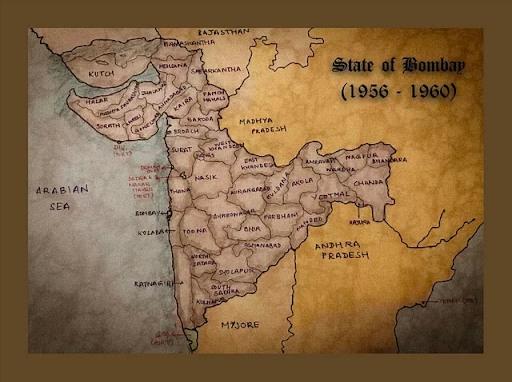
On May 1, 1960, Maharashtra was formed after the bifurcation of Bombay State, marking a major cultural and political milestone in India's history.
Maharashtra is the richest state in India and the second most populous one, boasting a long coastline with beautiful beaches that are surrounded by the evergreen forests of the Western Ghats which are adorned by the forts of Chhatrapati Shivaji Maharaj. The state has had a long history, however, the concept of a Marathi-speaking state has been a relatively new one.
History of Maharashtra
The Bombay Presidency included areas of the western coast of India that were directly under British rule under the British Raj. The Bombay Presidency joined British India as a province in 1937. Bombay Presidency joined India after it gained independence in 1947, while Sind Province joined Pakistan when India was divided. India's retained territory was transformed into Bombay State. It included princely states that had been influenced politically by the erstwhile Bombay Presidency, such as Kolhapur in the Deccan and Baroda and the Dangs in Gujarat.
Bombay State was reorganised on linguistic lines on 1 November 1956 per the States Reorganisation Act, incorporating several areas, including the defunct Saurashtra and Kutch States. Bombay State was abolished on May 1 and divided into Gujarat, which has a majority Gujarati-speaking population, and Maharashtra, which has a majority Marathi-speaking population.
Maharashtra Samyukta Samiti and its role in forming a separate state
Samyukta Maharashtra Samiti was an organisation in India that advocated for a separate Marathi-speaking state from 1956 to 1960.
Prior to Independence, the Indian National Congress had promised to establish linguistic states. Linguistic states were, however, vehemently opposed by Jawaharlal Nehru and Sardar Vallabhbhai Patel upon Independence. They saw the integrity of India as being threatened by linguistic states. Rashtriya Swayamsevak Sangh, led by Madhav Sadashiv Golwalkar, opposed Nehru and Patel's proposal to redraw the map along linguistic lines.
However things changed as the fasting death of Telugu nationalist Potti Sriramulu served as the impetus for the formation of a States Reorganisation Commission. The States Reorganisation Committee (SRC) supported the creation of the linguistic states of Andhra Pradesh, Kerala, and Karnataka in 1956, but they also suggested a bi-lingual state for Maharashtra-Gujarat with Vidarbha outside of Maharashtra as its capital instead of Bombay.
The SRC also advocated for the establishment of the Vidarbha state, which would join the Marathi-speaking populations of the old Hyderabad state with those of the Central Provinces and Berar state.
Police opened fire on protesters on November 21, 1955, in Flora Fountain in Bombay, the nation's capital. In their honour, Hutatma Chowk or "Martyr's Crossroad" was later given the name Flora Fountain. During the agitation and in various locations, it is reported that security personnel shot a total of 106 persons.
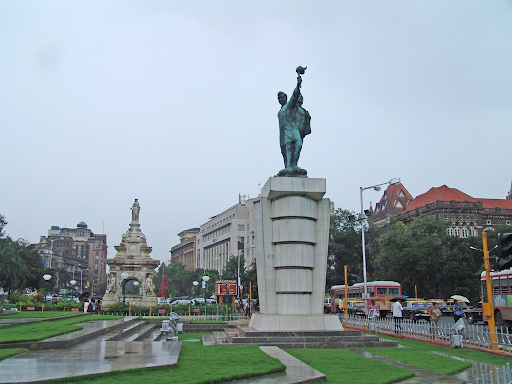
Hutatma Chowk, pic: Shekhar Krishnan
As a result of criticism surrounding the 21 November incident, Morarji Desai, the then-chief minister of Bombay State, was later dismissed and replaced by Yashwantrao Chavan. C. D. Deshmukh, the then-Finance Minister of the Nehru Cabinet, resigned from his position in January 1956 as a result of Nehru's speech disagreeing with the SRC.
Subsequently, the predecessor movement Samyukta Maharashtra Parishad was established on November 1, 1956, sparking a significant political uproar. On February 6, 1956, Samyukta Maharashtra Samiti was established at a party convention in Pune chaired by Keshavrao Jedhe.[Reference needed] The Samiti won 101 out of 133 seats in the second general election of 1957, including 12 from Bombay, defeating Congress stalwarts. Only Gujarat, Marathwada, and Vidharba may help the Congress party create a government.
The Samiti’s dreams finally came true on 1 May, 1960 when Bombay State was split into Marathi-speaking Maharashtra and Gujarati-speaking Gujarat with Bombay being Maharashtra’s capital and Ahmedabad serving as Gujarat’s capital. Thus celebrating 1 May as Maharashtra Day, the day of the formation of the Marathi-speaking state.
Moreover, the Samiti had envisioned uniting areas like Belgaum, Karwar and Goa and Daman (Portuguese Colonies) as a part of Maharashtra, but these areas were left out.
However, prominent members of the Samyukta Maharashtra Samiti made the decision to leave the organisation, but Bhai Uddhavrao Patil, the Samiti's then-chairman, continued to push for the inclusion of the 862 Marathi-speaking villages of Karnataka that were left out in 1960.
Maharashtra Day celebrations
The Maharashtra government releases a notification each year designating May 1 as a public holiday to be observed as Maharashtra Day. All businesses, workplaces, and schools that fall under the purview of the state and federal governments are required to observe this holiday by hosting a variety of events.
The Maharashtra Governor gives a speech during the annual procession at Shivaji Park.
On this day, Maharashtra prohibits all sales of alcohol to Indians, except foreigners.
Today, Maharashtra is a prosperous and vibrant state that has made significant contributions to India's cultural, economic, and social fabric. The state is home to some of India's most prominent institutions of higher learning, including the Indian Institute of Technology Bombay, the Tata Institute of Fundamental Research, and the Film and Television Institute of India. The state's capital, Mumbai, is one of the world's largest cities and is a hub of India's financial, cultural, and entertainment activities.
Cover Image: The state of Bombay before 1960
Like this article? Share it with your friends


