


Industrial AI · IoT · Heavy Industry · Deep Tech
Adani's Blast Furnace Runs on This Faridabad Startup's Algorithm
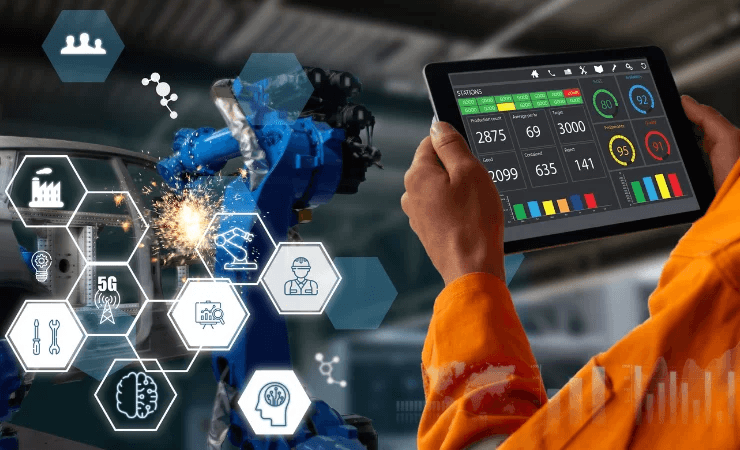
India's industrial AI isn't being built in Bengaluru boardrooms. It's being forged on the factory floors of steel plants and coal mines — by three engineers who refused to move to a tier-1 city.
Industrial AI · IoT · Heavy Industry · Deep Tech
By Analog Ventures Research · March 2025 · 8 min read
There's a category of startup that never makes it to TechCrunch. It doesn't fit the consumer narrative, it doesn't have a beautiful product landing page, and its total addressable market is measured in industrial accidents prevented and tonnes of steel optimized rather than app downloads. Bidaal is exactly this kind of company — and it might be one of the most important industrial deep-tech plays coming out of India right now.
Somewhere inside the Adani steel ecosystem, a process that once required a shift manager's instinct and a clipboard is now being monitored by a sensor array feeding data to a machine learning model built in Faridabad. The model was trained on thousands of hours of equipment telemetry. It knows what a bearing sounds like at the beginning of a failure cascade. It acts before the shift manager even knows there's a problem. The savings per avoided unplanned downtime event: upward of ₹2-5 crore.
Bidaal was founded in 2020 by Nitish Mishra, Kalash Nibjiya, and Rishi Kant Rajpoot — three engineers with deep roots in the industrial heartland of Haryana. They didn't come from IITs. They came from the factory floor. And that background is, paradoxically, their most powerful differentiator.
The company builds AI-powered Industrial IoT solutions for heavy industry — steel, coal, power generation, manufacturing. Its platform collects real-time sensor data from equipment (motors, furnaces, conveyors, compressors), processes it through predictive models, and surfaces actionable alerts before failures cascade into unplanned downtime. In heavy industry, unplanned downtime isn't an inconvenience. It's a multi-crore-rupee event.
The Market That Software Companies Ignore
India has roughly 1,500 steel plants, 300+ active coal mines, and thousands of large industrial facilities. Most of them are operating on 20-year-old control systems with zero real-time intelligence. The predictive maintenance market in India alone is estimated at $2.5 billion — growing as the government's PLI scheme drives industrial capex expansion.
The irony is that this market is dramatically underserved by Indian software companies. Most enterprise SaaS founders are building for banks, e-commerce, or HR. The ones who can sit through a blast furnace floor walk, understand rotating equipment dynamics, and speak the language of shift engineers are rare. Bidaal's founders can do all three — which is why Adani, JSW Steel, and Coal India are paying them rather than a Bengaluru SaaS company.
2020 Founded
$1.07M Raised
3 Anchor Clients
Adani / JSW / Coal India
What Bidaal Actually Builds
The Bidaal platform has three layers. First, a sensor integration and IoT gateway that connects existing industrial equipment (many of which pre-date modern connectivity standards) to a cloud data pipeline. Second, a machine learning layer that runs anomaly detection, predictive maintenance models, and process optimization algorithms on that stream. Third, an operational dashboard that presents insights in a format that a shift engineer can act on without a data science degree.
The last layer matters more than it sounds. Enterprise AI in heavy industry fails not because the model is wrong, but because the interface is unusable on a factory floor. Bidaal's design philosophy is ground-up operational — dashboards built for people wearing safety helmets, not sitting in air-conditioned control rooms.
"The valley looks for the next ChatGPT. Meanwhile, three engineers in Faridabad are preventing ₹50 crore of steel plant downtime per year. Guess which one India actually needs."
The gap Bidaal fills is between expensive global platforms (Siemens, GE, Uptake) and generic IoT tools that need years of customization. India's industrial clients want something that speaks their language — literally and figuratively — understands Indian grid volatility, Indian raw material variability, and Indian operational culture. Bidaal was built from that starting point.
The Revenue Model and Unit Economics
Bidaal operates on a SaaS + hardware model. The IoT gateway hardware is sold or leased; the platform subscription is monthly or annual. For large industrial clients, contracts are typically multi-year with per-site pricing. The beauty of this model is that expansion is geographic — once Bidaal is inside an Adani plant in one location, rolling it out to 20 plants in the same group is a procurement conversation, not a sales conversation.
The company raised $1.07M in an early round — modest compared to SaaS darlings, but appropriate for a capital-efficient industrial AI business where pilots convert to long-term contracts. The critical metric isn't ARR growth; it's contract duration and expansion within existing accounts. Industrial clients don't churn — they expand or they don't.
India's Manufacturing Supercycle Tailwind
This matters more than it sounds. India's PLI (Production Linked Incentive) scheme is channeling hundreds of billions of rupees into manufacturing expansion. The government's "Make in India" push is creating new steel capacity, new semiconductor fabs, new EV battery plants. Every one of these facilities needs industrial IoT. The timing for a company like Bidaal is structural, not cyclical.
Additionally, as environmental compliance requirements tighten (both for export eligibility and domestic regulation), industrial emissions monitoring and process efficiency become regulatory requirements rather than nice-to-haves. Bidaal's sensor layer can serve both functions — predictive maintenance and environmental compliance data collection. This dual utility strengthens the value proposition considerably.
Risk Factors to Watch
Sales cycle length: Industrial procurement in India is slow. Pilot-to-production conversion can take 12-18 months. Cash flow management in this environment requires discipline.
Hardware dependency: IoT gateway hardware means supply chain complexity and customer service overhead that pure-SaaS companies don't face. Chip shortages and logistics costs are real variables.
Scale hiring challenge: Finding engineers who can write ML code and also speak the language of a steel plant operations team is extremely difficult. The talent pool is small.
Competition from large SIs: If TCS or Infosys decides to build this capability aggressively, they have the relationships and balance sheet to compete. Bidaal's advantage is speed and domain depth — both of which erode over time if not defended.
Frequently Asked Questions
Q1: What does Bidaal actually do?
Bidaal builds AI-powered Industrial IoT solutions for heavy industry — steel plants, coal mines, and power facilities. Its platform connects sensors on industrial equipment to machine learning models that predict failures before they happen, preventing expensive unplanned downtime. Clients include Adani, JSW Steel, and Coal India.
Q2: Why is Bidaal based in Faridabad and not Bengaluru?
By design. Faridabad sits in the industrial belt of Haryana, adjacent to major manufacturing clusters. The founders have deep relationships with the industrial community there, and physical proximity to client sites matters in industrial IoT — where hardware installation, sensor calibration, and on-site troubleshooting require boots on the ground.
Q3: What is the size of India's industrial AI market?
India's predictive maintenance and industrial AI market is estimated at $2.5 billion and growing rapidly, driven by the PLI scheme's manufacturing expansion push, tightening environmental compliance requirements, and the digitization of legacy industrial facilities that have operated on analogue systems for decades.
Q4: How does Bidaal compete with global players like Siemens or GE?
On price, speed, and domain specificity. Global industrial platforms are expensive, require long implementation timelines, and are optimized for Western industrial contexts. Bidaal is built for Indian grid conditions, Indian raw material variability, and Indian operational culture — at a price point accessible to mid-market industrial clients, not just Tier-1 conglomerates.
The Verdict
Bidaal is the kind of company that doesn't get written about much but quietly matters enormously. It's solving a problem that India's industrial sector desperately needs solved — AI-enabled operational efficiency in heavy industry — at a price and implementation model that actually fits the market.
The anchor client names (Adani, JSW Steel, Coal India) are a significant vote of confidence from India's most demanding industrial buyers. The risk is scale — going from three marquee clients to 300 requires capital, talent, and execution discipline that early-stage industrial startups often struggle with.
Watch for: A larger Series A that funds geographic expansion within existing client groups, and possibly an international pilot in Southeast Asian industrial markets where the same dynamics apply.
Sources & References
Bidaal company website · Crunchbase funding profile · Inc42 deep tech coverage · India PLI scheme documentation · NASSCOM industrial AI reports · Primary research, March 2025.
This article is an independent editorial analysis. Analog Ventures Research has no commercial relationship with Bidaal.
For more important updates and curated information on regular basis, Join our whatsapp community : https://chat.whatsapp.com/DfkQi7r4o4dDduWvYor9dk
Like this article? Share it with your friends


