


India's TB Battle: Progress & Challenges
Explore India's strides and hurdles in combating tuberculosis, aiming for elimination by 2025 through enhanced diagnosis, treatment, and prevention strategies.
Tuberculosis (TB) remains a formidable disease worldwide. For over two decades, it has been recognized as a global public health emergency, consistently being a leading cause of death among adults. Prior to the onset of the COVID-19 pandemic, TB was the number one cause of death from a single infectious agent, surpassing HIV/AIDS. Approximately one-quarter of the world's population is infected with M. tuberculosis. A significant proportion of the population, particularly in India, where 35% of adults and nearly half of the children are undernourished, is at risk. This malnutrition weakens the immune system, leading to the reactivation of TB. Many people are exposed to risk factors for tuberculosis, including diabetes, indoor air pollution from cooking stoves, and smoking. However, treatment and prevention of TB are possible. Around 85% of people who develop TB can be successfully treated with a 6-month course of medication. India has made significant strides in TB prevention, marking a major achievement in public health.
The World Health Organization released the Global TB Report 2023 on November 7th. Since 1997, WHO has been annually publishing the Global Tuberculosis (TB) Report, providing a comprehensive and up-to-date assessment of the TB epidemic, as well as the progress in prevention, diagnosis, and treatment of the disease at global, regional, and national levels.
According to the Global TB Report 2023, India has seen a remarkable improvement in the reduction of TB cases. The report highlights an 80% improvement in TB cases in India, which is 19% higher than the previous year, marking significant progress.
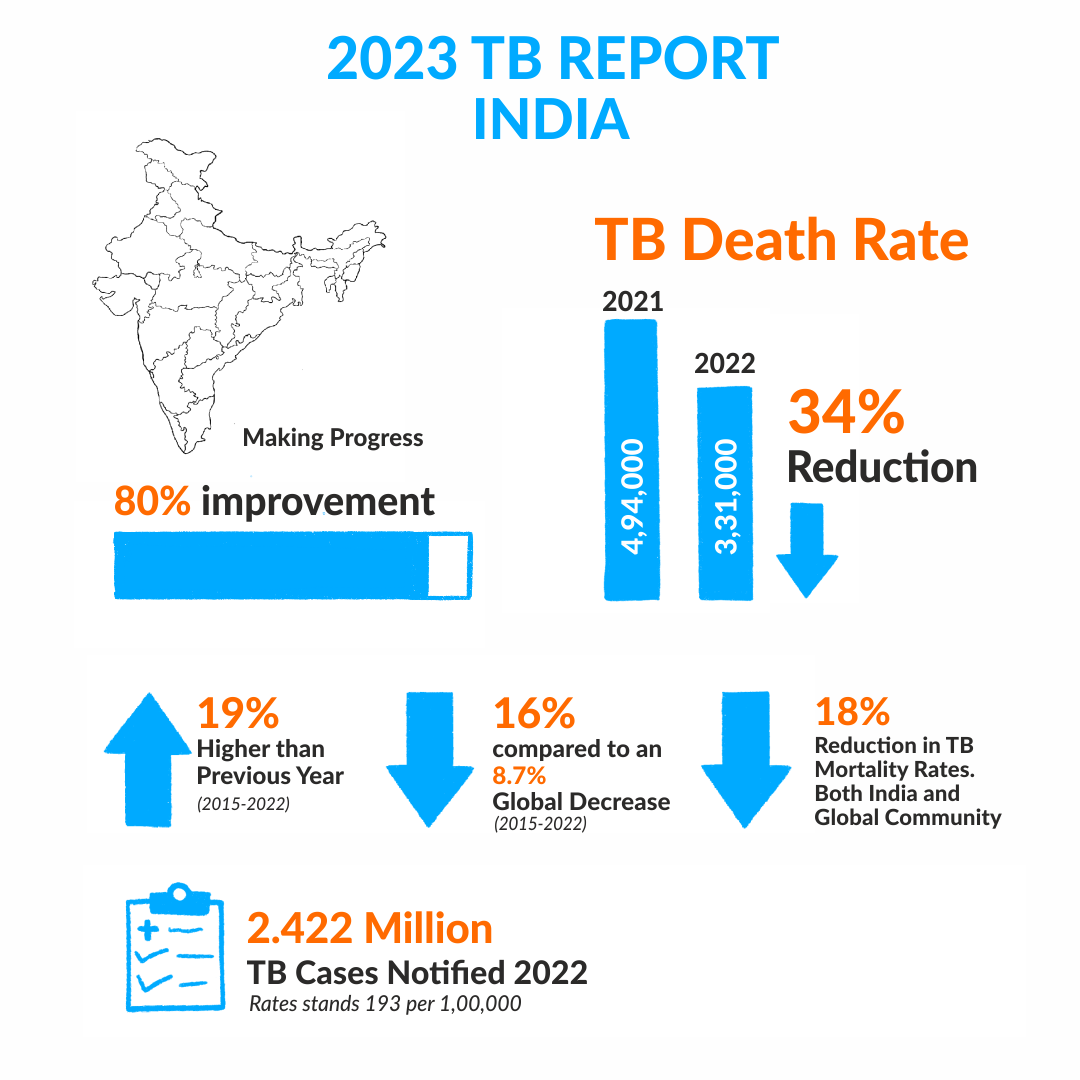
India's efforts have resulted in a reduction in TB incidents that is twice the global average from 2015 to 2022. During this period, TB incidents in India decreased by 16%, compared to an 8.7% global decrease. Both India and the global community have also seen an 18% reduction in TB mortality rates during the same period. The TB death rate, which was 494,000 in 2021, has decreased to 331,000 in 2022, representing a reduction of over 34% in a single year. According to the report, more than 2.422 million TB cases were notified in 2022. The TB rate in India stands at 193 per 100,000 population per year.
According to the Global TB Report, the estimated number of cases of Multi-Drug Resistant (MDR) and Extensively Drug-Resistant (XDR) TB under treatment were 4 and 1 per 100,000 population, respectively. During the pandemic, a notable decrease was observed in the total number of drug-resistant TB (DR-TB) patients who started treatment, compared to 2019. In 2020 and 2021, the number of MDR patients decreased by 14% and 9%, respectively. There was also a significant reduction in the number of XDR-TB patients who began treatment in these years.
However, this success has been over five decades in the making. India's TB control program was initiated in 1962. The National Tuberculosis Elimination Program (NTEP), a public health initiative of the Government of India, formerly known as the Revised National Tuberculosis Control Program (RNTCP), has been instrumental in these anti-tuberculosis efforts.
India's Historic Struggle Against Tuberculosis: From Sanatoriums to Modern Hospitals
India's journey towards tuberculosis (TB) eradication began over a century ago, transitioning from sanatoriums to hospitals. In 1906, the country's first tuberculosis sanatorium was established in Tilonia, between Ajmer and Phulera, specifically for girls suffering from TB, under the aegis of the American Methodist Episcopal Church. A second, smaller sanatorium was initiated in Almora in 1908. The first sanatorium under Indian management opened near Kasauli in Dharampur in 1909, followed by the first government sanatorium, King Edward VII Sanatorium, near Nainital in Bhowali in 1912. That same year, the All India Sanitation Conference in Madras recognized the TB problem in India for the first time. By 1920, these institutions had fewer than 500 beds combined. Dispensaries for outpatient treatment were also established in some locations, offering nursing assistance and, in some cases, tuberculin injections, but their greatest value lay in their educational impact.
The K.S. Roy TB Hospital in Kolkata was the first tuberculosis hospital in India and South Asia. Established in 1922 by the renowned thoracic surgeon Kumud Sankar Ray
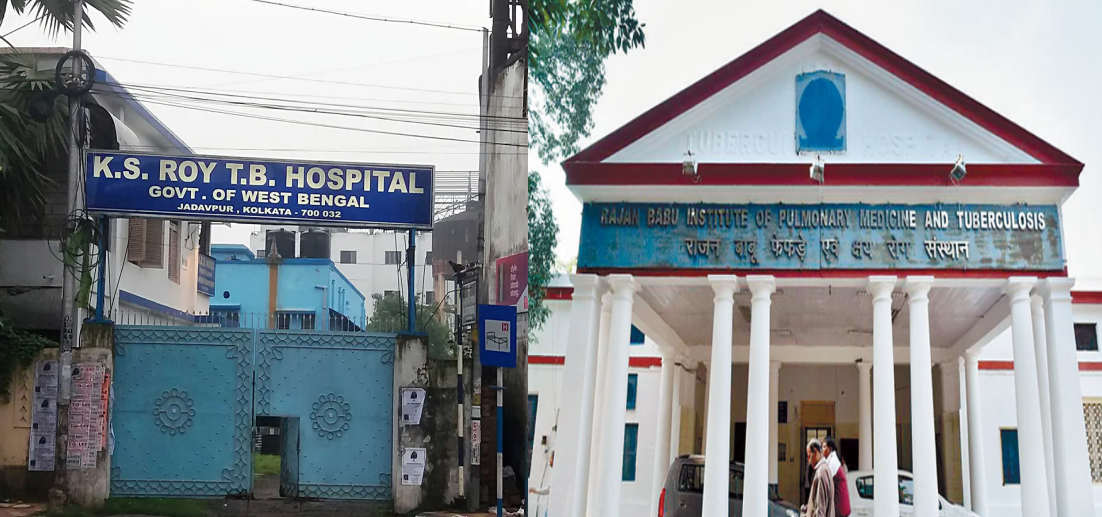
as a four-bed sanatorium, it was later expanded into a 750-bed facility. However, this hospital has since been closed. In 1935, the Rajan Babu Institute for Pulmonary Medicine and Tuberculosis in Delhi, established to commemorate the silver jubilee of the coronation of British Emperor King George V, became the largest TB hospital in Asia. It began as the 'Silver Jubilee TB Hospital' in a single-story building.
Post-independence, its name was changed to the Rajan Babu Institute for Pulmonary Medicine and Tuberculosis (RBIPMT). Spread over 79 acres, the hospital now houses 1,155 beds.
The TB Association of India, founded in 1939, accelerated the anti-TB movement in the country. In 1940, the Indian Tuberculosis Association and the Government of India jointly established the New Delhi Tuberculosis Centre as a model hospital. In 1951, with the support of WHO, UNICEF, and the Indian government, the clinic was upgraded to the country’s first TB training and demonstration center.
Evolution of India's TB Control Programs: From NTP to RNTCP and Beyond
India's efforts in TB prevention have evolved significantly since the inception of the TB control program in 1962, undergoing two major transformations in 1997 and 2020.
- National TB Program - NTP (1962-1997): The initial efforts in TB control began in 1962 with the 'National TB Program (NTP)', primarily based on the district TB center model. The focus was mainly on BCG vaccination and providing TB treatment. In 1992, the World Health Organization (WHO) and the Swedish International Development Agency evaluated the NTP and identified shortcomings.
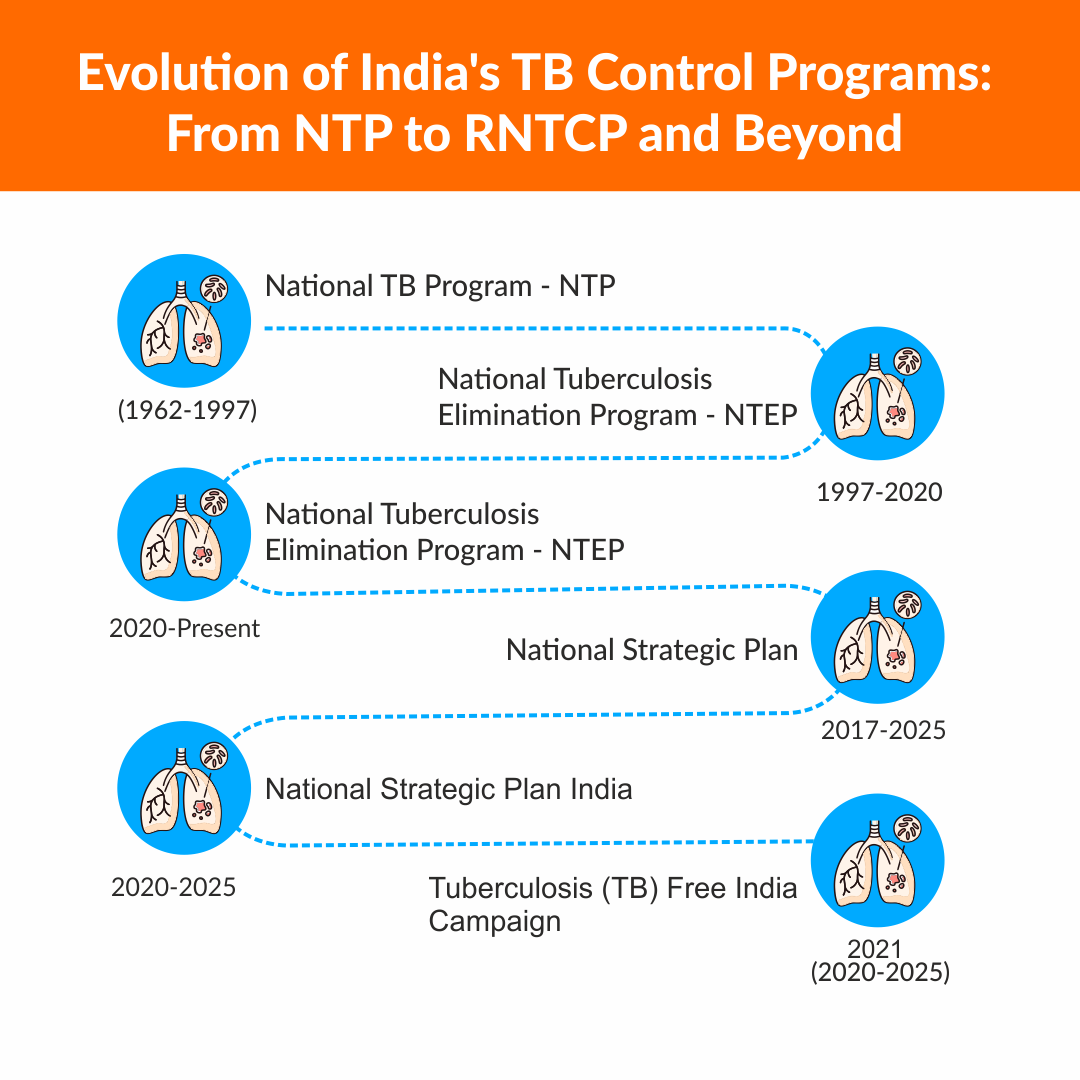
- Revised National TB Control Program - RNTCP (1997-2020): To address the deficiencies of the NTP, the Government of India adopted the Directly Observed Treatment Short-course (DOTS) strategy in the Revised National TB Control Program (RNTCP). The large-scale implementation of the RNTCP began towards the end of 1998. The first phase of RNTCP (1998-2005) focused on expanding quality DOTS services throughout the country. The initial five-year project plan was to implement RNTCP in 102 districts and strengthen another 203 Short Course Chemotherapy (SCC) districts in subsequent phases. The Government of India accepted the challenge of nationwide expansion of RNTCP and aimed to include the entire country by 2005, meeting global targets for TB control in terms of case detection and treatment success. Nationwide coverage under RNTCP was achieved by March 2006.
Phase II of the RNTCP, initiated in 2006, was developed based on lessons learned from the program's implementation over the past 12 years. In 2007, the Government of India launched the Programmatic Management of Drug-Resistant TB (PMDT) and achieved full geographical coverage by 2013. The second phase aimed to maintain a detection rate of at least 70% for new smear-positive cases and a treatment rate of at least 85%, in line with the Millennium Development Goals for 2015. RNTCP II also included plans to increase the involvement of private sector providers and incorporate DOTS+ for managing MDR and XDR TB. Web-based reporting for the TB program, started in 2012, was a significant achievement, enabling the capture and transfer of individual patient data from remote health institutions across the country. RNTCP aligns with other health sector strategies and global efforts, such as the 'National Health Policy 2017', WHO's 'TB Elimination Strategy', and the United Nations' Sustainable Development Goals (SDGs).
- National Tuberculosis Elimination Program - NTEP (2020-Present): Building on the rapid and progressive advancements in the RNTCP since 2016, the program was renamed to the National Tuberculosis Elimination Program (NTEP), effective from January 1, 2020. The NTEP operates as a key component of the National Health Mission (NHM), providing technical and managerial leadership for TB control activities in India.
National Strategic Plan 2017-2025: Initiated in 2017 by the Ministry of Health and Family Welfare, this plan aimed at significant and effective changes in TB incidence, prevalence, and mortality rates. By 2020, it became evident that the NSP 2017-25 would not be sufficient to achieve these goals, leading to the launch of a new NSP India 2025.
National Strategic Plan India 2020-2025: NSP India 2020-2025 identifies several targets that need to be met for the elimination of TB in India. Its objective is to accelerate the national response to TB and initiate a TB elimination campaign based on the lessons from the polio eradication experience, including comprehensive support for patients throughout their treatment.
Tuberculosis (TB) Free India Campaign: In 2021, under NSP India 2020-25, the Ministry of Health, in collaboration with various development partners, launched the campaign aiming to end the TB epidemic by 2025. This multi-faceted approach focuses on detecting all TB patients and emphasizes reaching those undiagnosed in private healthcare and high-risk populations. WHO-India identified 100 remote and neglected districts for targeted TB elimination efforts.
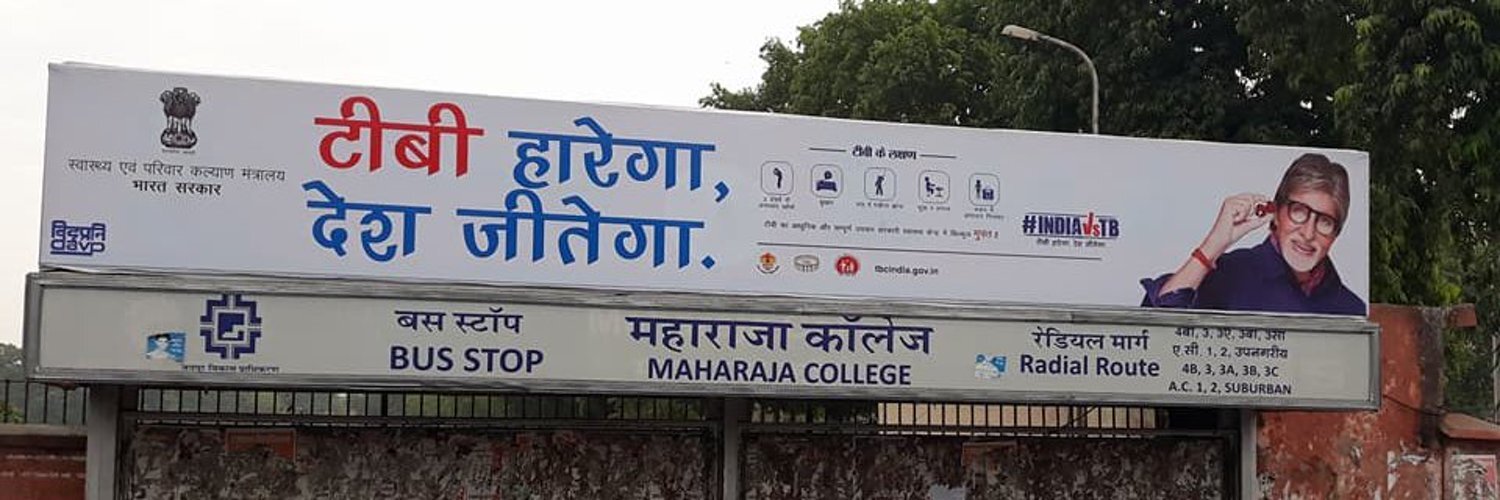
The Prime Minister’s TB-Free India Campaign has received an overwhelming response nationwide, with over 100,000 Ni-kshay Mitras from all walks of life stepping forward to adopt over 1.1 million TB patients. Since its inception in 2018, the Ni-kshay Poshan Yojana has distributed approximately ₹2613 crores to over 9.5 million TB patients. New patient-centered initiatives like the family care provider model and differentiated care have been launched to ensure further reduction in mortality rates and improve treatment success rates.
Rajasthan's Innovative Campaign: 'Mhare Gaon, TB Na Pasare Paon’
In the state of Rajasthan, a pioneering initiative known as 'Mhare Gaon, TB Na Pasare Paon' has been launched to address the pressing TB crisis. India currently hosts 26% of TB patients worldwide, with 7% of them residing in Rajasthan. To curtail the spread of this infectious disease, the state has rolled out the 'Tuberculosis-Free Village Campaign' across 7,000 gram panchayats, in collaboration with the National Tuberculosis Elimination Program (NTEP) Rajasthan and the Department of Panchayati Raj.
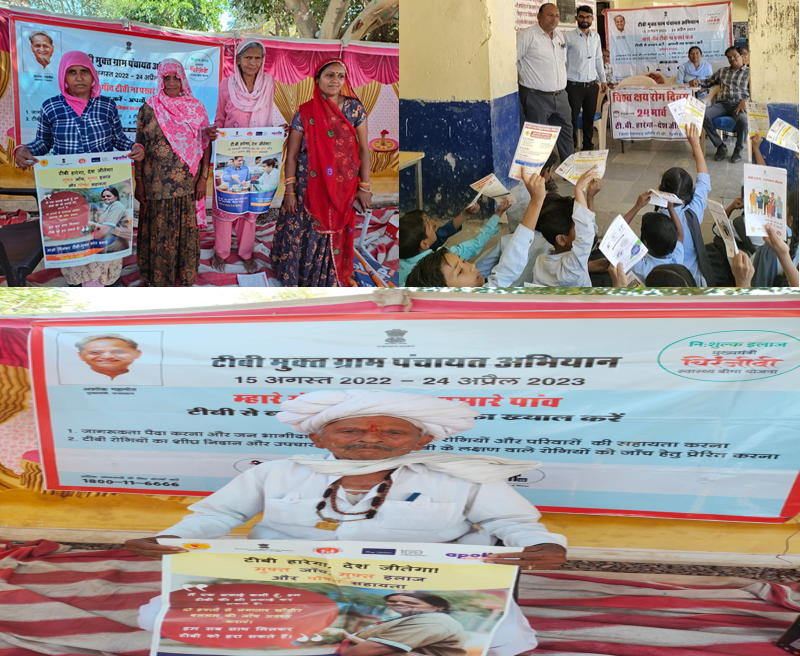
This ambitious campaign, unveiled on August 15, 2022, aims to completely eliminate TB from the state of Rajasthan. It places significant emphasis on leadership and active participation at the gram panchayat level, with the goal of creating TB-free villages. Rajasthan has already achieved a significant milestone by declaring 29 gram panchayats as tuberculosis-free, setting a precedent as the first state in India to do so.
In acknowledgment of Rajasthan's exceptional efforts in TB elimination, four districts have been honored with prestigious gold and silver medals at the national level. A recent event, held as part of the National TB Elimination Program, saw Jaisalmer district receiving a silver medal from the Central TB Division in New Delhi.
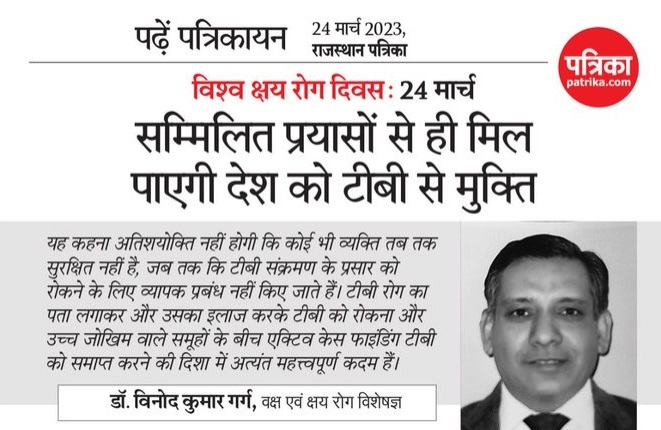
Dr. Vinod Garg, the State TB Officer, reported that in 2021 alone, Rajasthan had identified and notified 150,000 TB patients across the state. With 130 machines available for TB treatment, Rajasthan is making substantial strides in the battle against this pressing public health challenge.
While the fight against tuberculosis has been ongoing for over a century, India is now on the precipice of achieving a significant milestone. The question that looms large is how soon we can realize the vision of a tuberculosis-free India.
Like this article? Share it with your friends


