


In Conversation with Asia's Longest Living Kidney Transplant Recipient
Explore the inspiring journey of Asia's longest living kidney transplant recipient, sharing insights on resilience, health, and the power of organ donation.
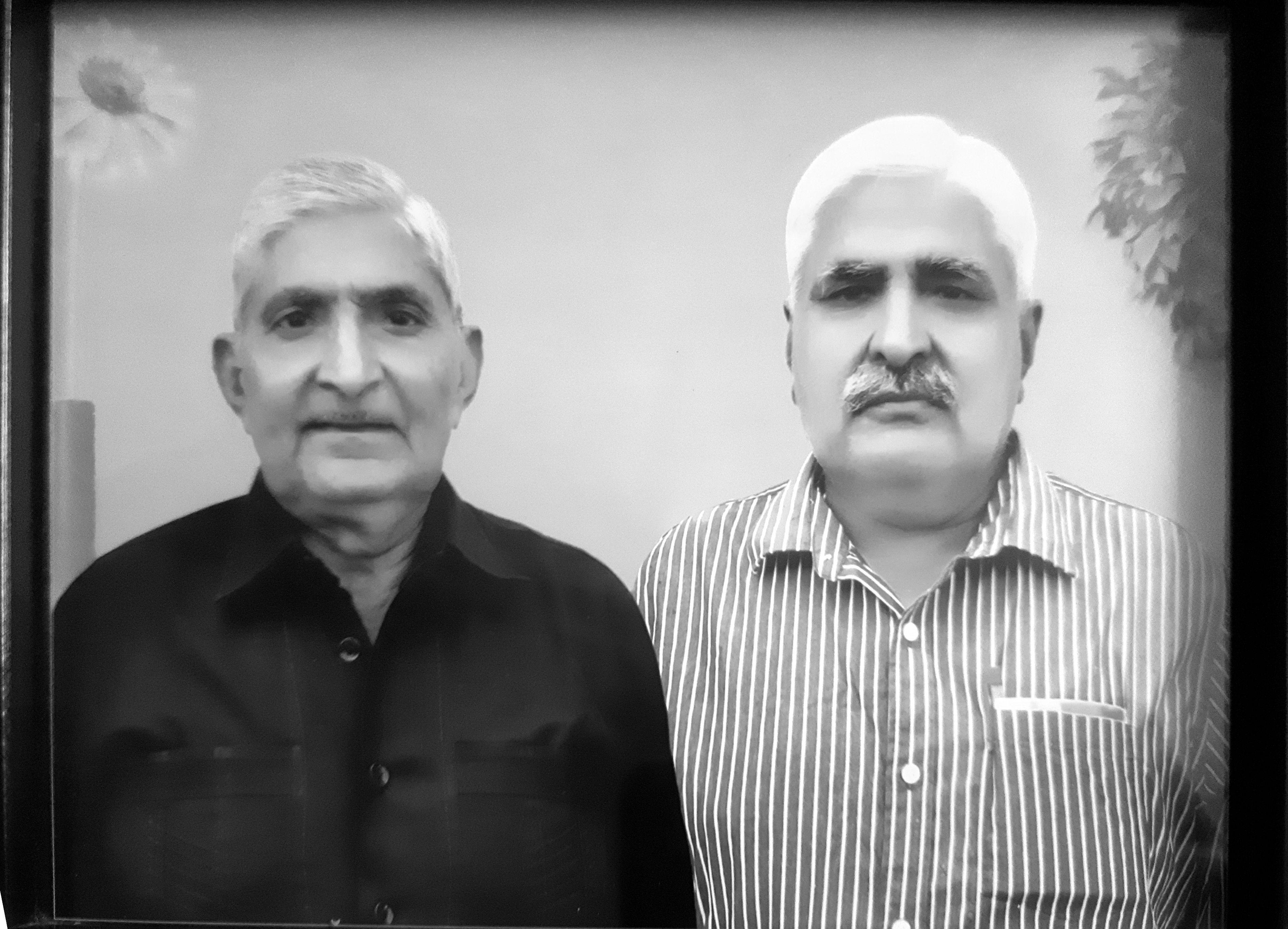
As 68-year-old Kishna Ram Sharma returns home after a regular day’s work at a school in Rajasthan’s Hanumangarh, he plays with his grandchild and walks around his palatial bungalow before turning for the night. The imagery is the same as that of any other Indian grandfather, but Sharma’s life story is anything but ordinary.
This year marks the 45th anniversary of him having undergone a kidney transplant—thereby making Sharma the longest-living recipient of a kidney transplant in Asia (according to Asia Book of Records). According to The Golden Book of Records, he is the longest-surviving kidney transplant recipient in the world.
Origins
It all began in the March of 1977. As a 24-year-old newly married man (and father of a toddler), Kishna Ram Sharma, an engineer by profession, worked in Anupgarh at the time. He complained of fatigue one day and, within a few hours, returned back to his place with a swollen face. He was vomiting profusely and his family members were shocked upon seeing his condition.
Numerous visits to the local doctor provided zero respites. The family got in touch with Dr. Paras Jain, who (to their utter shock) went on to diagnose Sharma with a possible kidney failure. The doctor then directed the Sharma family to go to SMSM Hospital—Rajasthan’s largest government hospital located in the capital city of Jaipur.
Kishna Ram sought advice from his older brother Om Prakash, who not only supported the idea but also traveled with Kishna to Jaipur. Kishna Ram’s father-in-law B Paiwal also accompanied them.
Upon reaching Jaipur, the doctor gave them an ultimatum to either travel to Christian Medical College in Vellore, Tamil Nadu, to get a transplant done immediately, or to return home. Crestfallen, just as they were about to return to their town, Kishna Ram’s father-in-law stopped Kishna. “It was here that my father-in-law encouraged me to travel to Vellore to get a transplant, and we went on with his conviction,” recalls Kishna Ram, speaking with Cityscope.
Traveling such a long distance with failed kidneys wasn’t an easy option in the 1970s. The language was a major barrier. Most of the people living in the towns of Rajasthan spoke Hindi or Marwari and those in Tamil Nadu were fluent in Tamil as well as some English.
With the support of his family, Kishan Ram traveled all the way down south, dodging language barriers, cultural differences, and food. He says nothing about his journey at the time was easy. “It took us three days to reach Vellore. The nephrologist, Dr A. P. Pandey, suggested that I undergo a kidney transplant immediately.”
The Sharma family found themselves financially constrained as well. Om Prakash Sharma tells Cityscope: “Ours was a middle-class family. My father used to work in government service and it had only been a year since my brother began working. We had to sell this tractor we owned even though it was a steady source of income for our family…,” he added.
On June 10, 1977, Kishna Ram began undergoing Haemodialysis in Vellore for three months. Dr. Pandey then went on to transplant Kishna Ram’s brother Om Prakash’s kidney into the former’s body after a successful match.
Thus, Kishna Ram survived.
‘My wife has been a source of strength’
This was only the first act of the drama that lay ahead for Kishna Ram and his family, considering the fact that post-operative care is a critical area for kidney transplant patients.
“It is important to protect the patient from any possible infection,” says Dr. Girivar Sharma, an orthopedic surgeon in Jaipur. He is a kidney transplant survivor himself. “Patients need to control their blood sugar and blood pressure level. They must also—without fail— take medication timely as prescribed by the doctor.”
This is important because “if there is carelessness in any of the parameters, the patient's kidney goes into reject mode which unarguably is life-threatening,” he explains.
Kishna Ram’s wife championed this area for him. As a newly married daughter-in-law of a house that had bovines like cows and buffaloes in the house, Ms. Santosh Sharma went above and beyond to provide a clean and sterilized environment for her husband. “I would mop the floors and wash his clothes after adding Dettol to the water. His utensils were also sterilized rigorously like those of a newborn baby,” she tells Cityscope.
Their lifestyle in a small town took a 180-degree turn. 45 years later, up to this day, Santosh, who now has the help of her daughter-in-law, still oversees every meal served to her husband and ensures that all rules are adhered to. “There is no choice. Even in a large household like mine, I could never afford to leave any loose ends. After all, it was his life that was at stake.”
Santosh had provided her husband with immense emotional support over the years. Even though she had never stepped out of Rajasthan, she went on to accompany her husband during his annual visits to Vellore. For the first 35 years, the couple visited the hospital every year. After that, they visited once every two years, and now, they travel to Vellore only once in five years.
“Her steadfast faith in God has been her source of strength,” said Kishna Ram, who holds his wife in high regard for the sacrifices that she has made for him. “She nurtured all our three children and has remained the strong backbone of our family.”
As for him, Kishna Ram has been taking his medicines regularly and has not indulged in any unhealthy habits like smoking, consuming alcohol, or eating unhealthy food. “I also keep a watch on my physical fitness by walking 3-4 kilometers every day and have been on my feet even during vacations,” he says.
A few years after undergoing the kidney transplant, he resumed working as a government official and continued his follow-up visits to Vellore. In 1982, during one such visit, he participated in the 2nd All India Kidney Transplant Sports Meet—where he came first in the Long Jump category and finished third in the 100-meter race.
Having aced the task of taking care of himself and building a healthy lifestyle, the third act of his life has been kind to Kishan Ram and his older brother Om Prakash.
The latter, who is now the patriarch of this house, said: “Kidney donors these days are wary of donating their kidney thinking it might bring about ailments. My good health is a testament to the fact that there is no reason to worry.”
For the last few years, Kishna Ram (now a retired engineer) spends most of his time managing a school that he established in Hanumangarh by the name of Swami Vivekanand Vidya Mandir School. He spends his time doting on his four grandchildren and spending time with his children, two of whom (his daughter and elder son) have joined the medical field. The former is a Homeopathic doctor and the latter a dentist. Kishna Ram’s younger son helps him run the school.
“My kids never saw me ill or bedridden, and were unaware of my surgery for a long time,” said Kishna Ram. “All three of them came to know about it informally from other family members once they were old enough to understand.”
Both Sharma brothers continue to live in a joint family. Kishna Ram says he is indebted to his older brother. “My life was saved by my brother’s willingness to donate a kidney,” he said. “I hope to inspire and motivate others also to sign up for organ donation.”
Like this article? Share it with your friends


