

12th Nov|6m read
Evolving Nationalism: From 'Inquilab Zindabad' to Contemporary India
Explore how India's sense of nationalism has transformed from ideals to current-day expressions, highlighting the disparity between symbolic and the social justice.
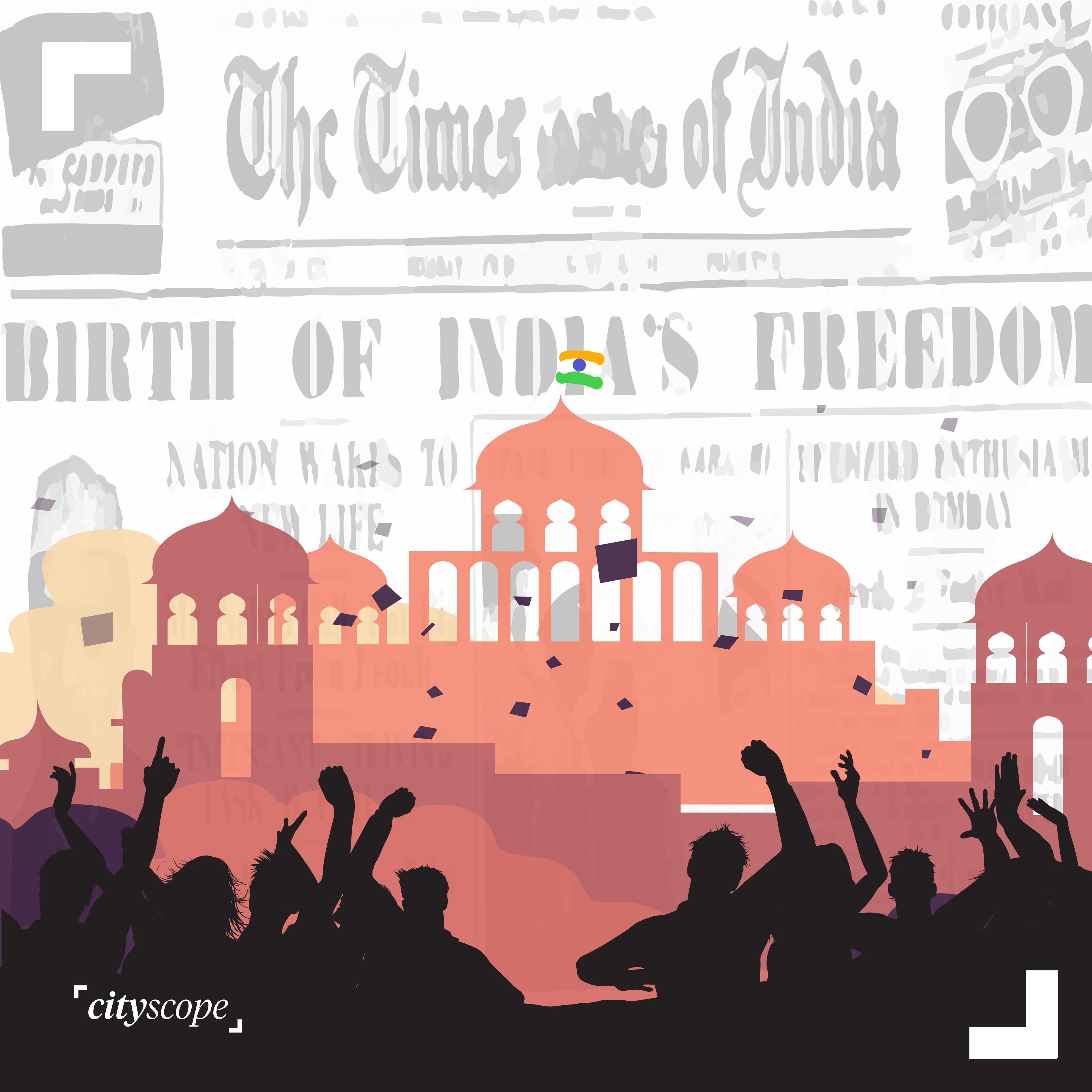
All 11 convicts who were facing life imprisonment for the 2002 post-Godhra Bilkis Bano gang rape walked free the same day India celebrated its 75th year of independence earlier this week. Prime Minister Narendra Modi, during his speech from the Red Fort, asked the people of India to change their mentality towards the treatment of women in the country. Meanwhile in Gujarat, a judge banged his gavel to acquit the 11 men accused of raping Bilkis and killing her daughter “because the convicts had completed 14 years in jail, and factors such as ‘age, nature of the crime, behavior in prison and so on."
Amidst all this, the tricolor was flying high, atop almost every roof, as the prime minister’s very own campaign—"Har Ghar Tiranga”—came into effect. The campaign aimed to educate the people, especially the youth, about the Indian flag. The Center even had the Flag Code of India 2002 amended for this very campaign, allowing for it (the flag) to be displayed day and night. The amendment also brought about another crucial change. Now, a “National Flag made of polyester or machine made Flag have been allowed”.
But as more and more people actively engage in this campaign, and incidents of labeling people as “anti-national” having become more common in recent times, it has become the need of the hour to understand the meaning of nationalism and the difference between “Har Ghar Tiranga” and “Inquilab Zindabad.”
Nationalism: then and now
Draped in khadi, Mohandas Karamchand Gandhi, through several of his movements, marches, and protests, had spread a message of unity throughout the country. Not only Gandhi, but Bhagat Singh, Subhash Chandra Bose, and several other freedom fighters played an important role in evoking strong nationalist sentiments in the country, ultimately leading to a massive struggle for independence. The nationalism of that time was very different from the sense of nationalism seen prevailing currently.
Back then, nobody forced the poor to contribute Rs 20 for a tiranga campaign. Nobody had labeled their neighbor as an “anti-national” for not hoisting the flag. And nobody mercilessly beat up Dalits for hoisting the tricolor.
Nationalism is not only about one’s love towards their country or the national flag—or even towards the national anthem or a particular political party; it’s about the love we display towards our fellow countrymen. Hoisting the national flag at your home for one day in the year will not make you a patriot, but having empathy and being respectful to people from all caste, class, sex, region, and religion, will. It is this feeling of oneness that makes one truly patriotic.
Har Ghar Tiranga, But Where’s the Ghar?
Several issues need to be addressed as the nation completes its 75 years of independence. One of these issues is that of Housing. After 75 years of independence, some of our countrymen still don’t have a permanent roof over their heads. Ironically, they now have the “tiranga” but are still looking for the “Ghar”.

(credits: Navbharat Times)
As per an estimate given by Habitat for Humanity, a global tracker of the problem of housing poverty, India’s housing shortage is currently around 73.6 million units, of which 26.3 million are urban. In addition, over 93 million people live in urban slums without adequate access to clean water, sanitation, and security of tenure.
This (the report) has also brought back attention to the ambitious program started by the PM in 2015, “Housing for All by 2022”, which aimed at providing a roof over everybody’s head by the time the country celebrates 75 years of independence. The Pradhan Mantri Awas Yojana Urban (PMAY-U) has now been extended up to December 31, 2024, after failing to achieve the targets by a margin of around 50%.
Overlooking the important questions
At a time when a globally triggered economic slowdown stares India in the eyes, when almost all of India’s immediate neighbors are on the brink of an economic meltdown, when communal tensions are running high, and the country’s ranking on different global indexes keeps on falling, what is it that India truly needs? A nationwide celebration of swirling flags, or a decisive strategy that addresses problems that have prevailed for three-fourths of a century?
I am not against the “Har Ghar Tiranga” campaign. It is a positive initiative aimed at spreading awareness about the national flag. My reservation is this: Is it the best time to launch such a campaign? Or is it actually a strategy—just like banging utensils— to distract people from the real, everyday problems of life that plague us?
A successful campaign, but an unsuccessful one
The “Har Ghar Tiranga” was a successful campaign. It spread throughout the country, with flags reaching schools, homes, offices, shops, and even monuments. The government had also issued virtual certificates for participating in the campaign virtually. The Opposition too joined in the campaign by encouraging people to bring home the tricolor. Arvind Kejriwal added a new twist when he urged the people of Delhi to hold the tricolor and sing the national anthem at 5 PM on 14th August.
Amending the Flag Code of India 2002 allows machine-made flags made out of polyester to solve the previously existing problem of scale and accessibility. But at the same time, the flag, which was only allowed to be made out of khadi, also had a socioeconomic symbolic meaning to it. In fact, the Karnataka Khadi Gramodyog Samyukta Sangha (KKGSS), which employs over 45,000 people to make hand-woven Khadi flags, held a statewide protest on 27 July against the decision to amend the Flag Code of India.
KKGSS General Secretary Shivanand Mathapati fears that the polyester flags will be cheaper and can be produced at a large scale using machines. He said that the big companies will replace the Khadi handlooms in the coming years.
“Khadi is a symbol of national pride and self-sustenance…Mahatma Gandhi, Pandit Nehru, Sardar Patel, and other great freedom fighters were all in favor of khadi. We leave our slippers outside and enter the khadi units, particularly the flag unit. But the government seems to have no respect for the tricolor,” said Mathapathi.
National flags manufactured by the KKGSS are hoisted atop the Red Fort, the Parliament building, the Rashtrapati Bhawan, and several other government buildings and offices on August 15 August and January 26 each year.
Resources:
Like this article? Share it with your friends


